

Let me guess why you are here. You have seen the cherry blossom photos, and they are gorgeous, but you are traveling in summer. Now you are wondering if Japan is still worth it when the petals are gone.
Short answer? Absolutely. Long answer? Summer might be Japan’s most underrated season, because the country trades blossoms for festivals, fireworks, cool mountain air, and tropical islands. You just need to know where to look.
Here is the thing, though: “summer in Japan” means completely different trips for different people. A festival chaser and a beach lover would barely overlap. So before we dive into places, let us figure out which traveler you are.
What Kind of Summer Traveler Are You?
Answer these four quick questions honestly. Keep track of your letters, because your result at the end shapes your whole itinerary.
1. Your perfect summer evening looks like:
a) A street festival with drums, dancing, and food stalls
b) A cool breeze on a mountain terrace with a cold drink
c) Bare feet in the sand while the sun goes down
d) A quiet temple garden after the day-trippers leave
2. When you pack, you reach for:
a) Comfortable shoes, because you will be on your feet all night
b) A light jacket, because evenings surprise you
c) Two swimsuits, because one is never dry
d) A notebook, because you collect stories, not souvenirs
3. Your friends describe you as:
a) The one who finds the party
b) The one who finds the viewpoint
c) The one who finds the water
d) The one who finds the hidden alley
4. Your dream Japan photo is:
a) Fireworks exploding over a river
b) Purple flower fields under a huge sky
c) Turquoise water with zero crowds
d) A 400-year-old street at dawn
Count your letters. Mostly A? You are the Festival Chaser. Mostly B? The Cool-Escape Seeker. Mostly C? The Island Hopper. Mostly D? The Culture Diver. A mix? Even better, because you can steal ideas from every section below.
The Festival Chaser: Your Summer Runs on Drums and Fireworks
You do not travel to rest. You travel to feel the beat of a place, and summer Japan delivers that beat louder than any other season. Matsuri, or traditional festivals, fill the calendar from July through August.
Start with Kyoto’s Gion Matsuri if you can. It runs through July, and the whole city dresses up for it. Towering wooden floats parade downtown while locals in light yukata robes crowd the evening food stalls. It is chaotic in the best possible way.
Then there are the hanabi, the fireworks festivals. Picture this: thousands of people on picnic blankets along a riverbank, festival snacks in hand, waiting for the sky to explode. The Sumida River show in Tokyo is the most famous, though smaller towns host cozier versions with shorter waits.
Up north, Aomori’s Nebuta Festival brings giant illuminated floats through the streets in early August. Dancers chant and spin around them while the crowd roars. It feels less like a parade and more like beautiful chaos.
Quick reality check, because festivals are popular for a reason. Book your stay early, since rooms near major festivals sell out fast. Arrive at parades an hour ahead, and carry cash for the food stalls.
Heading west after the festivals? Osaka makes a perfect next stop, and our first-timer’s guide to Osaka covers its legendary food streets and castle. Festival season also sweeps across Asia, so you might enjoy our autumn guide to Seoul when planning your next trip.
The Cool-Escape Seeker: You Chase Mild Weather
Maybe crowds and heat are not your thing. You would rather breathe mountain air than queue in humidity, and honestly, Japan rewards that instinct. The country’s northern and highland regions stay pleasantly cool all summer.
Hokkaido is your headline act. While Tokyo sweats, Japan’s northern island enjoys mild days and flower-filled landscapes. It is the classic answer to where to go in Japan in summer when you want comfort.
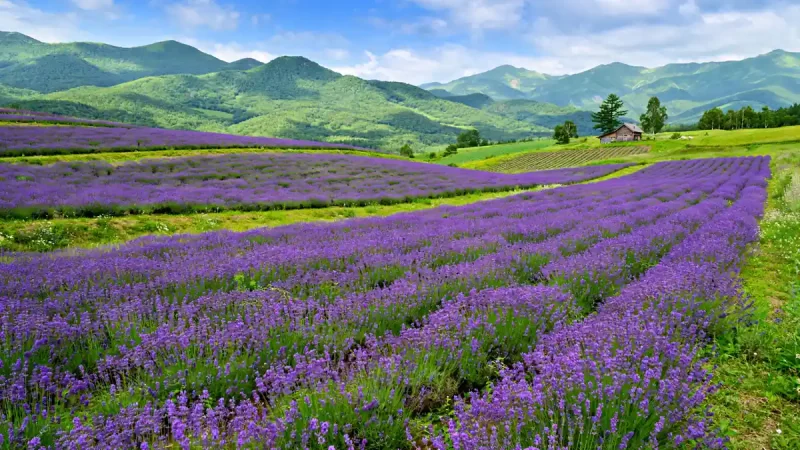
Furano and Biei are the postcard moment. Rolling hills stripe purple with lavender, gold with sunflowers, and pink with poppies. Farm Tomita lets you walk right through the rows, and yes, the lavender ice cream is worth the hype.
Sapporo adds city energy without the scorching heat. Beer gardens take over Odori Park in the evenings, and the seafood is outrageously fresh. Day-trip to Otaru for its canal district, glass workshops, and sweet shops.
Prefer peaks to plains? The Japanese Alps are calling. Kamikochi valley offers wooden trails along a crystal river beneath dramatic summits, and the walk to Myojin Pond suits most fitness levels. Summer is prime hiking season, although mountain weather shifts fast, so pack rain gear.
Round out the highlands with Takayama and Shirakawa-go. Takayama’s Edo-period streets feel wonderfully calm in summer, while Shirakawa-go’s steep thatched farmhouses glow against bright green rice paddies. Stay overnight in a farmhouse guesthouse if you can, because the home-cooked regional dinner alone justifies it.
Love going beyond the obvious? Our guide to Japan’s less-touristy destinations pairs perfectly with a cool-escape itinerary.
The Island Hopper: Your Ideal Day Ends in the Ocean
You measure a trip in swims, not steps. Good news: Japan is an archipelago, so the ocean is never far. Summer unlocks beach options most visitors never imagine.
Okinawa is the big one. Its islands feel like a different country, with turquoise water, coral reefs, and a distinct Ryukyu culture. The pace slows down the moment you land, and strangers smile more.
Snorkelers and divers get the best deal here. Sea turtles glide over coral gardens near the Kerama Islands, and glass-bottom boats cover everyone else. On land, try Okinawa soba and bitter melon stir-fry, then explore Shuri Castle’s royal history in Naha.
Want something quirkier? Hop the ferries of the Seto Inland Sea. Naoshima and its neighboring islands mix contemporary art with sleepy fishing villages, and you can cycle between outdoor sculptures with sea breezes cooling you down. Teshima and Inujima are quieter still, so art lovers can easily fill two or three days.
One practical note: beach season on Honshu runs roughly July through August, while Okinawa stretches much longer. That means island trips work beautifully at summer’s edges too, when crowds thin out.
Chasing sun beyond Japan? Our readers also browse this summer’s global travel trends and the season’s top destinations for wider inspiration.
The Culture Diver: You Travel for Stories, Not Selfies
You are the traveler who reads the plaque. While others rush between landmarks, you linger, and summer Japan has layers for you. The heat keeps some tourists away, which means temples and old towns breathe easier.
Kyoto in summer is a different animal from spring Kyoto. The crowds thin, the gardens turn deep green, and evening temple illuminations feel almost private. Go early in the morning, because the light is golden and the tour buses have not arrived yet.
Then slow down in the countryside. Villages like Shirakawa-go and the old post towns of the Kiso Valley preserve a Japan that cities left behind. Walk the same stone paths merchants used centuries ago, and stay in a family-run inn where dinner becomes the evening’s entertainment.
Do not skip the small museums. Regional craft museums, sake breweries with tours, and folk-art collections tell you more about Japan than any big-city landmark. Ask questions, because curators and artisans love sharing their craft.
If culture-rich travel is your love language, you will adore our Mumbai heritage and sightseeing guide. Different continent, same thrill of discovery.
How to Plan Without the Stress
Okay, you have picked your traveler type. Now let us turn it into a trip, because good planning is what separates a great summer from a sweaty ordeal.
Start with the rail network, since it makes multi-city Japan almost effortless. The bullet train links Tokyo and Kyoto in a little over two hours, and regional passes cover the rest. Book festival weekends early, though, because rooms near big events vanish fast.
Time your trip to your tolerance. June brings the rainy season with thinner crowds and blooming hydrangeas, while late July and August deliver peak festivals with peak heat. September softens the temperatures, although typhoons can shuffle plans, so keep a flexible day or two.
Traveling solo? Japan might be the easiest country on earth for it. Our solo travel tips cover dining alone, staying safe, and meeting people on the road.
And if your wanderlust ignores seasons entirely, save our winter destinations guide for your next planning session.
Try This: A 7-Day Mix-and-Match Itinerary
Not sure how to stitch it all together? Steal this flexible week, then swap days to match your traveler type.
Days 1-2: Tokyo. Land, shake off the jet lag, and catch a hanabi show if the timing works. Explore neighborhoods on foot in the early morning, because the city feels magical before the heat builds.
Days 3-4: Cool escape. Fly to Sapporo or ride into the Japanese Alps. Flower fields, mountain trails, and long mild evenings will reset your energy completely.
Days 5-6: Culture deep-dive. Kyoto’s temples at dawn, then an overnight in Takayama or Shirakawa-go. This is where the trip gets its soul.
Day 7: Your wildcard. Festival chasers add Osaka’s street food scene. Island hoppers grab a short flight to Okinawa. Culture divers linger in Nara’s old lanes.
The beauty of this plan? Every leg connects by fast, comfortable trains or short flights, so you spend your time experiencing Japan instead of transiting through it.
Traveling with kids or grandparents? Slow the pace by dropping one stop, because a relaxed six-day trip beats a frantic seven-day one. Japan rewards lingering, not rushing.
And remember the golden rule of summer travel here: do the outdoor stuff before 11 a.m., then duck into museums, cafes, and arcades during the afternoon heat. Your future self will thank you.
What Should You Actually Pack?
Forget the giant suitcase. Summer Japan rewards light packing, and here is your no-nonsense checklist:
The non-negotiables: breathable linen or moisture-wicking clothes, broken-in walking shoes you can slip off fast, and a compact umbrella that doubles as a sunshade.
The things everyone forgets: a small hand towel, because many public restrooms skip the dryer, plus a refillable water bottle and a portable fan. Trust me, the fan will become your favorite possession.
The smart extras: a light layer for air-conditioned trains and cool mountain evenings, plus a small daypack for temple visits and market hauls.
That is genuinely it. Japanese convenience stores sell anything you forgot, often better than what you packed.
So, which traveler are you? Festival chaser, cool-escape seeker, island hopper, culture diver, or a glorious mix? Whatever you picked, Japan in summer is ready to surprise you. Pick your type, book the ticket, and go find your story. What will your first summer memory be?

