
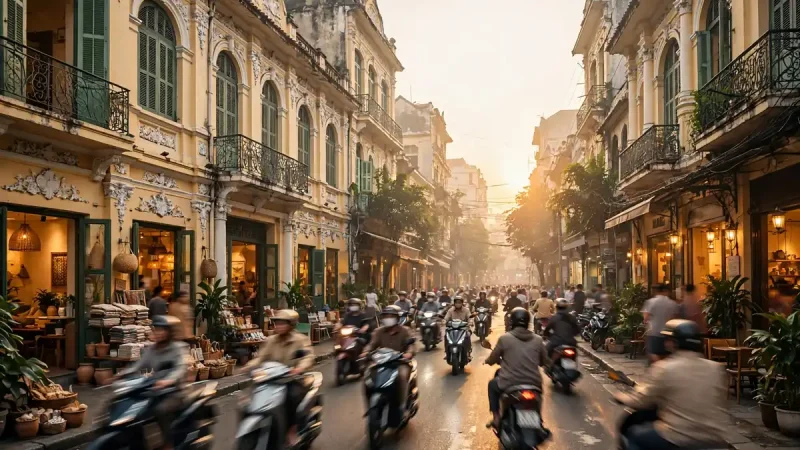

The first thing Saigon does to you is overwhelm you — in the best way. A million motorbikes flow past like a river you’ve just stepped into. The air smells of pho broth, exhaust, and frangipani all at once. And somewhere between the colonial facades and the glass towers, you realize this city doesn’t do anything halfway. So let’s not either. Here’s how to do Ho Chi Minh City right: three perfect days, zero wasted hours.
Locals still call it Saigon, by the way — and after a day here, you will too. This ho chi minh city travel guide is built like a local friend’s advice: where to go, what to eat, what to skip, and the rookie mistakes to avoid. Let’s get into it.
Day 1 Morning: The Classics (Yes, They’re Worth It)
Start where every Saigon story starts: District 1. The Reunification Palace is first — not because it’s the prettiest building, but because walking through those preserved 1970s rooms, past the tank-crashed gates, makes the city’s history suddenly, physically real. Go at opening time to beat both the heat and the tour buses.
From there it’s a five-minute walk to the Notre-Dame Cathedral Basilica and the Central Post Office across the square. The cathedral’s red-brick neo-Romanesque facade is pure French colonial Saigon, and the post office — designed with Gustave Eiffel’s fingerprints on it — is still a working post office. Buy a postcard and actually mail it. Your future self will thank you.
Rookie mistake #1: trying to “do” District 1 on foot at noon. The sun here is not joking. Stack your outdoor sights before 10:30 a.m., then retreat somewhere air-conditioned. Your itinerary should flow like the locals’ day: early, shade, repeat.
Day 1 Afternoon: The War Remnants Museum (Go Prepared)
I’m not going to sugarcoat this: the War Remnants Museum is heavy. Photographs, aircraft, and exhibits document the war’s human cost without flinching. But it’s also one of the most important museums in Southeast Asia, and visiting with an open mind will change how you understand Vietnam.
Give it two hours, then give yourself something gentle afterward — the museum courtyard has quiet corners, and the nearby Tao Dan Park is full of locals doing tai chi and playing badminton. Balance matters. Nobody does their best sightseeing while emotionally wrecked, so plan a soft landing.
Day 1 Evening: Bui Vien vs. The Rooftops (Choose Your Night)
Saigon after dark splits into two personalities, and you should know which one you are. Bui Vien Walking Street is the backpacker chaos option: neon, cheap beer, live music spilling from every doorway. It’s loud, it’s messy, and one night of it is genuinely fun.
The other option: a rooftop bar above the glitter. Order a Saigon Special beer or a proper cocktail, watch the motorbike rivers flow forty floors below, and feel like the city is performing just for you. My take? Do Bui Vien on night one for the story, then go rooftop on night two when you want to actually talk.
Dinner first, though — and in Saigon, dinner is an event. Com tam (broken rice with grilled pork), banh xeo (crispy stuffed pancakes), or a steaming bowl of pho from a plastic-stool joint with a line out the door. Rule of thumb: if locals are queuing, join the queue. You won’t regret it.
Day 2 Morning: Markets, Coffee, and the Real Saigon
Day two is for the city’s living, breathing side. Start at Ben Thanh Market — yes, it’s touristy, and yes, you should still go. But here’s the trick: go for breakfast, not souvenirs. The food stalls inside serve some of the best bun bo Hue and fresh-pressed sugarcane juice in the city, and the morning light through the market roof is beautiful.
Then find your coffee religion. Vietnamese coffee culture is a world unto itself: ca phe sua da (iced coffee with condensed milk, strong enough to file paperwork), egg coffee, coconut coffee, salt coffee. The old apartment-cafés on Nguyen Hue Walking Street — tucked up stairwells of a 1960s block — are the move. Climb the stairs, pick a tiny balcony café, and watch the city stream past below. This is my favorite hour in Saigon.
Walk it off along Nguyen Hue Walking Street itself, the city’s pedestrian spine, then loop past the Saigon Opera House and the colonial-era People’s Committee Building. The architecture here tells the whole French-colonial chapter in about twenty minutes of walking.
Day 2 Afternoon: Jade Emperor Pagoda and Cho Lon
After lunch, head to the Jade Emperor Pagoda — incense-thick, candle-lit, turtles paddling in the pond out front. It’s Taoist and Buddhist at once, gloriously atmospheric, and mercifully cool inside. Take your time; this is a working temple, not a photo prop, so watch how locals pray and follow their lead.
Then venture to Cho Lon, Saigon’s Chinatown and the city’s oldest soul. The Binh Tay Market is bigger, rawer, and more local than Ben Thanh — this is where Saigon actually shops. The Thien Hau Temple nearby is a riot of incense coils and carved woodwork. Most tourists skip Cho Lon entirely, which is exactly why you shouldn’t.
Day 2 Evening: The Food Tour You Give Yourself
Here’s a challenge: eat five things tonight from five different street vendors. A banh mi from the cart with the longest line. Grilled seafood on Vinh Khanh Street in District 4 — the whole street is basically an open-air seafood restaurant. Che (sweet dessert soup) from a vendor whose cart has been there for decades. Snails (oc) if you’re brave — the tamarind ones convert skeptics. And finish with a sugarcane juice the size of your forearm.
Street food safety, since you’re wondering: eat where it’s busy (high turnover means fresh food), watch them cook it, and carry hand sanitizer. Millions of people eat this way daily. Your stomach will most likely be fine — though pack the usual remedies just in case, because “most likely” isn’t “definitely.”
Day 3: The Cu Chi Tunnels (Half Day, Full Impact)
Day three means leaving the city for the Cu Chi Tunnels, the vast underground network used during the war, about 90 minutes northwest. You can crawl through widened tunnel sections yourself — and “yourself” is the operative word, because they are genuinely narrow. Claustrophobic? There’s zero shame in skipping the crawl; the above-ground exhibits tell the story completely.
Book a small-group tour with hotel pickup — it’s cheaper and easier than DIY, and the guides add context you’d never get alone. You’ll be back by early afternoon with the rest of the day free. That’s intentional: you’ll want a slow afternoon after the tunnels.
Day 3 Afternoon: Your Choice — Three Ways to End It
Option A: The Mekong Delta teaser. Too far for a real delta trip in half a day, but the Bitexco Tower Skydeck gives you the god’s-eye view of the whole sprawling city instead — and the scale of Saigon from 262 meters up is genuinely staggering.
Option B: The slow afternoon. Book a spa session (Vietnamese massage is excellent and cheap), then wander the Ben Nghe area’s book street — Nguyen Van Binh — where stalls sell everything from vintage maps to English novels. Buy something. You’ll read it on the flight home and think of this city.
Option C: The deep cut. The FITO Museum of Traditional Vietnamese Medicine in District 10 — a beautiful wooden building full of ancient remedies and apothecary drawers. Almost no tourists go. You’ll have entire floors to yourself.
Rookie Mistakes (So You Don’t Make Them)
Crossing the street wrong. Saigon traffic looks suicidal but runs on a system: walk slowly and steadily, and the motorbikes flow around you. The only dangerous move is stopping or darting. Commit and walk. It feels insane the first time; it’s second nature by day two.
Overplanning. Three big sights a day is plenty. The city’s magic is in the in-between: the alley café, the sudden rainstorm, the conversation with a vendor. Leave gaps.
Skipping the south. District 4 and District 7 show you where modern Saigon actually lives — Phu My Hung’s orderly boulevards feel like a different country from District 1’s chaos. A short ride over gives you the full picture.
Forgetting it’s a working city. Saigon isn’t a theme park; nine million people live and hustle here. Respect the pace, smile at the chaos, and you’ll be rewarded with warmth that polished tourist towns can’t fake.
When to Go, Where to Stay, How to Get Around
When: December to April is dry season — the sweet spot. May to November brings afternoon downpours (dramatic, brief, then gone). Tet (late January/February) is magical but chaotic; book everything early if you come then.
Where: District 1 for first-timers — walkable to everything on days one and two. Pham Ngu Lao for budget and backpacker energy. District 3 for a quieter, more local feel with great food. Rooftop pools are worth the splurge; you’ll use them.
How: ride-hailing apps for cars and motorbike taxis (cheap, fast, everywhere). Walking for District 1’s core. The new metro line is expanding — check current routes. And for getting here in the first place, Saigon pairs beautifully with the region: our Thailand family guide, Seoul in autumn, and Kuala Lumpur city guide all connect easily. Solo travelers should read our 5 travel tips for solo travellers before landing.
Got a Fourth Day? Take the Mekong Delta Trip
If your schedule stretches, the classic full-day Mekong Delta tour is worth it. You’ll cruise narrow canals by sampan, visit coconut candy workshops and floating markets, and eat lunch at a riverside homestead. It’s touristy in parts, sure — but the delta’s watery world is so different from Saigon’s concrete rush that the contrast alone justifies the early start. Book the small-group version, bring sun protection, and say yes to the snake wine photo (you don’t have to drink it).
Why Saigon Stays With You
Here’s what nobody tells you before your first visit: Ho Chi Minh City doesn’t impress you so much as recruit you. The chaos becomes rhythm. The plastic stools become your favorite seats in the world. And somewhere around day three, you catch yourself thinking in motorbike time — “it’s only ten minutes away,” you say, though it’s across the city.
The must-visit places in Ho Chi Minh City aren’t just sights on a list. They’re the post office you mailed a postcard from, the pagoda where incense made your eyes water, the street corner where you finally crossed without fear. Go for the itinerary; stay for the feeling. And when you’re ready for the next adventure, see how Saigon compares with the top most visited places in the world, or find your next trip in our 1001 places to visit before you die guide. The best places near Kuala Lumpur and our non-touristy Japan picks are waiting whenever you are. Chao, Saigon — until next time.

