
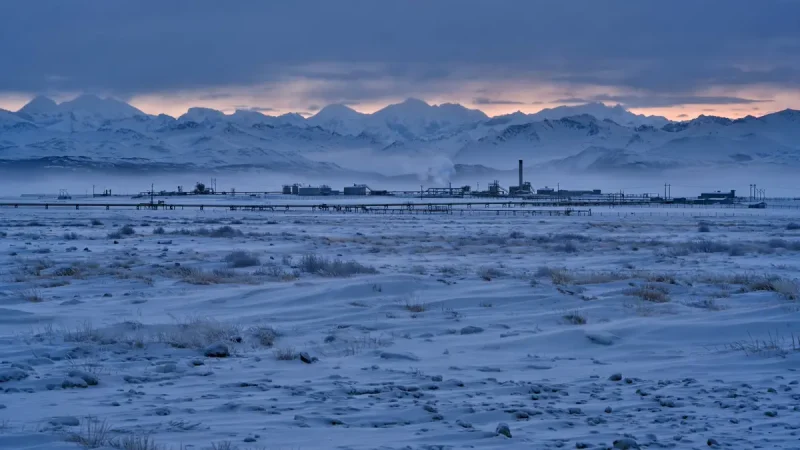

In this article, you will learn what the Willow Project is, why it was approved, what supporters and critics say, and where it stands now. Additionally, you will find the key numbers in one place. In addition, let us examine the facts.
What Is the Willow Project?
Willow is an approximately $8 billion oil development in the National Petroleum Reserve-Alaska (NPR-A) on the state’s North Slope. Additionally, Developer ConocoPhillips plans to produce up to 180,000 barrels of oil per day at peak — roughly 1.6% of current US oil production.
In fact, the Interior Department approved three drill pads with up to 199 wells, down from the five pads originally proposed. Over its 30-year life, the field should yield about 600 million barrels, with first oil targeted for 2029.
The project includes a central processing facility, pipelines, gravel roads, and an operations center. Furthermore, it is among the largest pending US oil developments.
Key Facts at a Glance
| Detail | Figure |
|---|---|
| Developer | ConocoPhillips |
| Location | National Petroleum Reserve-Alaska |
| Cost | ~$8 billion |
| Peak production | 180,000 barrels/day |
| Total yield | ~600 million barrels |
| Lifespan | 30 years |
| Drill pads | 3 (reduced from 5) |
| Construction jobs | 2,500 |
| Long-term jobs | 300 |
| First oil target | 2029 |
Why the Administration Approved It
Officials pointed to several factors. ConocoPhillips holds decades-old leases, and administration lawyers worried courts would side with the company if the project were blocked outright. In addition, officials presented the reduced three-pad scope as a compromise.
Alaska’s political leaders — including Republicans and many Alaska Native lawmakers — strongly supported Willow for its jobs and revenue. Moreover, the project should generate $8–17 billion for federal, state, and local governments.
Energy security also played a role. The approval came as the administration pressed oil companies to boost domestic output amid market disruptions from Russia’s invasion of Ukraine.
Furthermore, Notably, the administration paired the approval with new protections: 13 million acres of sensitive areas in the petroleum reserve and nearly 3 million acres of the Beaufort Sea were placed off-limits to drilling.
Why Critics Opposed It
In addition, Environmental groups condemned the decision, arguing it contradicted Biden’s campaign pledge to halt new drilling on public lands. The #StopWillow campaign drew millions of online supporters.
Critics say the project locks in decades of fossil fuel production and threatens Arctic wildlife, including polar bears and migratory birds. Additionally, they argue the climate math does not work: 600 million barrels means hundreds of millions of tons of CO2.
In fact, Several groups promised legal challenges. They contend the environmental review underestimated greenhouse gas impacts and that cleaner alternatives deserve the investment instead.
Where the Project Stands Now?
ConocoPhillips gave final investment decision and funding approval, and construction activity has begun. Moreover, the company relinquished rights to about 68,000 acres of other leases as part of the arrangement.
Legal battles continue, but the project has survived early court challenges. Furthermore, Barring major reversals, Willow is on track toward first oil in 2029.
The debate it sparked — jobs and energy security versus climate commitments — continues to shape US energy politics.
Frequently Asked Questions
What is the Willow Project in Alaska?
In addition, it is ConocoPhillips’ $8 billion oil development in the National Petroleum Reserve-Alaska, approved in March 2023, expected to produce up to 180,000 barrels per day.
Why did Biden approve Willow despite climate pledges?
The administration cited existing lease rights, legal risks of blocking it, Alaska’s economic needs, and energy security — while reducing the project’s scope and adding conservation protections elsewhere.
How many jobs will Willow create?
Moreover, About 2,500 construction jobs and 300 long-term positions, plus billions in government revenue over the project’s life.
When will Willow produce its first oil?
The target is 2029, with peak production of 180,000 barrels per day expected in the early 2030s.
Conclusion
The Willow decision shows how energy policy balances competing pressures: jobs, legal realities, and climate goals. In addition, people will debate its legacy for the project’s entire 30-year life.
For more energy coverage, visit our energy & utilities section.

