
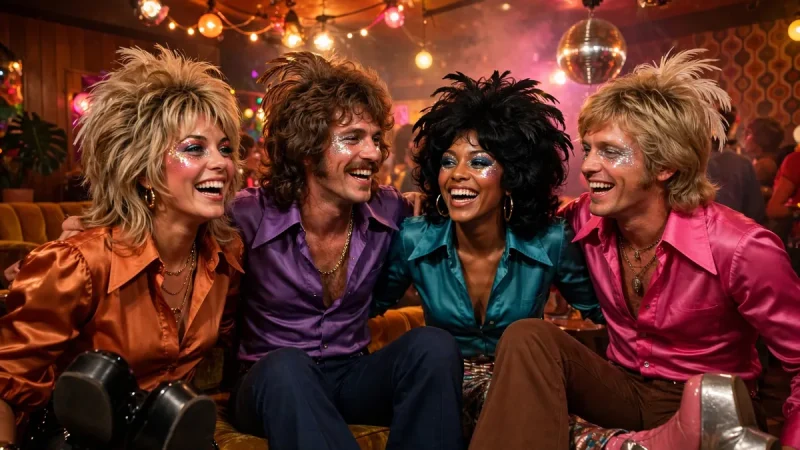

Glitter on the cheekbones, boots like skyscrapers, trousers impossibly tight. Few decades dressed as loudly as glam rock’s golden years. The 1970s stage look still sparks fancy dress boxes everywhere. Yet myths about the era pile up almost as high as those platforms.
Time, then, for some friendly myth-busting with a mirror ball overhead. This guide separates stage legend from wearable fashion truth. You will meet the key pieces that defined the look. Better still, you will learn to borrow its boldness today. No costume required, and no singing ability needed either.
First, a quick grounding in what glam rock meant. Musicians blended rock sound with theatrical, glittering visual drama. Fashion carried half the message before a note played. Audiences copied the look, and high streets followed quickly behind.
Myth One: Was Glam Just Costumes on a Stage?
Many people file glam under fancy dress and move on. That reading misses how deeply the style entered daily life. Teenagers wore glitter, satin, and platform shoes to ordinary discos. Department stores stocked toned-down versions for mainstream shoppers too.
Street adoption happened because the pieces felt fun, not sacred. A satin shirt could join jeans for Saturday shopping. Velvet trousers, meanwhile, dressed up for evening plans easily. Stage excess translated into small, joyful weekday rebellions.
Our history of Titanic era fashion shows the opposite social direction entirely. Edwardian dress enforced rules, while glam deliberately broke them. Both eras, however, understood clothing as public storytelling. Every generation, it seems, argues with the previous wardrobe.
So the myth falls at the very first fence. Glam lived in wardrobes, school discos, and wedding photographs. It was never only theatre, and it never stayed backstage.
Myth Two: Did Everyone Really Dress That Wildly?
Photographs exaggerate, because cameras hunt the loudest outfits first. Most seventies shoppers mixed one bold piece with basics. A glitter scarf might meet an otherwise sensible coat. Balance, quietly, ruled even during fashion’s loudest decade.
Regional scenes also shaped how far people went. London boutiques pushed extremes that smaller towns softened considerably. Workplace rules filtered the trend further for most adults. Still, a platform sole or flared hem reached nearly everywhere.
Music television and album covers amplified the wildest examples. Fans saw the peaks, rarely the everyday middle ground. That distortion survives in our collective memory even now. Retro parties copy the peaks and call it accuracy.
Our pocket-history guide to little books of fashion shows how illustrated volumes correct such distortions. Careful books balance stage shots with street photography wisely. Context, once again, rescues a decade from caricature.
Which Pieces Actually Built the Classic Glam Look?
Start at the floor, because glam literally raised everyone. Platform boots and shoes added inches and instant swagger. Soles ranged from chunky to frankly precarious at parties. Ankle health, sadly, paid for some of that drama.
Satin and velvet carried the era’s signature shine. Bomber jackets, shirts, and suits caught stage lighting beautifully. Lurex threads added sparkle without full sequin commitment. Lamé, meanwhile, delivered maximum shine for minimum subtlety.
Silhouettes swung between skintight and dramatically flared shapes. Catsuits and tight trousers defined one glam pole. Flowing capes, wide sleeves, and flares defined the other. Many performers mixed both poles inside one outfit nightly.
Feather boas and scarves finished countless stage looks memorably. They added movement, color, and playful softness against leather. Our recap of why NFR fashion is dominating shows fringe doing similar work today. Movement, clearly, photographs well in every single era.
Myth Three: Was Glam Only Ever for Men?
Stage photographs center male performers, and memory follows them. Women, however, shaped glam style just as powerfully throughout. Female fans turned glitter makeup into everyday art quickly. Women performers also wore suits, boots, and bold tailoring.
Androgyny sat at the beating heart of the movement. Performers blurred lines with makeup, hair, and silhouette deliberately. Audiences found that blur exciting, confusing, and liberating simultaneously. Fashion still borrows that freedom in collections every year.
Tailoring deserves special credit inside this shared wardrobe. Sharp shoulders and nipped waists flattered many body types. Satin lapels caught light during evening events beautifully. Our guide to fame fashion and staying ahead of the curve traces similar gender-fluid moments today. Modern stars remix those same tailoring tricks constantly.
Makeup, meanwhile, belonged to absolutely anyone feeling brave. Glitter shadow, bold liner, and painted stars crossed boundaries. Beauty counters noticed and stocked brighter palettes in response. Glam, in short, democratized dressing up for everybody.
What About Hair, Makeup, and That Famous Sparkle?
Hair grew big, feathered, dyed, and proudly theatrical everywhere. Mullets, shags, and long layered cuts framed glittered faces. Hairspray manufacturers enjoyed a very profitable decade overall. Backcombing, admittedly, tested patience and brushes alike.
Makeup artists treated the face as a small stage. Metallic shadows swept high toward brows without apology. Blush sat stronger and higher than modern taste prefers. Lips, by contrast, often stayed glossy and relatively simple.
Glitter placement followed joyful, rather than careful, logic then. Cheekbones, shoulders, and collarbones all caught loose sparkle. Stage lighting multiplied every fleck into visible magic. Photographs from concerts still glow with that energy today.
Modern retro nights borrow these tricks selectively and safely. Our music style reading on the Switchfoot vinyl revival shows nostalgia powering music formats too. Vinyl and glitter share one truth across generations. Tangible fun keeps pulling audiences back for more.
Myth Four: Did Glam Die When the Decade Ended?
Obituary writers rushed, yet the style simply shape-shifted onward. New wave acts kept the makeup and sharp tailoring alive. Eighties pop stars inherited platforms, sparkle, and theatrical videos. Fashion cycles then carried glam DNA into every revival since.
Designers still quote the era on runways regularly. Metallic fabrics return whenever party dressing needs energy. Jumpsuits, wide flares, and statement boots resurface each cycle. Each return visit feels familiar and freshly cheeky together.
Street trends show the same recycling in miniature daily. Browse our list of street style trends all over London for modern echoes. A metallic bag here, a platform loafer there everywhere. Glam rarely announces itself now; it simply winks.
Vintage markets keep original pieces circulating among young collectors. Satin shirts and platform boots change hands with stories. Caring for such pieces takes patience and gentle storage. Their survival proves the look meant more than novelty.
How Can You Wear Glam Boldness Without a Costume?
Begin with one hero piece and calm everything else. A satin shirt with dark jeans nods clearly. Metallic boots under a plain dress spark instant joy. Restraint, paradoxically, makes boldness look intentional and grown-up.
Texture mixing delivers glam energy more safely than glitter. Pair velvet with denim, or satin with matte knitwear. Shine needs contrast, otherwise outfits shout over themselves. Your mirror will tell you when balance feels right.
Makeup offers the lowest-risk entry point for beginners. Try a metallic liner flick on a Friday evening. Add one glitter accent, then stop before adding another. Friends will notice the glow, not a costume change.
Thrift stores hide genuine treasures for patient hunters weekly. Check seams, zips, and fabric condition under bright light. Retro king Elvis still teaches stage presence lessons too. Our profile of Elvis Presley and the Graceland tour shows earlier stage glamour clearly. Jumpsuit sparkle walked so glam rock could strut.
Which Colors and Fabrics Should Vintage Hunters Study First?
Color tells the glam story before silhouette even speaks. Gold, silver, and electric blue dominated stage-ready palettes everywhere. Hot pink and scarlet, meanwhile, fought happily beside them. Under stage lights, those shades practically vibrated with energy.
Fabric choice decided whether an outfit truly read as glam. Satin delivered liquid shine that cameras adored instantly. Velvet, by contrast, absorbed light and looked deliciously moody. Sequins demanded confidence, because they reflected absolutely everything nearby.
Hunters should also study construction clues inside vintage pieces. Metal zips and union labels help date garments roughly. Lining quality often separates stage wear from high-street copies. Honest wear, surprisingly, can add character rather than ruin value.
Care matters once a treasure finally comes home with you. Store sequined pieces flat, never crushed inside crowded wardrobes. Keep velvet away from damp rooms and direct sunlight. Gentle handling today preserves tomorrow’s party invitations perfectly.
Did Glam Change Everyday School and Office Dress Too?
Yes, although workplaces absorbed the trend in diluted doses. Wider ties and longer collars slipped into sensible offices quietly. Flared trousers became respectable once fabrics turned plain. Platform shoes, however, mostly stayed outside serious meeting rooms.
Schools felt the influence through hair and accessories first. Students pushed uniform rules with badges, scarves, and hairstyles. Teachers negotiated hemlines and heel heights with weary regularity. Each small rebellion rehearsed bigger self-expression later in life.
Wedding photographs capture this softened glam most charmingly today. Grooms wore velvet jackets beside brides in flowing sleeves. Guests mixed satin, big hair, and unmistakable decade confidence. Those albums, honestly, out-glam most modern retro parties easily.
Even television presenters adopted touches of the look nightly. Softer glitter, broader lapels, and brighter studio colors spread widely. Glam had become a visual language everyone could speak. Fluency varied, yet nobody remained completely untouched by it.
How Did Photography and Album Art Sell the Look?
Album covers acted as glam fashion’s most powerful shop windows. Fans studied sleeves under bedroom lamps for styling clues nightly. A single cover could popularize a haircut across continents quickly. Record shops, consequently, doubled as unofficial fashion galleries then.
Concert photography pushed the influence even further each tour. Flashbulbs caught sequins at their most explosive and joyful. Music magazines printed those images large, glossy, and unforgettable. Teenagers pinned them beside mirrors where outfits came together.
Television appearances sealed the national reach of key looks. One prime-time performance could shift high-street windows within weeks. Retailers watched broadcasts closely, hunting next month’s winning silhouette. Fashion and music marketing, clearly, grew up holding hands.
Today, social feeds replay that same mechanism at lightning speed. A striking stage outfit trends globally before midnight strikes. The platforms changed, yet the glam publicity engine did not. Sparkle simply found faster mirrors to shine into.
What Should a Beginner’s First Glam Capsule Include?
Building a starter capsule keeps experimentation affordable and focused. First, choose one satin shirt in a jewel tone you love. Second, add straight trousers that let the shirt star quietly. Together, they create an instant evening uniform with attitude.
Third, hunt comfortable platform boots with a manageable heel height. Modern versions protect ankles far better than vintage originals did. Fourth, add one metallic accessory, like a belt or clutch. Small shine delivers the message without overwhelming your frame.
Fifth, keep a feather or faux-feather trim piece for parties. Clip it onto a plain jacket when celebrations call loudly. Remove it afterward, and the jacket returns to weekday duty. Flexible pieces, ultimately, earn their wardrobe space many times over.
Sixth, borrow one makeup accent from the era permanently. Metallic liner or a soft glitter wash works for most faces. Practice once at home before debuting it publicly anywhere. Confidence, after all, remains glam’s most important garment always.
Why Does Glam Rock Fashion Still Matter So Much?
Try one small experiment before this week ends, then. Wear a single glam piece somewhere ordinary and notice everything. Watch shoulders lift, steps lengthen, and strangers smile knowingly. That tiny theatre, honestly, explains the entire movement better than museums can.
Above all, glam gave ordinary people permission to play. Dressing up stopped being only for the rich or famous. A teenager with glitter could feel like a headline act. That democratic sparkle still defines pop fashion today.
Younger designers keep mining the era with obvious affection. Their mood boards mix satin, chrome, and unapologetic color freely. Each collection season proves the vocabulary still feels electric. Glam, evidently, speaks a language fashion refuses to forget.
Self-expression, then, remains the era’s real legacy. Platforms gathered dust, yet the attitude never left wardrobes. Wear the color, claim the shine, enjoy the mirror, and let your everyday wardrobe keep a little stardust forever. Glam rock would absolutely applaud that spirit from the front row.

