
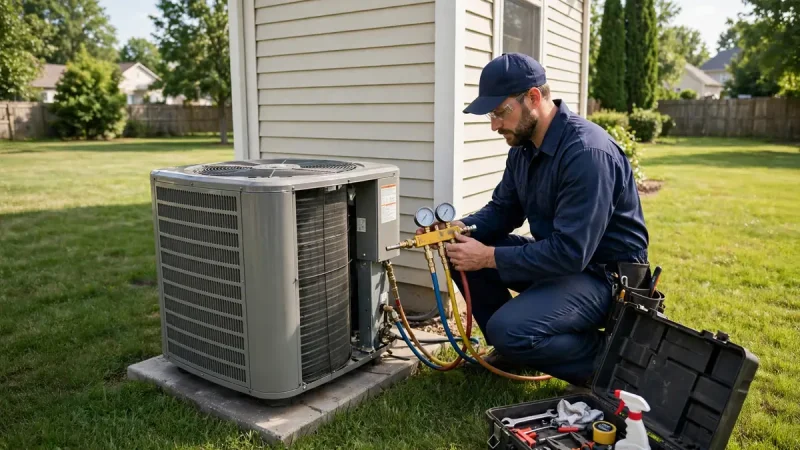

Air Conditioning Repair Services: Separating Fact from Fiction
Air conditioning repair services hear the same myths every summer. Homeowners repeat advice from neighbors, forums, and well-meaning relatives. Unfortunately, much of that advice is wrong, and wrong advice costs money.
In this guide, we separate fact from fiction. You will meet six common AC myths, learn what is actually true, and discover when to call a professional. In addition, you will get a maintenance checklist you can handle safely. Let us clear the air.
Myth 1: You Only Need a Repair When the AC Breaks Down
The fiction: If the system is running, it needs nothing. Many homeowners skip maintenance until a heatwave failure forces an emergency call.
The fact: Skipping maintenance is one of the fastest ways to shorten an AC’s life. Dust builds up on coils, filters clog, and small parts wear quietly. Consequently, efficiency drops while energy bills climb.
A seasonal tune-up catches problems early. During an AC tune-up, a technician cleans coils, checks refrigerant levels, and tightens electrical connections. As a result, the system runs smoother and breaks down less often.
Most manufacturers agree on the schedule. They recommend professional HVAC maintenance at least once a year, ideally before summer. Furthermore, some warranties require documented maintenance to stay valid.
Myth 2: Closing Vents in Unused Rooms Saves Energy
The fiction: Shutting vents in spare bedrooms forces more cool air where you want it. This sounds logical, and many people do it.
The fact: Your ductwork was designed for balanced airflow. Closing vents creates pressure imbalances that strain the blower and ducts. In addition, the added pressure can cause air leaks at duct joints.
The system works harder instead of smarter. Therefore, energy use often rises rather than falls. In some cases, restricted airflow can even freeze the evaporator coil.
Better options exist. A programmable or smart thermostat manages temperatures by schedule, not by blocking vents. For homes with very different cooling needs, zoned systems offer true room-by-room control. Curious about smart upgrades? Explore our roundup of innovative smart home devices.
Myth 3: Does Setting the Thermostat Very Low Cool the Room Faster?
The fiction: Dropping the thermostat to 60 degrees cools the house faster than setting it to 72. Impatient homeowners swear by this trick.
The fact: An air conditioner cools at one fixed rate. Setting the target lower does not speed up the process. Instead, the system simply runs longer and wastes energy.
The smart approach is steady and realistic. Set the thermostat to your actual comfort temperature, then give the system time. Moreover, ceiling fans help you feel cooler without lowering the thermostat.
For best results, keep the thermostat away from heat sources like lamps and sunny windows. A thermostat that reads a false temperature makes the whole system behave badly.
Myth 4: DIY AC Repair Always Saves Money
The fiction: Online videos make every repair look easy. Why pay a technician when you can buy the part and do it yourself?
The fact: Simple tasks are fine for homeowners. Changing filters, clearing debris around the outdoor unit, and checking thermostat batteries belong on your list. However, anything inside the cabinet is a different story.
Capacitors store dangerous electrical charge even when the power is off. Refrigerant is a controlled substance that requires EPA certification to handle. Furthermore, most manufacturers void the warranty the moment an unlicensed person opens the unit.
Botched repairs often cost more than the original fix. A wrong guess can burn out the compressor, the most expensive component in the system. When the job involves wiring, refrigerant, or sealed components, call a licensed HVAC technician. If you are weighing a career in this trade, our guide to starting a successful home service business is worth a read.
Myth 5: Bigger AC Units Always Cool Better
The fiction: The largest unit you can afford will keep you coolest. Bigger must mean better, right?
The fact: An oversized AC cools the room too quickly and shuts off. This short cycling leaves humidity behind, so the air feels cool but clammy. In addition, constant starting and stopping wears components faster.
Proper sizing depends on your home’s square footage, insulation, windows, and climate. Therefore, reputable contractors perform a load calculation before recommending equipment. A correctly sized unit runs longer, steadier cycles and removes humidity properly.
If your current system short-cycles, ask a technician to evaluate it. Sometimes ductwork or thermostat placement is the real culprit, not the unit size.
Myth 6: An Energy-Efficient Unit Needs No Maintenance
The fiction: A new high-SEER unit handles everything on its own. Efficiency ratings guarantee low bills without any effort.
The fact: Efficiency is a starting point, not a finish line. Dust on coils, clogged filters, and low refrigerant force even the best unit to work harder. Consequently, neglected efficient units can cost more to run than maintained standard ones.
Regular servicing protects your investment. It keeps the efficiency rating real instead of theoretical. Moreover, it extends the system’s lifespan, which often reaches 12 to 15 years with proper care.
Think of it like a fuel-efficient car. The engineering helps, but skipping oil changes still ruins the engine. Your AC deserves the same logic. Regular upkeep is maintenance you simply cannot ignore, much like the home care advice in our piece on cleaning tasks you cannot afford to skip.
Myth 7: Air Conditioners Produce Fresh Air
The fiction: Running the AC refreshes the air in your home. Many people believe the system pulls in clean outdoor air.
The fact: A standard central air conditioner recirculates indoor air. It cools and dehumidifies the same air over and over. Therefore, pollutants can build up without proper ventilation.
Occasional fresh air matters. Open windows on mild days to let stale air escape. In addition, a clean filter captures dust and allergens during normal operation.
For persistent air quality concerns, consider a ventilator or whole-home air purifier. Your HVAC technician can recommend options that integrate with your existing system.
When to Call a Professional: Warning Signs?
Some symptoms demand expert attention. Warm air from the vents is the obvious one. However, subtler signs matter just as much.
Listen for new noises. Grinding, squealing, or banging sounds signal worn bearings, belt problems, or loose parts. Similarly, musty or burning smells from the vents deserve immediate investigation.
Watch your energy bills. A sudden spike without a change in weather often means the system is struggling. In addition, weak airflow from vents points to duct problems or a failing blower.
Moisture where it should not be is another red flag. Pooled water near the indoor unit can mean a blocked drain line. Meanwhile, ice on the refrigerant lines suggests low refrigerant or airflow trouble.
Short cycling, where the system turns on and off rapidly, also needs diagnosis. Finally, if the breaker trips repeatedly, stop resetting it and call for help. Electrical faults are never a DIY project.
AC Maintenance Checklist: What You Can Safely Do
Homeowners can handle plenty of upkeep without touching anything dangerous. Start with the air filter. Check it monthly and replace it every one to three months during heavy use. A clean filter improves both airflow and indoor air quality.
Keep the outdoor condenser unit clear. Trim plants and grass at least two feet away from all sides. In addition, gently rinse dirt and leaves from the fins with a garden hose, never a pressure washer.
Inside the house, keep supply and return vents unblocked. Move furniture, rugs, and curtains away from them. Furthermore, wipe vent covers when dust collects.
Check the thermostat seasonally. Replace batteries once a year and confirm the settings match your schedule. A well-programmed thermostat can trim cooling costs noticeably.
Pour a cup of vinegar down the condensate drain line each spring. This simple step prevents algae clogs that cause water damage. For deeper cleaning projects around the house, our home cleaning guide covers professional-grade tips.
Finally, schedule a professional tune-up every spring. A technician inspects what you cannot safely reach. Clean indoor air protects your family too; learn more from our gateway to health and wellness and our guide to comfort and care at home.
How to Choose the Right Repair Service?
Not all air conditioning repair services are equal. Some chase volume, while others focus on craftsmanship. Certifications, experience, and reviews separate the two.
Start with licensing and insurance. A legitimate company carries both without hesitation. In addition, look for technicians certified by recognized industry organizations.
Read recent reviews, not just star ratings. Look for mentions of honest diagnosis and fair pricing. Furthermore, ask whether the company offers upfront pricing before work begins.
Get a written estimate for major repairs. A trustworthy technician explains what failed, why it failed, and what it costs to fix. Meanwhile, be wary of anyone who pressures you into an immediate full replacement.
Ask about maintenance plans. Many quality companies offer annual plans that include tune-ups and priority scheduling. Our overview of choosing the right home services shares more selection criteria.
Frequently Asked Questions About Air Conditioning Repair Services
How often should I service my air conditioner?
Schedule professional HVAC maintenance at least once a year, ideally in spring before the cooling season starts.
Why is my AC running but not cooling the house?
Common causes include a dirty air filter, low refrigerant, a frozen evaporator coil, or a failing compressor. Start by checking the filter, then call a technician if the problem continues.
Can I clean my AC coils myself?
You can gently rinse the outdoor condenser fins with a garden hose. Leave indoor evaporator coil cleaning to professionals, since it requires opening the unit.
How long does a typical AC unit last?
With regular maintenance, most central air conditioners last 12 to 15 years. Neglected systems often fail much sooner.
Is it worth repairing an old AC or should I replace it?
As a rule of thumb, replace the unit if the repair costs more than half the price of a new system and the unit is over 10 years old. A technician can help you weigh both options.
Why does my AC smell musty when it starts up?
That musty odor usually signals mold or mildew on the evaporator coil or in the drain pan. A professional cleaning removes the growth and restores fresh airflow.
Should I cover my outdoor unit during winter?
Breathable covers work fine for winter protection, but avoid airtight tarps that trap moisture. In addition, remove the cover before the first warm day so the system can breathe.
Conclusion: Trust Facts, Not Folklore
Air conditioning repair services work best when homeowners know the facts. Maintenance beats emergency repairs, proper sizing beats bigger equipment, and professionals beat risky DIY on complex jobs.
Keep your filters clean, your vents open, and your thermostat honest. Then schedule that annual tune-up before summer arrives. Your system, your wallet, and your comfort will all thank you.

