
Cosentino Norfolk Logistic Hub: Transforming Modern Supply Chains
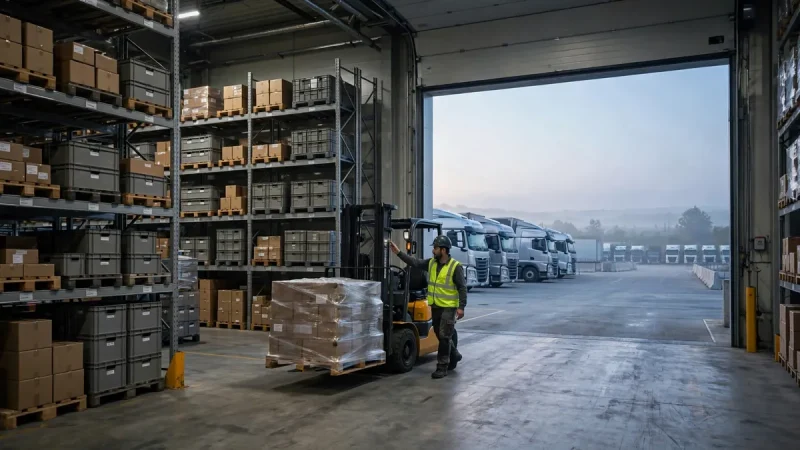
Picture a single pallet starting its day in the dark. Headlights sweep across a quiet loading yard before sunrise. Somewhere nearby, a forklift beeps and a dock door rolls upward. Have you ever wondered where that pallet goes next?
That small moment explains why hubs matter so much. Goods rarely travel in one straight, simple line anymore. Instead, products pause, regroup, and change direction inside distribution hubs. Consequently, the Cosentino Norfolk logistic hub interests anyone studying modern supply chains.
Rather than listing services you should verify elsewhere, this story follows freight. One imaginary shipment will carry us through each stage. Along the way, you will see why planning beats speed alone. Ultimately, calm coordination keeps shelves stocked and customers patient.
One caution belongs right at the start here. Specific routes, customers, and operating details belong on official company pages. Check those sources directly before making any business decision. General hub principles, however, can teach you plenty today.
Why Does Norfolk Make Sense as a Hub Location?
Geography quietly shapes every supply chain decision that companies make. A hub needs roads, storage space, and room to grow. Norfolk offers a useful setting for that kind of thinking. Therefore, location becomes the first chapter of our shipment story.
Think about a truck arriving from a regional supplier. Drivers need clear access without crossing a crowded city center. Planners, meanwhile, need flexible routes toward customers in several directions. When those needs meet, delivery days become far more predictable.
Still, a good map never guarantees a good operation. Traffic, weather, and seasonal demand can disrupt any careful plan. Skilled teams therefore build backup routes into their weekly schedules. For example, a delayed morning arrival need not ruin the afternoon.
Regional hubs also shorten the final stretch to customers. Shorter final legs usually mean fewer surprises near delivery time. In addition, local knowledge helps drivers handle recurring bottlenecks sensibly. Local teams spot patterns that distant planners might easily miss.
Our pallet, then, arrives in Norfolk with a purpose. Norfolk is not simply a stopping point on a map. Rather, the stop lets people sort, check, and redirect freight. That pause, paradoxically, often makes the whole journey faster.
What Happens When Our Shipment First Arrives?
Dawn deliveries begin with paperwork, even in a digital age. Staff confirm what arrived, how much arrived, and in what condition. Discrepancies get flagged before the goods move any deeper inside. As a result, small errors stay small and fixable.
Next, workers inspect the outer packaging for visible damage. Crushed corners or broken seals deserve attention right away. Photographs and notes create a record that protects everyone involved. Indeed, careful receiving prevents arguments weeks later about responsibility.
Afterwards, the shipment receives a place inside the system. Labels and scans link each pallet to its onward plan. Anyone checking later can see where the goods currently sit. Visibility like that calms customers who hate guessing games.
Sometimes freight arrives early, and sometimes freight arrives late. Flexible receiving teams adjust dock schedules without creating chaos elsewhere. For instance, a late truck may unload at a quieter door. Flexibility, practiced daily, becomes a genuine competitive advantage.
Curious how other regions organize similar freight flows? Read about Hanta Logistics in South Korea and its supply chain approach for comparison. Different ports face different pressures, yet receiving discipline stays universal. Good hubs everywhere respect the first fifteen minutes.
How Does Sorting Turn Chaos Into Order?
Inside the building, our pallet joins hundreds of others. Each pallet carries a different promise to a different customer. Sorting separates urgent freight from freight that can wait. Consequently, priorities become visible instead of living inside someone’s memory.
Workers group outgoing loads by destination, timing, and handling needs. Fragile goods receive gentler treatment than dense industrial supplies. Temperature-sensitive items, meanwhile, follow stricter timing and storage rules. Clearly, one routine rarely fits every product category well.
Cross-docking offers one especially elegant answer to storage pressure. Incoming goods move across the dock toward outbound trucks quickly. Very little time gets spent sitting in warehouse aisles. Thus, handling drops while delivery speed often improves noticeably.
Other goods stay longer, and that choice can be smart. Storage lets businesses buffer against supplier delays or sudden demand. However, stored freight ties up money and warehouse space. Smart planners balance buffering against cost, week after week.
Imagine a retailer preparing for a busy weekend sale. Extra stock waits near the outbound side, ready to move. When orders spike, staff simply execute a prepared plan. Preparation, in other words, converts panic into routine work.
Which Technology Keeps a Modern Hub Honest?
Scanners chatter constantly in a well-run modern hub building. Each scan updates a shared picture of freight in motion. Managers can then spot a stalled pallet before customers notice. Technology, used well, supports people rather than replacing judgment.
Warehouse management software coordinates many of those moving pieces. Systems assign storage spots, pick routes, and loading sequences digitally. Staff still decide when reality disagrees with the screen. Ultimately, human override remains an essential safety valve.
Tracking tools also change conversations with customers completely. Instead of vague promises, teams can share meaningful status updates. Delays still disappoint people, but honest updates preserve trust. By contrast, silence usually turns small delays into big complaints.
Data from daily operations reveals patterns over time. Certain docks clog on certain mornings, predictably and repeatedly. Specific routes, similarly, suffer predictable delays during holiday peaks. Once patterns become visible, schedules become easier to improve.
Interested in how classification shapes logistics businesses behind the scenes? Explore this guide to SIC codes for logistics on our site. Industry codes sound dull, yet they structure real market analysis. Understanding them helps you compare providers more fairly.
Who Are the People Behind the Pallet?
Machines scan boxes, but people solve the awkward problems. A label falls off, and someone must identify the freight. A customer changes an order, and someone must rethink the load. Resourceful staff, consequently, remain the soul of every hub.
Forklift drivers carry enormous responsibility inside tight, busy aisles. Training and clear traffic rules protect everyone sharing that space. Supervisors, likewise, watch fatigue because tired teams make mistakes. Safety culture, therefore, protects both workers and freight.
Planners work one step removed from the physical floor. Their screens show arrivals, departures, staffing, and available dock doors. When reality shifts, planners shuffle that puzzle calmly and quickly. Good planning feels invisible precisely because problems vanish early.
Customer service teams translate operations into plain human language. Shippers want straight answers about timing, condition, and next steps. Honest translation matters when news is bad as well. In fact, candor during problems often builds lasting loyalty.
Do you run a smaller operation watching these systems enviously? Many hub lessons scale down surprisingly well for small teams. Our guide to scaling business services growth explores that growth mindset further. Even a two-person warehouse benefits from clear receiving routines.
What Does a Hub Change for Local Businesses?
Local firms gain options when reliable hub capacity sits nearby. A manufacturer can ship smaller batches more frequently, for example. Retailers, meanwhile, can replenish popular lines without over-ordering everything. Flexibility like that reduces waste across the whole area.
Consider a growing food producer sending goods to regional stores. Predictable hub schedules help that producer promise fresher deliveries confidently. Stores then plan promotions around arrivals they can trust. Eventually, shoppers notice fuller shelves and fewer disappointing gaps.
Export-minded businesses think about hubs slightly differently, of course. Consolidated loads can make onward transport far more efficient overall. Documentation checks at the hub also catch errors early. Catching a paperwork error early beats fixing it abroad.
Trade rules, however, keep shifting beneath everyone’s feet. Our explainer on what the new trade deal means for small businesses adds useful context. Hub teams cannot control policy, but prepared teams adapt faster. Awareness, once again, becomes a quiet form of insurance.
Employment ripples outward from a busy hub as well. Driving, warehousing, maintenance, and administration all need skilled people. Training pathways can grow around stable logistics employers locally. Communities benefit when those pathways lead toward lasting careers.
Where Does Our Pallet Go After Norfolk?
By mid-afternoon, our imaginary pallet has a new companions group. Staff have rebuilt it into an outbound load heading onward. Labels now point toward the final regional destination clearly. Departure, in this world, is simply receiving in reverse.
Loading order matters more than casual observers ever realize. Heavy items sit low, and fragile items sit protected. Drivers also need loads balanced safely for the road ahead. Poor loading, by contrast, creates damage and dangerous handling later.
Before departure, teams run one final documentation check. Counts, destinations, and special handling notes all get verified again. That last pause sometimes feels tedious to busy crews. Yet final checks prevent the most expensive mistakes of all.
On the road, tracking continues quietly in the background. Dispatchers watch progress and prepare receiving teams at the destination. If traffic builds, updates flow before questions even arrive. Smooth handovers, therefore, feel almost boring to outside observers.
Want another view of how partner networks support that handover? Read about ATL Logistics LLC and seamless supply chain support for a parallel example. Networks beat lone heroes in logistics, almost every single time. Coordination, shared openly, keeps freight promises believable.
Which Mistakes Trip Up Businesses Using a Hub?
- Firstly, vague labeling creates confusion at every later stage.
- Secondly, late paperwork delays freight that arrived perfectly on time.
- Thirdly, poor packaging invites damage that no schedule can fix.
- Also, silence about delays destroys trust faster than delays themselves.
- Finally, unrealistic lead times turn good operations into apparent failures.
Each mistake on that list looks small in isolation. Together, however, those errors compound into missed customer promises. Shippers should therefore audit their own habits before blaming partners. Honest self-review often reveals the cheapest improvements available anywhere.
Packaging deserves special attention from first-time hub users. Boxes travel through more hands than most senders imagine. Strong outer packaging, clear labels, and sensible pallet wrapping help enormously. In addition, photographs before dispatch settle later condition disputes.
Communication habits deserve an equally honest review from shippers. Share forecasts early, especially before promotions or seasonal peaks. Hubs can staff up when they receive fair warning. Surprises, conversely, force everyone into expensive reactive mode.
Growth thinking helps here for industrial firms especially. Check out how simplified technologies support industrial growth for related ideas. Simpler internal processes make external partnerships work far better. Complexity at home rarely stays at home for long.
How Should You Evaluate a Hub Partner?
- Firstly, ask how receiving checks and damage reports actually work.
- Secondly, request a plain explanation of tracking and status updates.
- Thirdly, clarify storage, cross-docking, and onward transport options available.
- Also, discuss holiday peaks and backup plans before signing anything.
- Finally, verify every specific claim on official company channels.
That checklist keeps early conversations grounded in daily reality. Providers who answer clearly usually operate clearly as well. Providers who dodge basics, meanwhile, reveal something important by dodging. Trust your meeting notes more than glossy sales brochures.
Site visits add another layer of confidence for shippers. Watch how staff treat freight when nobody performs for visitors. Notice whether aisles look organized and labels look readable. Real culture shows itself in small, unscripted moments daily.
Strategy-minded readers may also enjoy our analysis of strategic analysis for small business growth on this site. Hub choices are strategy choices, not just transport purchases. Thinking strategically turns freight spending into capability building instead.
Questions Readers Ask About Logistics Hubs
What does a logistics hub actually do?
A hub receives, checks, sorts, stores, and forwards freight. Some hubs also consolidate loads or prepare goods for distribution. Exact services vary between operators and locations, of course. Always confirm the current service list with the operator.
Why does freight pause instead of traveling directly?
Direct travel sounds simple, yet it often wastes vehicle space. Consolidation at hubs fills trucks more efficiently for everyone. Better-filled trucks can mean fewer journeys and steadier schedules. Pauses, therefore, frequently improve overall speed and reliability.
How can shippers reduce damage during hub handling?
Strong packaging and clear handling labels help the most. Balanced pallets and secure wrapping also reduce movement in transit. Photographs before dispatch create useful evidence if problems appear. Discuss special handling needs before the first shipment leaves.
Where should you verify details about this hub?
Official company pages and direct company contacts work best. There, you can confirm services, coverage, and current arrangements. Third-party summaries age quickly and sometimes repeat outdated claims. Treat every specific detail as provisional until you verify it.
What Should You Remember About Our Pallet?
Our pallet arrived anonymous and left with a plan. Receiving checks, careful sorting, and honest tracking carried it through. People, software, and geography each played a distinct part. Together, those parts turned a pause into genuine progress.
The Cosentino Norfolk logistic hub illustrates that wider transformation clearly. Modern supply chains succeed through coordination, not frantic rushing. Every scan, label, and handover quietly supports a customer promise. Reliability, built daily, remains the real product being sold.
Ready to look at your own freight habits differently? Start by mapping where your goods pause and why. Then ask whether each pause adds control or confusion. Better questions, asked early, usually deliver better supply chains.