
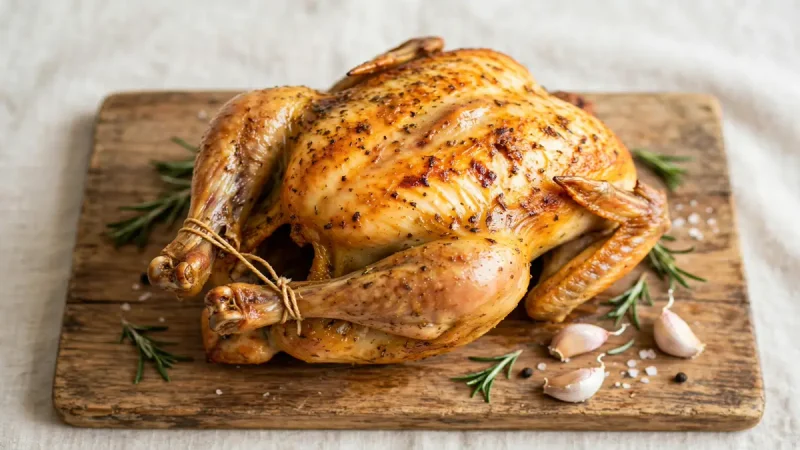

Moreover, the Costco rotisserie chicken is a legend. For $4.99, you get a three-pound bird that feeds a family — a price Costco has held steady for over 15 years, even while losing an estimated $30–40 million a year on it.
In this guide, you will learn why it is so cheap, what is really in it, the full nutrition breakdown, and how to get the most from every bird. Additionally, you will discover smart meal ideas. Let us dig in.
Why Is Costco Rotisserie Chicken So Cheap?
The $4.99 price is a deliberate loss leader. Costco willingly loses money on every chicken because the smell and the deal pull members into the warehouse — where they fill carts with far more profitable items.
To control costs, Costco built a $450 million poultry plant in Fremont, Nebraska in 2019. The facility processes around 2 million chickens weekly, giving Costco direct control from farm to rotisserie. In addition, this vertical integration is how the price stays frozen.
Costco has pledged to keep the $4.99 price, just like its famous $1.50 hot dog combo. Furthermore, the chicken rings up by weight at about $1.66 per pound — but you never pay more than $4.99, even for a bird over three pounds.
Costco Rotisserie Chicken Nutrition Facts
| Nutrient (3-oz serving) | Amount |
|---|---|
| Calories | 140 |
| Protein | 19 g |
| Total fat | 7 g |
| Saturated fat | 2.5 g |
| Sodium | 460 mg |
| Carbohydrates | 0 g |
One three-pound chicken yields about 16 three-ounce servings, or 4–5 meal-sized portions. In addition, that makes each serving cost roughly 25 cents in chicken — among the cheapest complete proteins in any supermarket.
The standout number is sodium: 460 mg per serving, 20% of the daily value. A whole bird carries over 2,300 mg. If you watch blood pressure, remove the skin and go easy on salty sides.
What Is Really in It?
The ingredient list is longer than “just chicken.” Beyond the bird itself, Costco injects a brine solution containing water, salt, sodium phosphates, modified corn starch, and natural flavors. This keeps the meat juicy under heat lamps for hours.
The brining raises sodium more than 600% compared to plain roast chicken. In addition, additives like carrageenan and dextrin help texture and moisture retention. None are unusual in commercial rotisserie chicken, but clean-eating purists should know.
On the positive side, there are zero carbs, high protein, and no breading or frying. Compared to fast food, it is a genuinely reasonable choice. Furthermore, you control what goes with it.
How Costco Keeps Quality High
Chickens stay under the heat lamps for a maximum of two hours. Staff pull and replace birds constantly, which is why the deli area always smells incredible. In addition, chickens are roasted and seasoned in-house throughout the day.
Costco recently switched from hard plastic dome containers to flexible bags. The change cuts plastic use significantly, and the bags fit fridges more easily. Furthermore, most customers prefer the lighter, resealable packaging.
Over 100 million of these chickens sell every year. That volume lets Costco negotiate every input cost aggressively — another reason the price never moves.
Getting the Most From Every Bird
Night one: serve it hot as the centerpiece with vegetables and rice. The skin is crispiest right after purchase, so enjoy it fresh.
In the realm of budget-friendly food options, the Costco rotisserie chicken stands as a testament to strategic pricing and consumer psychology, drawing shoppers into a whirlwind of purchases beyond just the poultry. Similarly, understanding the nutritional value of various foods can significantly influence dietary choices and overall health. For instance, incorporating unique fruits like dragon fruit into your meals not only enhances culinary diversity but also provides a plethora of health advantages. To explore how this exotic fruit can boost your well-being, delve into the myriad of dragon fruit health benefits that can complement your nutrition journey alongside affordable staples like Costco’s chicken. As we navigate the complexities of food choices, it becomes essential to recognize both cost-effectiveness and healthfulness in our diets.
Night two: shred leftover breast meat for tacos, wraps, or salads. In addition, the meat reheats beautifully without drying out, thanks to the brining. An air fryer crisps the skin right back up, too — check an air fryer cooking time chart for exact minutes by portion size.
Night three: simmer the carcass into stock. Cover the bones with water, add onion, carrot, and celery, and simmer for hours. Furthermore, homemade stock from a $4.99 bird is practically free soup base.
Freeze what you cannot use in three days. Shredded meat freezes perfectly for up to three months. Portion it into meal-sized bags for instant future dinners.
Tips for Buying
Go early for the freshest birds. The first batches of the day have the crispiest skin and juiciest meat. In addition, late-day birds are still good but have sat longer.
Check the weight. Since pricing caps at $4.99, a heavier bird is a better deal. Heft a few and pick the weightiest one — it costs the same.
Refrigerate within two hours of purchase. Furthermore, do not leave it in a hot car while you finish errands. Food safety rules apply even to great deals.
Consider delivery carefully. Costco offers same-day delivery in many areas, but fees push the effective price well above $4.99. In-store remains the best value.
Frequently Asked Questions
How much is Costco rotisserie chicken?
$4.99 for a three-pound bird — a price Costco has maintained for over 15 years. You never pay more than $4.99, even if the bird weighs slightly more.
Is Costco rotisserie chicken healthy?
Mostly yes. It is high in protein, zero-carb, and not fried. The main concern is sodium at 460 mg per serving. Remove the skin and balance the rest of your day’s salt to keep it in a healthy range.
Why does Costco lose money on rotisserie chicken?
It is a loss leader — an estimated $30–40 million annual loss that drives foot traffic. Members who come for chicken leave with full carts. Furthermore, the $450 million Nebraska plant keeps costs as low as possible.
How long does it last in the fridge?
Three to four days refrigerated. For longer storage, shred and freeze the meat for up to three months. The carcass makes excellent stock before you discard it.
What are the ingredients?
Whole chicken plus a brine of water, salt, sodium phosphates, modified corn starch, and natural flavors. The brine keeps it juicy but adds significant sodium.
Conclusion
The Costco rotisserie chicken earns its legend: unbeatable price, solid nutrition, and endless meal possibilities. Grab one on your next warehouse run.
For more food guides, explore our food and beverage section.

