
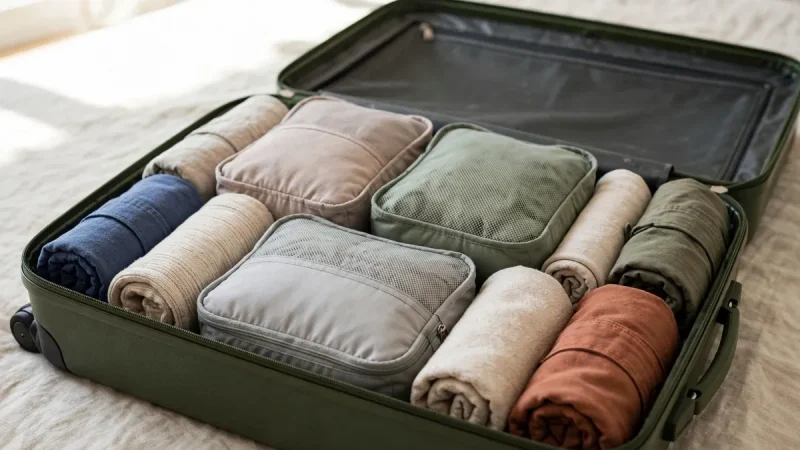

How to Pack a Suitcase Efficiently: Step-by-Step Space-Saving Method
You know that sinking feeling at the airport check-in desk, right? Your case will not close, so you sit on it in public. Meanwhile, your shirts look crushed before your trip even starts. Learning how to pack a suitcase efficiently fixes that stress for good. Indeed, smart packing is a skill, not a talent. So anyone can learn it with a clear method.
This guide walks you through one simple system, step by step. Firstly, you will plan and edit what you take. Secondly, you will roll, fold, and bundle each item well. Thirdly, you will place every piece in the right spot. As a result, your case closes easily and your clothes arrive fresh. Ready to pack like a calm, seasoned traveller?
Why does smart packing save you so much stress?
A well-packed case saves time at every stage of your trip. For example, you find outfits fast because everything has a place. Also, you lift less weight because you carry only useful items. Consequently, you move through stations and airports with real ease. In fact, good packing even protects fragile items from damage.
Poor packing, in contrast, creates chaos from day one. Clothes spill out whenever you open the lid. Shoes soil clean shirts, and toiletries leak onto trousers. Therefore, a few calm minutes at home prevent daily frustration abroad. Still, most people pack in a rush the night before. Does that rushed routine sound painfully familiar to you?
What should you do before you touch the suitcase?
Great packing starts long before you open the case. Firstly, check your destination, your dates, and your planned activities. Then picture each day and what it truly demands. For instance, a beach day needs very different gear from a museum day. Thus, your plan shapes every item you choose later.
How can you check the weather and your plans first?
Weather decides fabrics, layers, and shoe choices more than fashion does. So check a reliable forecast about three days before departure. You can compare forecasts on the best weather websites for a clearer picture. Also, save your bookings inside helpful apps for quick access. Those best travel apps for your next trip keep tickets and maps in one place.
Next, scan your itinerary for special dress codes or events. A smart dinner, for example, may need one polished outfit. Meanwhile, a hiking day calls for sturdy shoes and layers. Indeed, one honest itinerary check prevents most overpacking mistakes. Write those needs down before you open any drawer.
How do you build a packing list for a suitcase you will actually follow?
A written list turns vague intentions into firm decisions. Start your packing list for a suitcase about a week early. Then add items as they come to mind each day. Also, group the list into clothes, shoes, toiletries, and documents. As a result, you spot gaps and duplicates very quickly.
Afterward, lay every listed item on your bed or floor. Look at the full pile with honest, critical eyes. Does each piece earn its space inside your case? Cut at least three items, because travellers rarely miss them. Indeed, that final edit is where real space appears.
How does the 5-4-3-2-1 packing rule work?
The 5-4-3-2-1 packing rule gives beginners a simple starting formula. Basically, you pack five tops and four bottoms for one week. Then you add three pairs of shoes and two hats. Finally, you add one set of accessories, like sunglasses. Of course, you can adjust those numbers for your trip.
| Number | Item | Smart Choice |
|---|---|---|
| 5 | Tops | Mix tees, shirts, and one smart layer |
| 4 | Bottoms | Two trousers, one skirt or shorts, one jeans |
| 3 | Shoes | Walking shoes, smart pair, sandals or trainers |
| 2 | Hats or covers | Sun hat and a light scarf or cap |
| 1 | Accessory set | Sunglasses, belt, and simple jewellery |
Underwear and socks sit outside that formula, so count them separately. Pack one clean set for each day, plus one spare. Similarly, sleepwear needs just one light set for most trips. Therefore, the rule stays simple and easy to remember. Could a simple count really end your overpacking habit?
What makes a capsule wardrobe for travel packing so powerful?
A capsule wardrobe for travel packing relies on mix-and-match pieces. Every top, for instance, should match at least two bottoms. Neutral colours like navy, grey, beige, and white help greatly. Also, one accent colour keeps outfits lively without extra bulk. Consequently, five tops can create ten different daily outfits.
Fabrics matter just as much as colours in a capsule. Merino, linen blends, and quick-dry synthetics resist odours well. In contrast, thick denim and bulky knits eat precious space. So choose thin layers that you can stack for warmth. Indeed, layering beats one heavy coat on most trips.
Also, test each outfit at home before you pack it. Wear the full look, including shoes and your chosen belt. Then check comfort while sitting, walking, and climbing stairs. If one piece only works with one outfit, leave it. Clearly, versatile pieces always beat single-use fashion items.
Step 1: How should you lay everything out and edit ruthlessly?
Firstly, place every candidate item in one clear space. Group tops together, then bottoms, then shoes and small items. This layout shows duplicates that drawers usually hide from view. For example, three similar black tees suddenly look very obvious. So remove the extras before they reach your case.
Next, hold each item and ask one blunt question. Will you wear or use this at least twice? If the honest answer is no, it stays home. Admittedly, that rule feels harsh for sentimental favourite pieces. Still, your shoulders will thank you at the airport. Overall, ruthless editing is the true first packing step.
Step 2: What wins the roll vs fold clothes packing debate?
The roll vs fold clothes packing debate confuses many first-time packers. Rolling suits soft, casual clothes like tees and underwear best. Folding, however, suits structured items like blazers and shirts. Indeed, the smartest packers combine both methods in one case. So stop searching for one winner and use both.
| Method | Best For | Main Benefit | Watch Out For |
|---|---|---|---|
| Rolling | Tees, underwear, gym wear, knitwear | Saves space and fills gaps | Thin fabrics can still crease |
| Folding | Shirts, blazers, dresses, trousers | Keeps shape and looks neat | Takes more flat space |
| Bundling | Formal and wrinkle-prone clothes | Reduces sharp creases greatly | Takes practice at first |
When should you roll, and when should you fold?
Roll soft items tightly, then smooth them with your hands. Tight rolls squeeze out air and shrink each piece. Fold structured items along their natural seams and lines instead. That approach, in fact, protects collars, cuffs, and pleats well. Meanwhile, place folded items flat inside a separate cube.
Also, roll kids clothes and casual layers without any worry. Their fabrics forgive creases and bounce back very quickly. Delicate dresses, however, deserve folding or careful bundling instead. Therefore, match the method to the fabric every time. Simple matching like that prevents most arrival-day ironing.
Step 3: Packing cubes how to use them like a pro?
Many travellers buy cubes, yet few use them well. Learning packing cubes how to use them properly changes everything. Firstly, assign each cube one clear job or category. One cube holds tops, while another holds underwear and socks. Consequently, you unpack in minutes at your hotel room.
Secondly, fill each cube fully, but never force the zip. A full cube holds its shape and stacks neatly. Then place cubes side by side like bricks in a wall. Also, keep one small cube for dirty laundry later. As a result, clean and worn clothes never mix together.
What are the compression packing cubes benefits you feel first?
The compression packing cubes benefits show up the moment you zip. A compression zip squeezes extra air from soft clothes. Thus, bulky jumpers and hoodies shrink into flat, neat packs. Also, compressed cubes stack firmly and stop items shifting around. Indeed, shifting clothes cause wrinkles and messy, jumbled cases.
Still, compression does not reduce the weight of your case. It only reduces volume, so watch your total load carefully. Likewise, avoid compressing delicate fabrics for very long periods. Those pieces can hold creases after hours under tight pressure. Overall, compress casual layers and leave formal pieces uncompressed.
Step 4: How does the bundle wrapping method packing trick work?
The bundle wrapping method packing approach protects formal clothes beautifully. You wrap each garment around a soft central core. That core, for example, can be a pouch of underwear. Because each layer curves gently, sharp fold lines never form. Consequently, shirts and dresses emerge smooth and ready fast.
Start with the largest, most structured item on the bottom. Lay a jacket flat, then add trousers and dresses above. Then place smaller items toward the centre of the pile. Finally, fold each outer layer inward over the core. Admittedly, your first bundle may look slightly untidy. Practice, however, makes each attempt neater and much quicker.
Step 5: How to pack shoes in a suitcase without mess or waste?
Shoes cause two problems: dirt and wasted hollow space. Learning how to pack shoes in a suitcase solves both problems. Firstly, clean the soles, then slip each pair into bags. Old shower caps or simple cloth bags work perfectly well. Also, place shoes along the edges of your case.
Here is a favourite trick many frequent flyers swear by. Simply stuff socks inside shoes packing tip style, every time. Rolled socks, chargers, and belts fit inside that hollow space. Thus, shoes keep their shape and no corner goes unused. Similarly, underwear can fill the gaps around each heel.
Wear your heaviest pair during travel whenever you can. That choice, in fact, frees striking space inside your case. Meanwhile, limit most trips to three pairs at most. One pair walks, one pair dresses up, one pair relaxes. Indeed, few trips truly demand a fourth shoe option.
Step 6: Why should you place heavy items near wheels suitcase style?
Balance decides whether your case rolls smoothly or fights you. Always place heavy items near wheels suitcase position, low and central. Books, shoes, and toiletry bags belong near that wheeled end. As a result, the case stands upright without tipping over. Also, rolling feels lighter because the weight sits correctly.
In contrast, heavy items near the handle cause constant strain. The case tips backward and drags against your heels. Therefore, build your base layer with the heaviest pieces first. Then add medium cubes above that firm, stable base. Finally, finish with light, soft items on the very top. That order, clearly, protects fragile pieces from crushing pressure.
Step 7: How does vertical packing like files method help at the hotel?
The vertical packing like files method borrows an office idea. You stand rolled or folded clothes upright, row by row. Then you see every item at once from above. For instance, think of shirts lined up like files in a drawer. Consequently, you pull one item without disturbing the rest.
This method works especially well inside packing cubes and carry-ons. Open the cube, scan the rows, then grab your choice. Also, repacking takes seconds because the order stays visible. Indeed, parents love this system for kids clothes too. Each child gets one cube with neat, visible rows. Could unpacking ever feel simpler than one quick glance?
How to save space in a suitcase using gaps, corners, and layers?
Experts agree that wasted air is the real enemy. Learning how to save space in a suitcase means hunting gaps. Fill corners with belts, scarves, chargers, and rolled underwear first. Also, slide flat items like documents along the case walls. Thus, every hollow and edge starts earning its keep.
- Roll belts and place them around the inner edge.
- Slide books and tablets flat against the hard shell.
- Tuck chargers and cables inside shoes or small pouches.
- Fill hat crowns with socks to hold their shape.
- Wear your bulkiest jacket and boots while travelling.
- Decant toiletries into small travel bottles, never full sizes.
Also, choose travel sizes and solid toiletries whenever you can. Solid shampoo bars, for example, skip liquid limits and leaks. Meanwhile, a small pouch keeps all liquids together for security. Therefore, one leak never ruins a full case of clothes. Smart small swaps like these add up surprisingly fast.
How to pack without wrinkles and still arrive looking sharp?
Wrinkles form from sharp folds, pressure, and long confinement. Learning how to pack without wrinkles means fighting all three causes. Firstly, favour knit and blended fabrics over pure linen. Those fabrics, in fact, recover quickly after a short hang. Secondly, unpack and hang key items as soon as you arrive.
Tissue paper between folded layers reduces friction and creasing noticeably. Also, button shirts fully and fold them along existing seams. Then place those shirts on top, away from heavy pressure. A quick bathroom steam, meanwhile, relaxes stubborn creases overnight. Hang the garment near a hot shower for twenty minutes. Indeed, steam plus gravity fixes most travel wrinkles easily.
Still, some fabrics crease no matter how carefully you pack. Accept that truth and pack one easy-care backup outfit. That backup, for instance, covers you for an early meeting. Consequently, one creased shirt never ruins an important first morning. Smart travellers plan for wrinkles instead of fearing them.
Worked example: How to pack a suitcase for a week, day by day?
Theory helps, but a real example makes everything click. Here is exactly how to pack a suitcase for a week abroad. Imagine seven days in Europe during mild spring weather. Your case is one medium checked suitcase plus a backpack. Ready to build the full loadout together, step by step?
Start with the capsule list from the rule above. Pack five tops, four bottoms, and three shoe pairs total. Add seven underwear sets, seven sock pairs, and one sleep set. Also add one warm mid-layer and one light rain jacket. Planning days across the top 15 places to visit in Europe needs exactly this flexibility.
How do the seven days of outfits fit together?
- Day 1, travel day: Wear jeans, your warm layer, and walking shoes.
- Day 2, sightseeing: Wear a tee, trousers, and those same walking shoes.
- Day 3, museums: Choose a shirt, chinos, and your smart shoe pair.
- Day 4, day trip: Repeat trousers with a fresh top and scarf.
- Day 5, markets: Wear shorts or a skirt with a light top.
- Day 6, smart dinner: Dress up one outfit with your accessory set.
- Day 7, travel home: Wear the warm layer and walking shoes again.
Notice how each bottom appears at least twice in that plan. Repeating bottoms, indeed, is the secret behind light travel. Also, each top matches at least two different bottoms easily. Therefore, seven days need surprisingly few individual clothing pieces. Your case, as a result, still holds souvenirs later.
Now place everything inside the case using the steps above. Shoes and toiletries form the heavy base near the wheels. Cubes with rolled tops and underwear sit in the middle. Then your file-packed cube stands upright for easy daily access. Finally, the bundled smart outfit rests flat on top. Zip slowly, then weigh the case before you leave.
How do you adapt the same system for other destinations?
Destinations change the details, but the system stays the same. Beach trips swap trousers for shorts and swim layers instead. City breaks in Dubai, for instance, demand breathable, modest layers. Those layers suit the many outdoor activities in Dubai during cooler morning hours. Likewise, they cover visits to the unique attractions in Dubai with dress expectations.
Cold trips need one extra trick inside the same system. Pack thermal base layers and roll them very tightly. Wear your heaviest boots and coat during the journey itself. A festive break at the Christmas markets in Copenhagen, Denmark rewards that approach greatly. Indeed, warm layers packed flat beat one giant suitcase coat.
What are the biggest packing mistakes to avoid on any trip?
Even careful packers repeat a few classic errors every year. The biggest packing mistakes to avoid start with just-in-case items. Extra outfits for imaginary events waste space and add weight. Also, packing the night before invites panic and forgetfulness. Therefore, start early and follow your written list calmly.
- Packing full-size toiletries instead of small travel versions.
- Bringing shoes that match only one single outfit.
- Folding everything, even soft tees that roll better.
- Leaving no empty space for souvenirs on the return.
- Placing liquids loosely among clothes without a sealed pouch.
- Forgetting chargers, documents, and daily medicines in the case.
Another common error involves valuables buried inside checked luggage. Keep passports, medicines, and electronics in your hand luggage always. Those best travel credit cards also belong safely in your personal bag. Consequently, a delayed suitcase never becomes a true emergency. Indeed, that one habit separates calm travellers from stressed ones.
Finally, many people ignore the return journey while packing. Dirty clothes expand, and souvenirs need real protected space. So leave roughly one quarter of your case empty. Also, pack a light laundry bag for worn items. As a result, repacking at the hotel takes minutes only.
What should your final check include before you zip the case shut?
A calm final check catches small problems before departure. Firstly, walk through your list and tick each item off. Then check documents, chargers, medicines, and your payment cards twice. Also, confirm liquids sit inside one sealed, accessible pouch. Indeed, security checks move faster with that simple order.
Next, lift the case and roll it across your hallway. Does it tip, drag, or pull toward one side? If so, move heavy items lower and closer centrally. Then close the lid without forcing or sitting on it. A forced zip, in fact, often breaks during transit. Clearly, a case that closes easily is packed correctly.
Finally, photograph your packed case and your item list. That photo helps greatly if luggage ever goes missing. Also, snap your documents and keep copies on your phone. Therefore, you hold proof of contents during any claim process. Now zip up, breathe out, and enjoy your trip fully.
Frequently asked questions
How many packing cubes do you really need for one suitcase?
Most travellers manage well with three or four cubes total. One large cube holds tops, while one medium holds bottoms. Also, one small cube organises underwear, socks, and sleepwear neatly. Compression cubes, in fact, suit one bulky layer only. Therefore, start small and add cubes only if needed.
Is rolling really better than folding for every type of clothing?
No, rolling suits soft and casual fabrics best of all. Structured shirts, blazers, and dresses keep shape through folding instead. Bundling, meanwhile, protects formal pieces from sharp crease lines. So combine all three methods based on each fabric type. Indeed, mixed methods beat one rigid rule every time.
How early should you start packing before a trip?
Start your list about one week before you travel. Then lay out and edit items two days before departure. Pack the case itself one day before you leave home. As a result, you gain time for laundry and replacements. Rushed packing, in contrast, causes most forgotten essentials.
Can you pack a full week in carry-on luggage only?
Yes, you can, especially with a tight capsule wardrobe plan. Roll soft clothes, compress one cube, and wear bulky items. Also, repeat bottoms and limit shoes to two pairs total. The worked example above adapts easily to carry-on size. Indeed, many travellers now prefer that lighter, faster style.
What is the fastest way to fix wrinkles without an iron?
Hang the garment in a steamy bathroom for twenty minutes. Gravity and steam together relax most light creases quickly. Also, smooth the fabric gently with clean, damp hands afterward. Then hang the item overnight in an airy spot. Most wrinkles, consequently, fade before your morning plans begin.
Where should toiletries go inside a packed suitcase?
Place toiletries inside a sealed pouch near the top. That spot, in fact, makes security checks fast and simple. Also, keep the pouch away from light-coloured clothing layers. A leak, therefore, harms one pouch instead of many outfits. Clearly, separation protects both cleanliness and your peace of mind.
Efficient packing is just one piece of the travel puzzle; once you’ve mastered the art of suitcase organization, it’s crucial to complement it with thorough preparation of your international travel essentials. After all, what good is an impeccably packed bag if you arrive at your destination without the necessary documentation? In today’s global landscape, ensuring you have all required paperwork is paramount. From your passport and visa to travel insurance and proof of funds, each document plays a critical role in ensuring a smooth journey. To facilitate this process, refer to the international travel documents checklist that provides a comprehensive overview of everything you need to carry abroad, allowing you to travel with confidence and peace of mind.

