
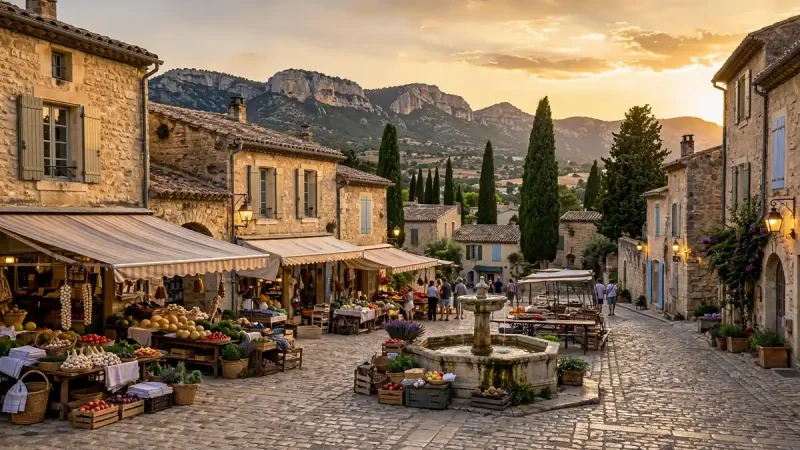

You arrive on market morning, and Saint-Rémy immediately slows you down. Stalls fill the old streets with melons, lavender, and warm bread. Meanwhile, cicadas hum from the plane trees above the cafés. You meant to rush off sightseeing, honestly. Instead, you order another coffee and watch the town wake up.
That pause teaches you the real secret here. The best places to visit near St Remy de Provence sit minutes away, not hours away. Indeed, Roman ruins, cliff villages, and olive valleys all circle this one small base. So you can explore deeply each day and still return for dinner.
Picture this guide as a story, not a checklist. You will follow one relaxed route through Provence, day by day. For example, one morning belongs to ancient stones, while another belongs to mountain villages. By the end, you will understand why painters, poets, and travellers keep returning.
What Makes Saint-Rémy Itself So Hard to Leave?
Start at home, because Saint-Rémy rewards anyone who lingers. Narrow lanes twist past stone houses, small galleries, and shaded squares. In fact, every corner seems designed for a slow photograph. You notice fountains first, then you notice how locals actually use them daily.
Wednesday and Saturday bring the famous market, so arrive early. Farmers sell goat cheese, tapenade, honey, and bunches of dried lavender. Meanwhile, bakers pull fougasse from ovens while musicians settle near the church steps. Taste something small at each stall, because grazing here counts as research.
Art lovers feel the pull especially strongly in Saint-Rémy. Vincent van Gogh spent a year here, painting some of his best-loved work. Consequently, the town still carries his colours in its light and landscapes. Cypress trees bend in the wind, and suddenly those swirling skies make perfect sense.
Use the town as your evening anchor, whatever you do. Restaurants spill onto terraces as the heat fades from the stone. Therefore, plan big outings for mornings and late afternoons instead. Midday belongs to long lunches, shaded gardens, and a well-earned rest.
Glanum, Where Rome Still Stands in the Olive Groves
Walk south from town, and history appears almost without warning. Glanum began long before Rome, beside a sacred healing spring. Later, Roman builders added temples, baths, forums, and elegant houses. Today, two superb monuments still stand guard at the entrance road.
Locals call those survivors Les Antiques, and they photograph beautifully at sunrise. One is a triumphal arch, while the other is a tall mausoleum. Indeed, their carved stone has survived roughly two thousand years of weather. Stand beneath them quietly, because the scale feels more powerful in silence.
Inside the site, the story unfolds street by street. You can trace shop fronts, house floors, and the old sacred spring. For instance, mosaic fragments hint at wealth that once filled these rooms. Guides and panels explain each layer, so bring your curiosity and comfortable shoes.
Combine Glanum with the Saint-Paul asylum nearby for deeper context. Van Gogh stayed there, painting views you can still recognise today. Consequently, one short walk links Roman Provence and modern art history. Few day trips from St Remy de Provence pack so much into so little distance.
Following Van Gogh Through Fields He Painted
Ready to walk inside a painting for an afternoon?
A marked trail connects the town, the asylum, and surrounding viewpoints. Panels along the route reproduce paintings beside the scenes that inspired them. Meanwhile, olive groves and cypress lines frame almost every stop. You do not need art training here, because the landscape explains itself.
Go late in the day, when the light turns golden. Shadows lengthen across the Alpilles, and the stone glows softly pink. In contrast, midday light flattens colours and drains your energy fast. Photographers know this trick already, so copy them and wait for evening.
Pack water, a hat, and a little patience too. Some stops feel quiet, almost plain, until you look twice. Then a church tower aligns, a mountain ridge sharpens, and everything clicks. That slow reveal makes this walk one of the loveliest things to do near Saint Remy de Provence.
Finish back in town with ice cream near the main square. Linden and lavender flavours suit the place surprisingly well. Afterwards, browse the small museum and galleries if energy remains. Art days should end gently, never with a sprint.
Les Baux-de-Provence, the Village Carved From a Cliff
Drive twenty minutes, and the road starts climbing into bare rock. Les Baux clings to a rocky spur high above the plains. Once, powerful lords ruled this fortress village and defied counts for generations. Today, visitors wander its lanes, castle ruins, and huge viewpoints.
Arrive before the day-trip crowds, especially in summer months. Early light suits the pale stone, and parking stays simpler then. First, climb toward the ruined château for the widest panorama. You can see olive valleys, Alpilles ridges, and distant Camargue wetlands from there.
Below the village sits a very different kind of wonder. Carrières de Lumières fills a former quarry with moving art and music. Huge images wash across cool stone walls in complete darkness. In fact, the underground chill feels glorious after Provencal summer heat.
Book those quarry tickets ahead during busy weeks, though. Timed entry keeps crowds manageable, yet popular slots still disappear quickly. Similarly, village restaurants fill fast around lunch, so reserve or eat early. Smart timing turns Les Baux from stressful to unforgettable.
On the drive home, stop at an olive mill if signs tempt you. The Alpilles produce peppery oils that locals treat with real pride. Tasting notes here mention artichoke, grass, and green almonds, surprisingly. Buy one small bottle, because suitcase space always vanishes eventually.
Quiet Alpilles Villages You Will Want to Keep Secret
Eygalières sits east of Saint-Rémy, calm and quietly elegant. Stone houses climb toward a ruined castle and a tiny chapel. Meanwhile, cafés stay local in feel, even during high season. You come here for atmosphere, not for a long attraction list.
Fontvieille offers a different pleasure, just west of town. Writer Alphonse Daudet found inspiration near its famous windmill on the hill. A short path leads up through pine trees and dry grass. Consequently, sunset watchers gather there with picnics and cameras.
Mouriès claims olive fame, and locals defend that title proudly. Groves surround the village, and mills welcome visitors for tastings. For example, autumn brings harvest energy and fresh, grassy new oil. Ask politely about production, because growers love explaining their craft.
Maussane-les-Alpilles works beautifully as a lunch stop between sights. Its main square holds cafés, fountains, and plenty of people-watching. Then Paradou charms walkers with quiet lanes and a small miniature-village museum nearby. None of these stops demands hours, yet each adds real texture.
Linking these Alpilles villages makes a perfect lazy loop day. Drive little, walk slowly, and eat very well in between. If you love slow European bases, our roundup of the most romantic places in Europe to visit offers similar inspiration. Provence simply does romance without trying too hard.
Arles, a Bigger Day With Roman Giants and River Light
Arles deserves a full day, so give it one properly. The drive stays under an hour through flat, bright countryside. Once there, a huge Roman arena anchors the old centre. Nearby, an ancient theatre, baths, and underground passages complete the picture.
Van Gogh followed this same river light long before you. He painted café terraces, bridges, and starry nights along the Rhône here. Therefore, Arles pairs naturally with your Saint-Rémy art trail. Two towns, one painter, and two very different moods await you.
Modern Arles adds photography festivals, galleries, and a striking contemporary arts quarter. The Luma tower twists above old railway yards in mirrored aluminium. In contrast, the medieval cloister nearby offers silence and cool stone shade. That mix keeps Arles feeling alive, not frozen in its past.
Plan your Arles timing around market day if possible. Saturday market stretches through the boulevards with food, fabrics, and flowers. Still, watch your belongings in crowds, as in any busy market. Afterwards, escape to a quiet café square for a long lunch.
Driving back at dusk feels especially sweet after Arles. Fields glow, villages light up, and Saint-Rémy welcomes you home. Readers planning wider routes may enjoy our guide to places to visit in Montenegro from Dubrovnik next. Southern Europe rewards this same slow, base-and-explore rhythm everywhere.
L’Isle-sur-la-Sorgue and Avignon, Two Easy Extensions
Antique hunters, clear a morning for L’Isle-sur-la-Sorgue immediately. Clear green canals run through this town of waterwheels and antique shops. Sunday market days add brocante stalls along the riverbanks too. Indeed, browsers can lose hours among old linen, posters, and furniture.
Arrive hungry, because riverside cafés serve long, lazy lunches here. Trout, salads, and local rosé appear on many menus seasonally. Meanwhile, children feed ducks while dealers polish brass by the water. The whole town feels like a market and a holiday combined.
Avignon asks for more time, yet rewards a half day too. Its papal palace dominates the skyline with serious medieval weight. Walk the palace first, then cross toward the famous broken bridge. Finally, pause in the palace gardens for views across the Rhône.
Choose between these extensions based on your mood, honestly. Antiques and canals suit dreamers, while palaces suit history lovers. Either way, both rank among the classic Provence villages near St Remy alternatives nearby. Our list of the most important places to visit in Europe shows similar heritage depth. Avignon, in particular, earns its place on any history-led route.
How to Plan Your Saint-Rémy Days Without Rushing
Firstly, base yourself in town for at least three nights. Two nights feels tight once day trips start multiplying fast. Secondly, group sights by direction each day to cut driving. East brings Eygalières, west brings Fontvieille, and south brings Glanum.
Rent a car if your budget allows it, ideally. Buses exist, although rural schedules can limit spontaneous village hopping. Cycling suits confident riders, because distances stay short between many villages. Still, summer heat punishes midday rides, so start rides very early.
Use this simple rhythm as your daily template:
- Start early with one headline sight before crowds arrive.
- Pause for a long market or café lunch nearby.
- Add one gentle village or viewpoint later each afternoon.
- Return to Saint-Rémy for dinner on a terrace.
That rhythm protects your energy across several days easily. You see plenty, yet you never feel chased by your itinerary. Consequently, memories settle properly instead of blurring into one rush. Travel feels richer when afternoons breathe a little.
What Changes With the Seasons?
Season changes the plan more than distance ever will. Spring brings poppies and almond blossom across the Alpilles foothills. Summer brings lavender nearby, festivals, and serious midday heat. Autumn, meanwhile, brings harvests, softer light, and quieter lanes everywhere. Winter stays mild often, although mistral winds can bite sharply.
For wider planning, browse our guide to the top 15 places to visit in Europe afterwards. Then compare Provence with Yorkshire in our places to visit near Leeds, West Yorkshire guide. Contrasts help you choose your next base wisely.
Couples planning something special should also peek at the best places to visit in Europe for Valentine’s Day roundup. Saint-Rémy suits romance quietly, without crowds or grand gestures. Sometimes a market morning says more than any staged experience.
Finally, leave one slot completely empty in your plan. A baker may recommend a village you never considered. Or a festival poster may rewrite your afternoon entirely, happily. Those unplanned hours often become the stories you retell most.
One Last Morning Before You Leave Provence
Wake early on departure day and walk the town once more. Shutters open, café cups clink, and swallows cross the square. Indeed, Saint-Rémy looks loveliest before the day-trippers arrive. Buy lavender, oil, and biscuits for people back home then.
You came searching for places to visit near St Remy de Provence, remember. What you found instead was a way of travelling slowly. Glanum taught patience, Les Baux taught timing, and Arles taught light. Each village added flavour, quite literally, to every single day.
So promise yourself one thing before the road home. Do not squeeze Provence into a frantic checklist next time. Instead, pick a beautiful base, explore gently, and return each evening. If that approach appeals, our places to visit in the East Midlands guide uses the same idea. Good bases make good trips, wherever you travel next.

