
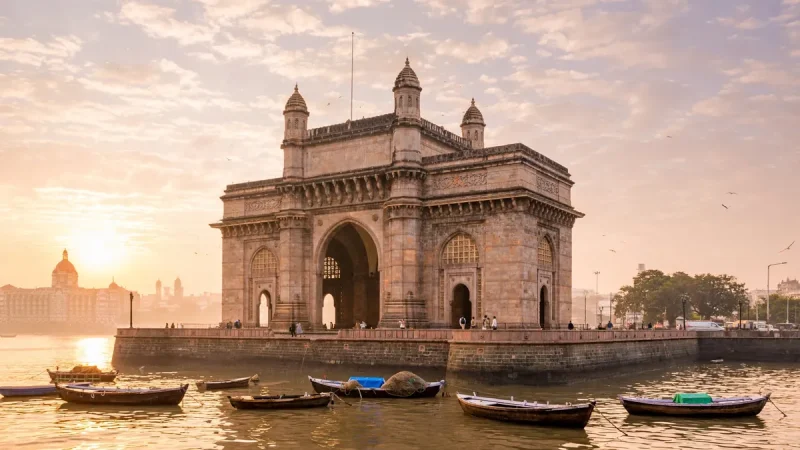

Mumbai does not do subtle. It hits you with sea air, honking taxis, and the smell of roasting corn the moment you step outside. Then, just when you think it is pure chaos, a 150-year-old stone archway stops you cold.
That is the magic of this city: extremes sharing the same street. Colonial landmarks stand beside art-deco apartments, ancient caves hide inside a national park, and fishermen mend nets within sight of billion-dollar skylines. No wonder travelers call Mumbai overwhelming and unforgettable in the same breath.
This is not another dry directory of monuments. It is a local-feeling list of the best places to visit in Mumbai for cultural heritage and scenic beauty, with honest tips on what each one is actually like. Let us go.
How to Use This List (Pick Your Pace)
Only have one day? Hit numbers 1, 4, and 5, because they cluster in South Mumbai and deliver maximum wow per hour. Got three days? Do the whole list in order, since it flows geographically.
Heritage nerd? Prioritize 1, 2, 3, 4, and 7, which trace Mumbai from ancient caves to colonial grandeur. Scenery chaser? Numbers 5, 8, and 9 give you sea, forest, and skyline. There is no wrong answer here, only your answer.
And if this list gives you the India travel bug, you are in good company. Our Kerala travel guide and Shimla-Kullu-Manali guide cover two completely different sides of the country.
1. Gateway of India: Where Every Mumbai Story Starts
You have seen it in a hundred photos, yet nothing prepares you for the scale. This basalt arch rises 26 meters over the Apollo Bunder waterfront, and it has watched over Mumbai’s harbor for a century. Stand beneath it at sunrise, because the crowds have not woken up and the light turns the stone gold.
The Gateway was built to welcome British royalty, although today it welcomes everyone: street photographers, chatting couples, and tourists from every continent. Ferries bob nearby, ready to carry you to the Elephanta Caves, which is your next stop.
Do not miss: the Taj Mahal Palace hotel standing guard right beside it. Even if you are not staying, walk through the lobby, since the architecture alone justifies the detour.
2. Elephanta Caves: A Thousand Years in Stone
An hour’s ferry ride from the Gateway lies one of India’s most astonishing heritage sites. The Elephanta Caves are rock-cut temples carved over a thousand years ago, and their massive Shiva sculptures still stop visitors mid-step. The three-faced Maheshmurti alone is worth the crossing.
Here is the honest version: the ferry is basic, the climb involves steps, and hawkers line the path. Go anyway, because few experiences match emerging from a dark cave into a courtyard of ancient stone gods. Morning ferries beat the heat, so catch an early one.
Do not miss: the small museum near the entrance, which explains the carvings’ stories. Ten minutes there transforms the rest of your visit.
Love ancient rock architecture? Our Udupi and Mangalore guide explores more of coastal India’s heritage treasures.
3. Chhatrapati Shivaji Maharaj Terminus: A Train Station Like No Other
Yes, a train station made this list, and you will understand why in five seconds. CSMT is a Victorian Gothic fantasy of turrets, stained glass, and stone carvings, and it still handles millions of commuters daily. It is a UNESCO World Heritage site that actually works for a living.
Come at dusk when the building glows under floodlights. Watch the organized chaos of evening rush hour from the plaza outside, because the human river flowing through those arches is pure Mumbai theater. Photographers, this is your golden hour.
Do not miss: the small heritage gallery inside, which tells the station’s 130-plus-year story through photos and artifacts.
4. Colaba Causeway and the Fort District: Colonial Grandeur on Foot
This is Mumbai’s great walking neighborhood, where every block layers another century. Start at Colaba Causeway for street shopping and old cafes, then wander north into the Fort district’s grand colonial streets. The architecture shifts from Victorian to Art Deco within a few blocks.
Pop into Leopold Cafe for the legend, although locals will steer you to quieter Irani cafes for better bun maska. The Kala Ghoda arts precinct rewards slow wandering, with galleries and boutiques tucked into heritage buildings. Weekends bring street fairs and extra energy.
Do not miss: the Rajabai Clock Tower near the university, which chimes over one of Mumbai’s prettiest heritage precincts.
Planning more city explorations? Our Hyderabad travel guide rounds out your urban India plans.
5. Marine Drive: The Queen’s Necklace at Sunset
Every Mumbaikar has a Marine Drive memory, and you are about to make yours. This 3-kilometer seaside promenade curves along the bay, and at night the streetlights trace a glowing arc that earned its nickname: the Queen’s Necklace.
Come for sunset and stay for the vibe. Families picnic on the tetrapods, couples claim spots along the railing, and the sea breeze washes the day’s heat away. It costs nothing and delivers everything, which might be Mumbai’s best deal.
Do not miss: walking the full curve from Nariman Point to Chowpatty Beach, then rewarding yourself with street food at the Chowpatty end.
6. Crawford Market and the Bazaars: Mumbai With All Senses On
If heritage sites are Mumbai’s memory, the bazaars are its pulse. Crawford Market, housed in a stunning colonial building, explodes with fruit pyramids, spice sacks, and flower garlands. The building itself deserves as much attention as the goods inside.
Nearby, the narrow lanes of Bhuleshwar and Zaveri Bazaar dive deeper. Jewelers, textile merchants, and sweet shops pack streets that have traded the same way for generations. It is chaotic, fragrant, and utterly absorbing, although first-timers should keep valuables secure and comfortable shoes on.
Do not miss: tasting your way through the market lanes. Try fresh sugarcane juice, roasted peanuts, and whatever the locals are queueing for, because the queue is never wrong.
Market lovers should also see Bangalore to Mysore by road, which strings together Karnataka’s best bazaar towns and palaces.
7. Chhatrapati Shivaji Maharaj Vastu Sangrahalaya: The Museum Worth Half a Day
Mumbai’s premier museum sits in a gorgeous domed heritage building near the Gateway, and it earns every minute you give it. Galleries span ancient Indian sculpture, miniature paintings, decorative arts, and natural history. The collection is deep without being exhausting.
Give it at least two hours, because rushing wastes the experience. The sculpture gallery alone justifies the visit, with stone deities that rival anything at Elephanta. Kids love the natural history section, so it works for families too.
Do not miss: the museum shop, which stocks genuinely good crafts at fair prices. It beats most tourist shops in the city.
8. Sanjay Gandhi National Park: Wilderness Inside a Megacity
Here is Mumbai’s best-kept secret: a real forest inside the city limits. Sanjay Gandhi National Park sprawls across the northern suburbs with leopards, deer, and 250-plus bird species. The contrast with the metropolis outside its gates feels surreal.
The ancient Kanheri Caves hide within the park, adding 2,000-year-old Buddhist rock-cut architecture to your nature walk. Climb to the highest cave for a viewpoint over the forest canopy, because the panorama redefines what you thought Mumbai was.
Do not miss: the early-morning bird activity. Arrive at opening time with binoculars if you have them, since the forest wakes up spectacularly.
Prefer mountain scenery? Our North Sikkim guide and summer escapes in Uttar Pradesh cover the Himalayan side of India.
9. Bandra-Worli Sea Link and Bandra’s Street Art: Modern Mumbai
End where Mumbai is heading. The Bandra-Worli Sea Link arcs across the bay in a sweep of cable-stayed engineering, and driving across it at night feels like flying. It is the city’s boldest statement about its future.
Then explore Bandra itself, Mumbai’s coolest neighborhood. Chapel Road and Veronica Street burst with murals, while sea-facing promenades like Carter Road offer sunset views without the South Mumbai crowds. Old Portuguese-style bungalows hide between trendy cafes, layering yet another era onto the city.
Do not miss: the murals around Mount Mary, which change often enough to reward repeat visits. Bring your camera and comfortable shoes.
10. Haji Ali Dargah: Faith on the Sea
Few sights match this one: a white mosque-tomb rising from the sea at the end of a long causeway. Haji Ali Dargah sits on an islet off Worli, reachable on foot at low tide when the walkway emerges from the waves. The journey itself feels like a pilgrimage.
Visit on a weekday morning to dodge the biggest crowds, and check tide timings before you go, because high tide closes the causeway. The shrine welcomes visitors of all faiths, although modest dress and respectful behavior matter here more than anywhere.
Street vendors along the approach sell flowers and offerings, adding color and fragrance to the walk. Do not miss: the view back toward the city skyline from the shrine platform, since Mumbai looks almost serene from the water.
How to String It All Together
Three days is the sweet spot for this list. Spend day one in South Mumbai covering the Gateway, Elephanta, CSMT, and Colaba, since they cluster tightly. Day two takes Marine Drive, the museum, and the bazaars at a deliciously slow pace. Day three heads north for the national park and Bandra, ending with the Sea Link at night.
Use local trains for long hops, because they beat traffic dramatically, although avoid rush hours with luggage. Auto-rickshaws and taxis handle short distances, and ride-hailing apps work reliably across the city. Walking remains the best way to experience heritage neighborhoods, so plan your feet accordingly.
Culture-rich travel does not stop at Mumbai. Our Japan summer guide offers a completely different flavor of heritage and scenic discovery.
What Should You Know Before You Go?
A few practical truths will smooth your trip enormously. October through February brings the most pleasant weather, while summer runs hot and monsoon season, roughly June to September, brings dramatic downpours. Dress modestly for religious sites, and carry a scarf for temple and mosque visits.
Bargaining is expected in street markets but not in malls or restaurants. Start at about half the quoted price and meet somewhere friendly in the middle. Keep small cash handy, because the best street food vendors rarely take cards.
Stay hydrated and pace yourself, since Mumbai rewards stamina. The city can overwhelm on day one and enchant by day three, so give it that chance. Most travelers leave planning their return before their flight even boards.
So, which number calls to you first? The ancient caves, the colonial boulevards, or the sea at sunset? Start with whatever excites you most, because enthusiasm is the best itinerary. Whatever you choose, Mumbai will meet you with more than you expected. That is its promise, and it always keeps it. When will you go?

