
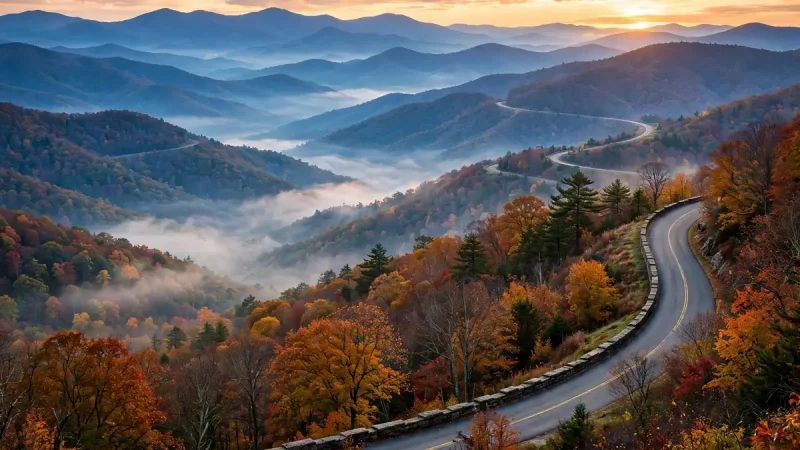

This guide compares places to visit in North Carolina and South Carolina side by side. It pairs rivals fairly, because both states hide serious range. For example, North Carolina climbs from sea level to the highest peaks east of the Mississippi. Meanwhile, South Carolina leans into slow rivers, historic streets, and warm surf.
Together, they form one of the easiest two-state trips in America. Distances stay kind, food stays memorable, and every day changes scenery. So use this comparison to build your route, then argue about favourites at dinner.
The Mountains: Blue Ridge Giants Versus Table Rock Calm
North Carolina owns the high drama here. The Blue Ridge Parkway curls past overlooks that stop traffic, especially in autumn. For instance, the Linn Cove Viaduct hugs Grandfather Mountain like a ribbon. Arrive early, because parking fills fast on clear weekends.
Asheville anchors the western mountains with breweries, galleries, and serious food. The Biltmore Estate draws crowds, yet the gardens justify every ticket. Besides, smaller towns nearby like Black Mountain offer quieter evenings. Therefore, base yourself in Asheville and day-trip outward.
South Carolina answers with lower, gentler highlands. Table Rock State Park delivers a granite summit without the Parkway crowds. In fact, the hike feels wilder and more personal. Lakes below sparkle on the descent, and picnic shelters invite long lunches.
Verdict for mountains? North Carolina wins on scale, while South Carolina wins on solitude. Hikers chasing famous views should start north. Conversely, travellers craving quiet trails should head south first.
The Coast: Outer Banks Wildness Versus Lowcountry Charm
North Carolina’s Outer Banks stretch thin and windswept into the Atlantic. Wild horses roam near Corolla, and lighthouses guard lonely beaches. For example, Cape Hatteras Lighthouse has watched storms for generations. The whole chain feels raw, remote, and beautifully exposed.
Further south, Wilmington blends beach life with a film-set historic district. Wrightsville Beach nearby keeps things polished and swimmable. Our dedicated guide to places to visit in Wrightsville Beach, NC plans that stop properly. Also, summer crowds gather here, so book stays early.
South Carolina counters with Charleston, and Charleston rarely loses comparisons. Rainbow Row, church steeples, and cobbled lanes create pure postcard material. Our roundup of top places to visit in Charleston, South Carolina covers the essentials. In fact, many visitors call Charleston the South’s prettiest city.
Beyond Charleston, Hilton Head Island slows everything down beautifully. Bike paths thread through oak shade, and beaches stay wide at low tide. Day trips toward places to visit near Hilton Head Island add Savannah-style squares and wildlife refuges. Therefore, the Lowcountry rewards travellers who linger.
Cities Head-to-Head: Charlotte and Raleigh Versus Columbia and Greenville
Charlotte brings big-city energy to North Carolina. Museums, pro sports, and a gleaming uptown skyline fill a weekend easily. For instance, the NASCAR Hall of Fame entertains even non-racing fans. Meanwhile, neighbourhoods like NoDa add murals and music.
Raleigh offers a calmer capital-city rhythm. Oak trees shade free museums, and food halls buzz at lunch. Besides, nearby Durham and Chapel Hill complete the Triangle nicely. College towns add bookshops, gardens, and fierce basketball pride.
Columbia flies under the radar in South Carolina, unfairly. The state museum surprises visitors, and the riverwalk invites evening strolls. In fact, Columbia works perfectly as a road-trip midpoint. Stop overnight, eat well, and continue refreshed.
Greenville might be the region’s happiest surprise overall. A waterfall drops right downtown through Falls Park, and Main Street glows after dark. Indeed, many travellers rank Greenville above both capitals for charm. Give it at least one full day.
Small Towns That Steal the Whole Trip
Big names fill brochures, but small towns fill memories. Beaufort in South Carolina drips with antebellum grace and river views. Porch swings creak, shrimp boats unload, and time slows politely. For example, a simple waterfront walk here beats many paid attractions.
North Carolina answers with Beaufort too, confusingly and delightfully. Its waterfront watches wild horses across Taylor’s Creek on Carrot Island. Meanwhile, nearby Morehead City serves seafood straight off the boats. Pronounce both towns differently, and locals will correct you warmly.
Blowing Rock charms mountain travellers in the north. Its namesake rock overlooks a gorge, and Main Street sells fudge unapologetically. Similarly, Floyd-style artsy energy fills little Hendersonville near apple season. Autumn visits here smell like cider and woodsmoke.
Georgetown in South Carolina adds rice-era history and a harbour walk. Museums stay small, personal, and uncrowded. Therefore, schedule one unplanned small town per state minimum. Serendipity needs room in every Carolina itinerary.
What Should Food Lovers Choose?
Ready for the tastiest argument in the South? Barbecue divides these states deliciously. Eastern North Carolina sauce leans vinegar and pepper, sharp and bright. For instance, whole-hog plates there arrive with slaw and cornbread. Purists defend this style fiercely, and honestly, they have a point.
Western North Carolina prefers tomato-kissed sauce on pulled pork. Meanwhile, South Carolina claims mustard-based gold sauce near Columbia. Sample all three on one trip, then declare a winner. Besides, roadside pits usually beat fancy dining rooms here.
Coastal cooking shines in both states equally. She-crab soup warms Charleston evenings, while Calabash-style fried seafood defines the northern border coast. Also, shrimp and grits appear everywhere, each kitchen guarding its version. Order it twice in different towns, because comparison is half the fun.
Summer travellers should read our guide to places to visit in NC in summer before locking dates. Heat and storms shape menus and beach days alike. Similarly, our list of warm places to visit this time of year helps winter planners chase Carolina sunshine.
History That Feels Alive, Not Dusty
Colonial and Civil War stories layer both states deeply. Charleston’s Fort Sumter sits where the Civil War began, reachable by boat. Standing there feels sobering, because the harbour looks deceptively peaceful today. Rangers explain events clearly, so history lands even for casual visitors.
North Carolina counters with Tryon Palace in New Bern. Costumed interpreters bring the colonial capital back to life. In fact, kids often rate the palace kitchens as the highlight. Gardens outside bloom across several seasons too.
Wright Brothers history belongs to the Outer Banks at Kitty Hawk. Wind still whips the dunes where powered flight began. Meanwhile, South Carolina preserves Gullah Geechee culture along the Lowcountry coast. Tours led by descendants share language, food, and craft traditions respectfully.
Therefore, balance beach days with one serious history stop daily. The Carolinas reward curiosity generously. Our collection of scenic places to visit in the US places these routes in national context. Also, the wilder stops in surreal places to visit in the US pair nicely with a Carolina extension.
How to Build a Two-State Route That Works
Start in the mountains, then roll downhill toward the sea. This direction saves the beach for last, which feels like dessert. For example, run Asheville to Charlotte, then Charleston, and finish on Hilton Head. Each drive stays manageable, usually under four hours.
Alternatively, fly into Raleigh and exit from Charleston. That open-jaw route skips backtracking entirely. Besides, rental returns between major airports usually stay simple. Check terms locally, because one-way fees vary by company.
Give the trip seven days minimum for both states. Five days forces painful cuts, whereas ten days feel luxurious. Indeed, the Carolinas punish rushing more than most regions. Slow travellers collect the best stories here, consistently.
Beach-only travellers can detour through our guide to places to visit in Miami, Florida for free on a longer coastal run south. That pairing turns one trip into an Atlantic coast epic. Plan fuel and rest stops accordingly.
Lakes, Waterfalls, and the Quiet Middle
Between mountains and sea, both states hide superb freshwater escapes. Lake Lure in North Carolina mixes mountain views with a sandy beach. For example, families swim in summer, then ride boats past granite cliffs. The town stays small, friendly, and refreshingly unhurried.
Western North Carolina also claims waterfall country around Brevard. Hundreds of cascades sit within a short drive there. Sliding Rock delights brave swimmers, while Looking Glass Falls needs no hike at all. Therefore, even rainy itineraries stay packed here.
South Carolina counters with Lake Jocassee, a mountain reservoir of startling clarity. Waterfalls pour directly into the lake, reachable mainly by boat. In fact, locals guard this spot like a family secret. Kayak rentals usually run seasonally, so confirm availability before driving out.
When Should You Visit the Carolinas?
Spring and autumn usually deliver the Carolinas at their best. Azaleas erupt in spring, especially around Charleston and Wilmington gardens. Meanwhile, autumn paints the Blue Ridge in waves of red and gold. Both seasons also bring milder temperatures for hiking.
Summer belongs to the beaches, crowds and all. Book coastal stays early, because popular weekends sell out fast. Also, afternoon thunderstorms roll in quickly near the sea. Plan indoor backups, then enjoy the cleared evening air afterwards.
Winter stays surprisingly gentle along the coast. Charleston dresses up for the holidays, and hotel rates often soften. However, mountain roads can ice over after storms occasionally. Check forecasts locally, and keep one flexible day in reserve.
Festivals and Events Worth Timing Your Trip Around
Timing adds magic to a Carolina road trip quickly. Charleston’s food and wine events draw chefs each spring usually. Meanwhile, garden weeks open historic homes that stay private otherwise. Book tickets early, because popular tours sell out fast.
North Carolina answers with music rooted deep in mountain culture. Bluegrass jams spill out of general stores in small towns. For example, Floyd-style picking circles welcome listeners with folding chairs. Summer evenings here feel like family reunions with better fiddles.
Autumn brings barbecue festivals, oyster roasts, and harvest fairs statewide. Coastal towns shuck oysters by the bushel as temperatures drop. Besides, college football Saturdays transform Raleigh, Chapel Hill, and Clemson completely. Join a tailgate if invited, because hospitality rules these weekends.
So, Which Carolina Wins Your Trip?
Honestly, the scoreboard matters less than the fit. North Carolina suits adventurers who want mountains, wild beaches, and big-city buzz. South Carolina suits romantics who love historic streets, slow rivers, and Lowcountry cooking. Most road-trippers, however, leave loving both equally.
Pick your starting point, book the mountain and beach nights first, and leave gaps between. The Carolinas fill gaps with farm stands, ferry rides, and porch conversations. That, ultimately, is why people return here year after year.
One last practical tip before you go. Download offline maps for mountain stretches, because signals fade between ridges. Also, keep a light jacket handy even in summer, since coastal evenings cool quickly after sunset. Small preparations like these keep the focus where it belongs, on the road ahead and the next plate of something delicious.

