
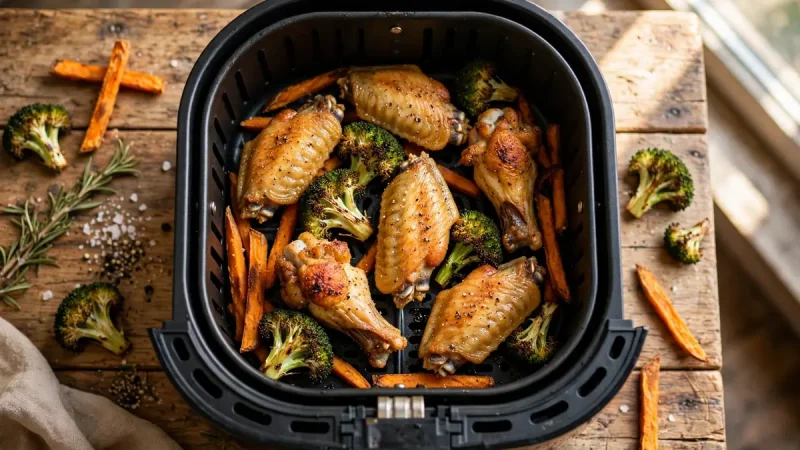

Inside, you will find an air fryer temperature chart with exact times for chicken, beef, pork, seafood, vegetables, and frozen favorites. Additionally, you will learn the five simple rules behind every number. Moreover, a quick oven-to-air-fryer conversion formula is included at the end.
How to Use This Air Fryer Cooking Time Chart
Start by finding your food in the tables below. Moreover, every air fryer cook time listed here assumes a preheated air fryer and food arranged in a single layer. Furthermore, always check for doneness, because air fryer wattage varies slightly between brands.
Times appear as ranges because thickness changes everything. A thick pork chop, for example, needs several more minutes than a thin one. When in doubt, choose the lower number. In addition, you can always add minutes — you cannot un-cook food.
Internal temperature is the true finish line for meat. Therefore, a simple probe thermometer removes every shred of doubt. In fact, it is the single most useful tool in air fryer cooking. Grab one if you have not already.
Chicken Cooking Times
| Cut | Temp | Time | Notes |
|---|---|---|---|
| Chicken breast (6–8 oz) | 375°F | 16–18 min | Flip halfway; 165°F internal |
| Chicken thighs (bone-in) | 400°F | 22–25 min | Skin side up; 165°F internal |
| Chicken wings | 400°F | 20–25 min | Flip halfway for even crisp |
| Chicken tenders (breaded) | 400°F | 10–12 min | Single layer, no overlap |
| Whole chicken (3–4 lb) | 360°F | 55–65 min | Breast down for first 30 min |
| Drumsticks | 400°F | 20–22 min | Flip halfway through |
| Chicken nuggets (fresh/breaded) | 400°F | 8–10 min | Shake basket once |
Chicken is the most air-fried protein for good reason. It turns out juicy inside and golden outside with almost no effort. Additionally, breast is the leanest cut and the one people ask about most. For a complete step-by-step walkthrough, see our air fryer chicken breast recipe with seasoning ideas and diet tips.
Wings deserve a special note because they are a crowd favorite. Pat them very dry before cooking, and the skin renders into a shattering crisp. In addition, toss them in sauce after cooking — never before, or the sauce burns.
Beef and Pork Cooking Times
| Cut | Temp | Time | Notes |
|---|---|---|---|
| Steak (1-inch, medium-rare) | 400°F | 8–10 min | Flip halfway; rest 5 min |
| Steak (1-inch, medium) | 400°F | 10–12 min | 130–135°F vs 140–145°F |
| Burgers (1/3 lb patties) | 375°F | 10–12 min | 160°F internal |
| Pork chops (1-inch) | 400°F | 12–15 min | 145°F + 3 min rest |
| Pork tenderloin | 400°F | 20–25 min | Flip halfway; 145°F internal |
| Bacon | 350°F | 8–10 min | Single layer; check often |
| Meatballs | 380°F | 10–12 min | Shake basket halfway |
| Plant-based burger patties | 375°F | 8–10 min | No flip needed; check brand box |
Red meat loves high heat and short cook times in an air fryer. However, thicker cuts do better with a slightly lower temperature. That way, the center cooks through without the outside burning.
Burgers and meatballs are weeknight heroes here. The circulating air browns all sides at once, so there is no flipping needed for meatballs. Additionally, both are excellent high-protein choices — read our guide to high-protein foods for more ideas that keep you full.
Plant-based patties work beautifully too. They brown nicely at 375°F without drying out. For the full story on the best meat-free options, check our article on why plant-based burgers are here to stay.
Seafood Cooking Times
| Type | Temp | Time | Notes |
|---|---|---|---|
| Salmon fillets | 400°F | 7–10 min | Skin down; 145°F internal |
| Shrimp (large) | 400°F | 5–7 min | Flip halfway; pink + opaque |
| Tilapia / white fish | 400°F | 8–10 min | Flakes easily when done |
| Scallops | 400°F | 6–8 min | Pat very dry first |
| Cod fillets | 400°F | 10–12 min | Best with a light breading |
Seafood cooks faster than anything else in this chart. Therefore, watch it closely — one extra minute turns tender fish rubbery. Set a timer and check early.
Salmon is the star of the show. The skin crisps like a cracker while the flesh stays silky. Moreover, seafood is a smart lean-protein choice; see our complete guide to seafood calories to compare your favorite options.
Vegetable Cooking Times
| Vegetable | Temp | Time | Notes |
|---|---|---|---|
| Broccoli florets | 400°F | 8–10 min | Shake halfway; charred edges = flavor |
| Brussels sprouts (halved) | 400°F | 12–15 min | Cut side down first |
| Asparagus | 400°F | 7–9 min | Thin spears need less time |
| Potato wedges | 400°F | 18–22 min | Soak 30 min first for crispiness |
| Sweet potato fries | 380°F | 15–18 min | Single layer; shake twice |
| Zucchini rounds | 400°F | 8–10 min | Do not overcrowd |
| Cauliflower florets | 400°F | 12–15 min | Great with curry spices |
| Corn on the cob | 400°F | 10–12 min | Brush lightly with butter or oil |
Vegetables are where the air fryer truly shines. High heat caramelizes their natural sugars. As a result, even lifelong veggie skeptics come back for seconds.
A light coating of oil and a generous pinch of salt are all most vegetables need. In addition, frozen vegetable blends work great too — stocking up is easy and cheap. Our guide to vegan-friendly meal options at Costco shows which bulk produce bags are worth buying.
Frozen Foods Cooking Times
| Food | Temp | Time | Notes |
|---|---|---|---|
| French fries (frozen) | 400°F | 15–20 min | Shake every 5 min |
| Tater tots (frozen) | 400°F | 15–18 min | Shake twice |
| Chicken nuggets (frozen) | 400°F | 10–12 min | Single layer |
| Mozzarella sticks (frozen) | 380°F | 6–8 min | Watch closely — cheese escapes fast |
| Fish sticks (frozen) | 400°F | 10–12 min | Flip halfway |
| Egg rolls (frozen) | 380°F | 12–15 min | Light oil spray helps |
| Onion rings (frozen) | 400°F | 8–10 min | Single layer; shake once |
No thawing is needed for most frozen foods. However, add 2–4 minutes beyond fresh times for the same item. In addition, the results beat oven cooking every single time.
Frozen snacks are perfect for movie nights and game days. They crisp up faster and use far less oil than deep frying. For more crowd-pleasing ideas, browse our snack food guide.
5 Rules Behind Every Number on This Chart
Preheat for 3–5 minutes. In fact, a hot start sears the surface immediately. Moreover, this single habit improves everything you cook.
Keep food in a single layer. In addition, overlapping pieces trap steam and kill crispiness. Cook in batches when the basket looks full.
Flip or shake halfway through. Air fryers blast heat from the top, so the far side needs its turn. Furthermore, a quick shake takes about five seconds.
Pat food dry before cooking. In addition, moisture is the enemy of crunch. Paper towels are your best friend here.
Trust temperature over time. Charts guide you, but a thermometer decides. In addition, let meat rest for 3–5 minutes before cutting so the juices settle.
Air Fryer Breakfast Ideas
Your air fryer is not just a dinner machine. Hash browns turn shatteringly crisp in 12–15 minutes at 400°F. Additionally, breakfast sausages cook evenly in about 8–10 minutes without splattering the stove.
Even hard “boiled” eggs work — 15 minutes at 270°F gives a firm yolk. Furthermore, a hot breakfast keeps you satisfied through the morning. In fact, research on morning meals shows real benefits; read our article on how skipping breakfast may be harming your mental health for details.
Seasoning Secrets for Maximum Flavor
Great seasoning turns basic air fryer food into something special. Salt, pepper, garlic powder, and smoked paprika cover 90% of meals. Additionally, a teaspoon of oil helps dry spices stick to the surface.
Season before cooking for a deep, roasted flavor. Alternatively, toss hot food with fresh herbs or a squeeze of lemon right after cooking for brightness. Either way, do not be shy — circulating hot air mellows spices slightly. Want to cook like the pros? See our breakdown of the secret ingredient top chefs swear by.
Oven to Air Fryer Conversion Formula
Adapting an oven recipe is easy. As a general rule, reduce the temperature by 25°F and cut the cooking time by about 20%. For example, a dish that bakes at 425°F for 25 minutes becomes roughly 400°F for 20 minutes in the air fryer.
This works because the compact basket and powerful fan cook faster than an oven. However, delicate baked goods like cakes and soufflés do not always convert well. In addition, always check food early the first time you convert a recipe.
Common Beginner Mistakes to Avoid
Everyone makes these mistakes at first. However, they are easy to fix once you know what to watch for.
The biggest mistake is skipping the preheat. A cold basket steams food instead of crisping it. As a result, you get soggy fries and pale chicken.
Another common error is using too much oil. The air fryer needs only a light mist. In fact, a single teaspoon is plenty for most foods.
Many beginners also forget to shake the basket halfway. Consequently, one side browns while the other stays pale. Set a halfway timer until the habit sticks.
Finally, do not walk away from seafood or thin vegetables. Fish, shrimp, and zucchini go from perfect to overdone in under a minute. Stay close and check early.
One more tip: never use aerosol cooking sprays. They contain additives that damage nonstick coatings over time. Instead, use a refillable oil mister or a pastry brush.
Meal Prep Sundays With Your Air Fryer
The air fryer is a meal-prep powerhouse. In one hour, you can cook protein, vegetables, and carbs for the whole week. Moreover, everything reheats well.
Start with the longest-cooking items first. Chicken breasts go in while you chop vegetables. Then roast a big batch of broccoli and sweet potatoes. Finally, crisp up some chickpeas for salads.
Batch cooking works because the air fryer reheats so well. In addition, pre-cooked components make weeknight dinners nearly effortless. Store everything in sealed containers and eat within four days.
Try this simple formula: one protein, two vegetables, one starch. For example, chicken thighs, broccoli, carrots, and potato wedges cover five lunches. Additionally, a quick sauce keeps things interesting all week.
Reheating Leftovers in the Air Fryer
The air fryer is a reheating superstar. It beats the microwave for anything that should stay crispy. Pizza, fries, fried chicken, and egg rolls all come back to life.
Use 350°F for most leftovers. In addition, 3–5 minutes is usually enough. The hot air re-crisps the outside without drying out the inside.
For pizza, place slices in a single layer. Moreover, 4 minutes at 350°F melts the cheese and crisps the crust beautifully. It tastes nearly fresh-baked.
Avoid reheating soups or very saucy dishes this way. The air fryer excels at dry-heat foods. For example, it works wonderfully on roasted vegetables, spring rolls, and breaded cutlets.
Frequently Asked Questions
Do I need to preheat my air fryer?
Yes — three to five minutes at your cooking temperature makes a real difference. Furthermore, preheating gives you better browning from the very first minute.
Can I stack food in the air fryer basket?
In short, it is not recommended. Stacked food steams instead of crisps. Additionally, for large batches, cook in rounds and keep finished food warm in a low oven.
How do I convert oven times to air fryer times?
Reduce the heat by 25°F and the time by roughly 20%. Then check early — you can always add minutes.
Why is my food not crispy in the air fryer?
Usually, the causes are overcrowding, wet surfaces, or too-low temperature. In addition, a light spray of oil helps browning a lot.
Are air fryer cooking times the same for all brands?
Mostly, but wattage varies between models. Furthermore, smaller, powerful units cook a bit faster. Use this air fryer temperature chart as a starting point and adjust to your machine.
Can I cook raw meat and vegetables together?
Yes, as long as the meat reaches its safe internal temperature. However, dense vegetables may need a head start, so add quicker-cooking items halfway through.
Is air frying healthier than deep frying?
Yes, significantly. Air frying needs only a teaspoon or two of oil instead of the cups required for deep frying. In addition, less oil means fewer calories while keeping the crispy texture people love.
What foods should never go in an air fryer?
Avoid wet batters, which drip through the basket and make a mess. Additionally, skip very light foods like loose spinach leaves — the fan blows them around. Large roasts that block airflow are also a poor fit.
Conclusion
Finally, bookmark this air fryer cooking time chart or print it for the fridge. With these times, temperatures, and the five golden rules, every meal comes out right.
In addition, the more you cook, the more you will trust your instincts. Happy air frying!

