
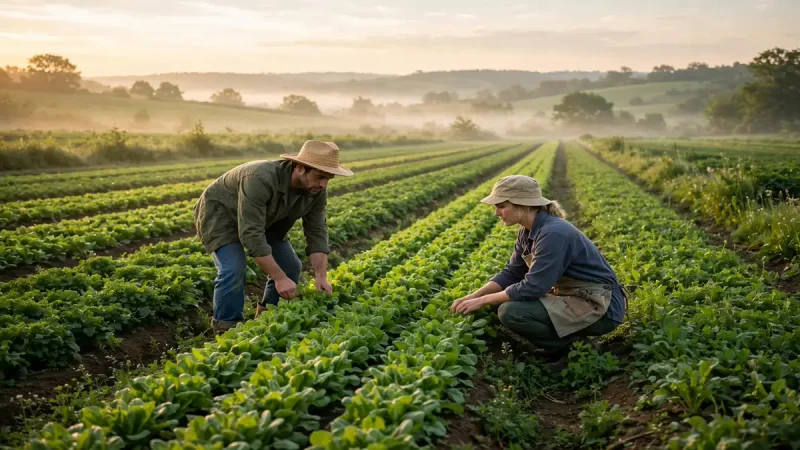

Moreover, the organic food industry is one of the fastest-growing sectors in the global economy. Moreover, Career opportunities in the organic food industry span farming, science, retail, marketing, and regulation — offering meaningful work with solid pay.
In this guide, you will discover the most promising organic food careers, typical salaries, required qualifications, and how to break into the industry. Additionally, you will learn which roles are growing fastest. Let us explore your options.
Why Organic Food Careers Are Booming
Consumer demand for organic products keeps climbing year after year. Furthermore, as more shoppers choose organic, companies need more people to grow, certify, process, market, and sell these products. In addition, this growth spans the entire supply chain.
Governments worldwide are supporting organic agriculture with subsidies and programs. Furthermore, export markets for organic goods are expanding rapidly. This creates jobs not just on farms, but in offices, labs, and stores.
Unlike many industries, organic food offers mission-driven work. People enter this field because they care about health, sustainability, and the environment. That sense of purpose is a powerful career motivator.
Top Career Opportunities in the Organic Food Industry
1. Organic Farming Specialist
Organic farming specialists manage chemical-free crop production. In addition, they handle organic certification compliance, natural pest management, soil health, and crop planning. In addition, many work in export-oriented operations where premiums are highest.
This is the fastest-growing segment in agricultural careers. Demand rises with every new organic acre. A degree in agriculture or agronomy helps, though experienced conventional farmers can transition with certification training.
2. Food Scientist
Food scientists develop new organic products and improve existing ones. Additionally, they analyze nutritional content, ensure safety standards, and refine recipes. National average salary: around $89,737 per year.
This role typically requires a degree in food science or a related field. Furthermore, organic product development is a specialty that commands premium pay as brands race to launch clean-label products.
3. Organic Food Sales Representative
Sales representatives connect organic producers with retailers and distributors. They build client relationships, negotiate pricing, and stay current on industry trends. In fact, National average salary: around $69,403 per year.
Success here requires relationship skills and product knowledge. In addition, established contacts with natural grocery chains and distributors are extremely valuable.
4. Quality Control Officer
Quality control officers inspect raw materials, monitor processing, and verify compliance with organic standards. They are the guardians of the organic label. Moreover, Food companies hire them at every scale, from local processors to international exporters.
A degree in agriculture, food science, or a related field is typical. Furthermore, knowledge of certifications like USDA Organic or EU Organic is a major advantage.
5. Regulatory Affairs Specialist
These specialists ensure products meet legal requirements across markets. They navigate the complex world of organic certifications, labeling laws, and import regulations. Furthermore, National average salary: around $96,755 per year — among the highest in the sector.
This role suits detail-oriented people who enjoy working with regulations. In addition, international trade knowledge multiplies your value significantly.
6. Health Food Marketer
Marketers identify consumer trends and build brands people trust. They decide which products to develop, how to position them, and how to reach health-conscious shoppers. National average salary: around $62,825 per year.
In addition, Digital marketing skills are increasingly essential. Furthermore, authentic storytelling matters enormously in organic, where consumers buy values as much as products.
7. Organic Retail Careers
Natural grocery chains like Whole Foods Market employ thousands in roles from grocery associate to team lead to sustainability coordinator. These jobs offer entry points with real advancement paths. In addition, employee discounts and flexible scheduling are common perks.
Retail is the most accessible entry into the industry. Moreover, many executives started on the store floor. Furthermore, firsthand customer knowledge is invaluable for any organic food career.
8. Agricultural Inspector and Food Safety Auditor
Inspectors verify that farms and facilities follow organic standards. Auditors check food safety compliance across the supply chain. Both roles combine fieldwork with documentation. In addition, certification bodies worldwide are hiring as organic acreage grows.
Furthermore, these positions offer independence and variety. You visit different operations, solve real problems, and protect the integrity of the organic label.
How to Break Into the Organic Food Industry
Start with education that matches your target role. Food science degrees suit product development; agriculture degrees suit farming; business degrees suit sales and marketing. In addition, short courses in organic certification add immediate credibility.
Get hands-on experience early. In addition, Internships, farm apprenticeships, and entry-level retail jobs all count. Furthermore, the organic community is tight-knit — volunteering at farmers markets and food events builds connections fast.
Learn the certifications. Understanding USDA Organic, EU Organic, and other standards sets you apart in interviews. Employers value candidates who already speak the language of compliance.
Network intentionally. Industry trade shows, organic farming conferences, and online communities are where jobs surface before they are posted. In addition, informational interviews with people in your target role reveal the real path in.
Frequently Asked Questions
Is the organic food industry a good career choice?
Yes. The sector grows faster than conventional food, offers diverse roles from farm to office, and provides mission-driven work. Salaries are competitive, especially in specialized roles like regulatory affairs and food science.
What qualifications do I need for organic food jobs?
It depends on the role. Additionally, Farming favors agriculture degrees or experience; science roles need food science backgrounds; sales and marketing value business skills. Organic certification knowledge helps everywhere.
Which organic food jobs pay the most?
Regulatory affairs specialists (around $96,755) and food scientists (around $89,737) top the salary lists. Senior sales roles and management positions also pay well.
Can I switch from conventional food to organic?
Absolutely. Most skills transfer directly. Add organic certification training and learn the specific standards, and your conventional experience becomes an asset.
Are there entry-level organic food jobs?
Yes. Retail positions at natural grocers, farm apprenticeships, and quality control assistant roles all welcome beginners. These are excellent stepping stones to specialized careers.
Conclusion
Career opportunities in the organic food industry have never been stronger. Whether you dream of working the land, developing products, or building brands, there is a place for you in this growing field.
For more career insights, explore our business section.

