
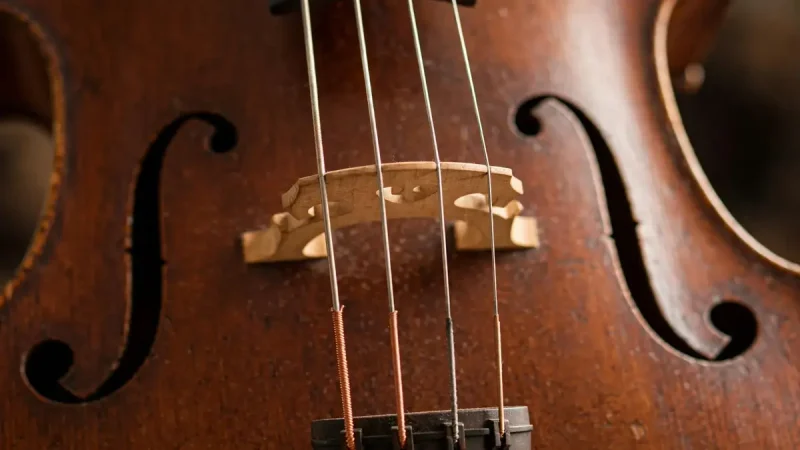

Moreover, the cello produces some of the most soulful sounds in all of music. Moreover, this cello instrument guide covers everything you need to know: how it works, its parts, sizes, types, and how to start playing.
Whether you are a curious beginner or a parent choosing an instrument for your child, this guide answers every essential question. Additionally, you will learn care tips and famous cellists to inspire you. Let us begin.
What Is a Cello?
The cello is a bowed string instrument and the second-largest member of the violin family. Played sitting down with the instrument resting between the knees, it produces deep, rich tones that closely resemble the human voice.
The cello has four strings tuned in perfect fifths: C, G, D, and A, from lowest to highest. In addition, players read music primarily in bass clef. Its range spans more than four octaves, giving it remarkable versatility.
Furthermore, Virtuoso Pablo Casals popularized the cello as a solo instrument in the 20th century. Before him, it was mainly an orchestral and chamber instrument. Today, cellos appear in classical, pop, rock, and film music.
How Does a Cello Produce Sound?
Sound begins when the bow’s horsehair drags across a string, or when the player plucks it (pizzicato). The vibrating string transfers energy through the bridge into the hollow wooden body, which amplifies it.
The left hand presses strings against the fingerboard to change pitch. In addition, Shortening the vibrating length raises the note. In addition, the f-holes carved into the body project the sound outward toward the audience.
Inside the body, a small wooden dowel called the soundpost connects the front and back plates. It transfers vibrations between them and supports the instrument structurally. Furthermore, its precise position affects tone quality significantly.
Parts of the Cello Explained
- Scroll: the decorative spiral at the very top, carved from maple
- Pegbox and pegs: four pegs that adjust each string’s tension for tuning
- Additionally, Nut: a small strip guiding strings from pegbox to fingerboard
- Fingerboard: smooth ebony surface where fingers press strings
- Bridge: curved wooden piece holding strings above the body; held by string tension, not glue
- F-holes: the f-shaped openings that project sound outward
- Tailpiece: anchors strings at the bottom, often with fine tuners
- Endpin: adjustable metal rod supporting the cello on the floor
- Bow: pernambuco wood or carbon fiber stick with tensioned horsehair, about 73 cm long
In fact, Understanding these parts helps you maintain the instrument and communicate with teachers and luthiers. In addition, knowing what each piece does makes you a more confident player.
Cello Sizes: Finding Your Fit
| Size | Typical Age | Total Length |
|---|---|---|
| 1/8 | 4–6 years | ~46 in (117 cm) |
| 1/4 | 6–9 years | ~50 in (127 cm) |
| 1/2 | 9–12 years | ~54 in (137 cm) |
| 3/4 | 12–15 years | ~57 in (145 cm) |
| 4/4 (full size) | 15+ years / adults | ~60 in (152 cm) |
Correct sizing matters enormously. A cello that is too large strains the arms and ruins posture. In addition, teachers typically measure arm length to confirm the right fractional size for young students.
Most players reach full size by their mid-teens. Moreover, Adults almost always play 4/4. Furthermore, smaller adults occasionally prefer 7/8 size, though it is less common.
Types of Cellos
Student cellos are affordable, durable instruments built for beginners. They use laminated or solid woods with simpler fittings. In addition, most student outfits include a bow, case, and rosin.
Intermediate cellos offer better tonewoods and craftsmanship for advancing players. Furthermore, the sound improves noticeably. Furthermore, this is the right tier for serious students in youth orchestras.
Professional cellos are handcrafted from aged spruce and maple by master luthiers. They cost many thousands of dollars. Concert musicians choose these for their tonal depth and projection.
Electric cellos have solid bodies designed for amplification. They suit pop, jazz, rock, and experimental players. In addition, they allow silent practice with headphones — a huge advantage for apartment dwellers.
How to Start Learning Cello
Find a qualified teacher first. The cello’s technique — posture, bow hold, left-hand position — is difficult to learn correctly alone. In addition, bad habits formed early are hard to break later.
Rent before you buy. Most music shops offer affordable rental programs for students. This lets you confirm the commitment before investing. Furthermore, rental instruments are properly sized and maintained.
Practice consistently, not occasionally. Thirty focused minutes daily beats three hours on Sunday. Moreover, in addition, beginners should prioritize posture and tone production over speed.
Learn to tune your cello early. Use the fine tuners for small adjustments and the pegs for larger ones. Turn pegs gently — strings break when forced. Furthermore, a clip-on tuner makes this easy for beginners.
Caring for Your Cello
Wipe rosin dust off the strings and body after every session. Rosin buildup dulls the finish and deadens string response over time. Furthermore, in addition, a soft cloth is all you need.
Loosen the bow after playing. Leaving it tensioned warps the stick permanently. Furthermore, store the cello in its case away from heat, cold, and humidity extremes.
Replace strings when they lose brilliance, typically every 6–12 months for active players. Old strings sound dull and go out of tune easily. In addition, change them one at a time to keep the bridge stable.
See a luthier for setup issues. A fallen soundpost, warped bridge, or cracked seam needs professional attention. Never attempt structural repairs yourself.
Frequently Asked Questions
Is cello hard to learn?
It is challenging but rewarding. Additionally, Producing a pleasant tone takes weeks of practice, and intonation requires a trained ear. However, steady practice with a good teacher brings real progress within months.
What age should a child start cello?
Many start between ages 5 and 8 with fractional-size instruments. The key requirements are the ability to focus for short practices and a correctly sized cello.
How much does a beginner cello cost?
Decent student outfits start around $500–$1,000. Renting typically costs $30–$60 monthly. Avoid ultra-cheap instruments — they sound bad and discourage practice.
Can adults learn the cello?
Absolutely. Many adults start in their 30s, 40s, and beyond. Progress may be slower than for children, but adults bring focus and motivation that accelerate learning.
What is the difference between a cello and a double bass?
The cello is smaller, tuned an octave higher (C-G-D-A vs E-A-D-G), and always played seated with an endpin. The double bass is the largest string instrument and often played standing.
Conclusion
This cello instrument guide covered the essentials: how it works, its parts, sizing, types, and how to begin. The cello rewards patience with one of music’s most beautiful voices.
For more music content, explore our entertainment section.

