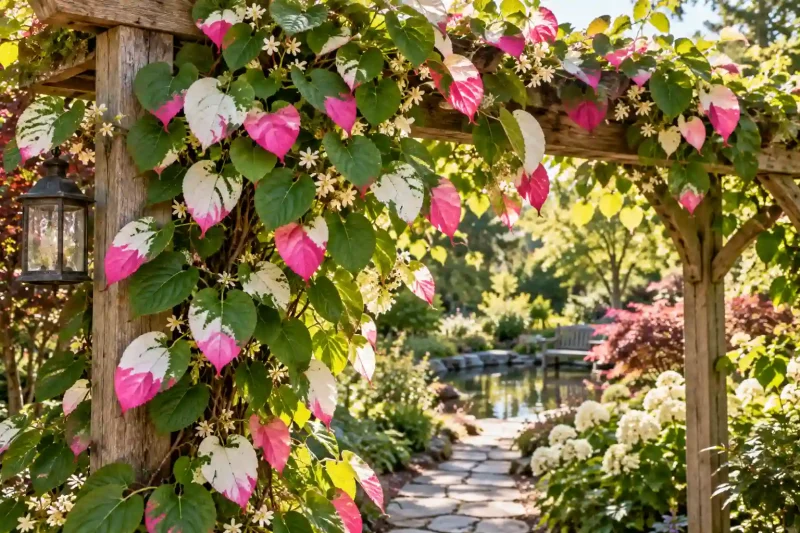

Cultivating resilient perennial vines requires understanding soil preparation, trellis structures, pruning techniques, and climate adaptability. By browsing specialized outdoor and nature-focused content within our dedicated lifestyle category archive, gardeners can learn how to foster thriving ecosystems right in their backyards. In this comprehensive guide, we explore the botanical characteristics of Actinidia Kolomikta, ideal planting conditions, pruning strategies, trellis management, and step-by-step instructions to successfully establish this hardy vine in your landscape.
Botanical Overview and Unique Foliage Characteristics
*Actinidia kolomikta* is a deciduous, woody perennial vine native to temperate forests of East Asia, including regions of China, Korea, Japan, and eastern Siberia. Unlike traditional vines grown strictly for spring blossoms or autumn foliage, the Arctic Beauty kiwi is famous for its mesmerizing, multi-colored leaves.
Several distinct characteristics define its visual appeal:
- Tri-Color Leaf Transformation: Mature male vines produce leaves that splash dramatically into shades of snowy white and vibrant bubblegum pink during late spring and early summer.
- Subtle Fragrant Blossoms: In early summer, the vine produces small, nodding white flowers that emit a sweet, pleasant fragrance reminiscent of lily-of-the-valley.
- Edible Kiwi Fruits: Female plants produce small, oblong, vitamin-C-rich kiwi berries in autumn that are entirely edible, sweet, and smooth-skinned.
- Exceptional Cold Hardiness: Capable of surviving brutal winter temperatures dropping well below freezing (-30°F or lower), making it one of the toughest kiwi varieties available.
This deep connection to botanical beauty and outdoor sanctuaries mirrors broader landscape design trends. As explored in environmental landscaping guides and property development frameworks like Lument real estate capital investments, integrating natural landscaping and lush garden features substantially enhances property appeal and long-term environmental value.
Ideal Growing Conditions and Site Selection
To watch *Actinidia kolomikta* reach its full visual potential, providing the correct microclimate and soil conditions is essential. While the plant is remarkably hardy against cold winters, it has specific preferences regarding sunlight and soil drainage.
Key environmental requirements include:
- Sunlight Exposure: Plant in a location receiving full sun to partial shade. Morning sun is particularly beneficial for maximizing the vibrant pink and white leaf variegation.
- Soil Composition: Thrives in rich, well-draining loam with a slightly acidic to neutral pH (6.0 to 7.0). Avoid heavy clay soils prone to waterlogging.
- Moisture Retention: Prefers consistently moist soil. Applying a generous layer of organic mulch around the root zone helps retain moisture during dry summer weeks.
- Wind Protection: Because the heart-shaped leaves are delicate and the vine can experience heavy growth, shelter from harsh, drying winds is highly recommended.
Establishing sustainable outdoor environments also complements personal well-being and daily physical activity. Maintaining a vibrant garden encourages active outdoor engagement, mirroring daily wellness routines such as exercising 40 minutes every day amidst nature.
Trellising, Support Structures, and Pruning Management
As an aggressive, woody climber, Arctic Beauty requires sturdy structural support to flourish. Left unsupported, the vines will twist around themselves into dense, tangled thickets, reducing air circulation and sunlight exposure.
Key management strategies include:
Installing Sturdy Arbors and Fences
Construct heavy-duty wooden trellises, metal pergolas, or reinforced wire fences capable of supporting the mature weight of a woody vine that can easily reach lengths of 15 to 20 feet.
Managing Male and Female Plant Ratios
If fruit production is desired, gardeners must plant both male and female vines. One male plant can successfully pollinate up to eight female plants, though male plants alone provide the most intense leaf variegation.
Annual Dormant Pruning
Prune the vine strictly in late winter while it is fully dormant. Heavy pruning in spring can cause the vine to “bleed” sap, weakening the plant. Remove dead, diseased, or overcrowded branches to encourage robust new growth.
Nutritional Wellness and Harmonious Outdoor Living
Creating a thriving garden sanctuary provides profound mental and physical restorative benefits. Spending time tending to delicate vines like Actinidia Kolomikta offers a peaceful escape from the fast-paced demands of modern life.
Key lifestyle and wellness integrations include:
- Connecting with Natural Rhythms: Observing seasonal leaf transitions and budding vines fosters mindfulness and reduces daily stress.
- Mindful Evening Relaxation: Enjoying calm evenings in the garden inspired by the restorative benefits of early dinner and restful sleep.
- Creating Outdoor Sanctuaries: Designing shaded garden seating areas celebrated in balanced lifestyle luxury and wellness.
- Accessing Community Health: Ensuring overall family health via trusted providers like the Muskingum Valley Health Center and regional health networks like the Gastonia Health Department.
For landscape architects, commercial property developers, and green-space entrepreneurs managing regional expansion, maintaining structured operational strategies can be explored through guides on scaling business services growth and marketing analysis such as small business growth and marketing analysis.
Protecting Arctic Beauty Vines from Common Pests and Hazards
One of the remarkable advantages of *Actinidia kolomikta* is its general resistance to major pests and diseases. However, growers must remain vigilant against one unexpected garden visitor: local cats.
Key protection measures include:
- Feline Attraction: The bark and roots of Arctic Beauty vines contain chemical compounds similar to catnip, making young vines highly susceptible to being dug up or rubbed raw by neighborhood felines.
- Protective Wire Cages: Encircle newly planted vines with chicken wire or protective mesh cages for the first two to three years until the woody stems mature and toughen.
- Monitoring Root Rot: Ensure optimal soil drainage to prevent fungal root rot caused by stagnant standing water after heavy rainstorms.
Financing larger landscaping projects or purchasing specialized gardening equipment can also be managed efficiently through capital programs like Northmill equipment finance and flexible lines of credit such as Navitas financial solutions. Furthermore, establishing a professional green-industry brand is supported by creative design frameworks detailed in Flowfury Entertainment logo strategies and regional campaigns like advertising marketing growth in Los Angeles.
Step-by-Step Guide: How to Plant and Grow Actinidia Kolomikta
Successfully establishing an Arctic Beauty kiwi vine in your garden requires a careful, methodical approach. Follow this structured roadmap to plant and nurture your vine:
- Select the Perfect Site: Choose a location with full sun to partial shade, excellent soil drainage, and protection from strong winter winds.
- Erect Support Structures: Install a sturdy trellis, arbor, or fence before planting to prevent disturbing the root system later.
- Prepare the Soil: Dig a hole twice as wide as the nursery container, enriching the native soil with compost and organic matter.
- Plant and Mulch: Set the vine at the same soil depth it grew in the pot, backfill gently, water thoroughly, and apply a thick layer of organic mulch.
- Provide Initial Protection: Install a wire mesh cylinder around young vines to protect them from curious cats during their first growing seasons.
By following these expert planting steps, you will establish a vigorous, stunning vine that brings vibrant color and vitality to your outdoor space for years to come.
Frequently Asked Questions About Actinidia Kolomikta
Why are the leaves on my Arctic Beauty kiwi turning pink and white?
This tri-color leaf variegation is a natural genetic trait in mature male *Actinidia kolomikta* plants, typically appearing in late spring when exposed to adequate sunlight.
Do I need both male and female plants to get fruit?
Yes. Actinidia Kolomikta is dioecious, meaning male and female flowers grow on separate plants. You must plant at least one male vine nearby to pollinate female vines for fruit production.
Are the kiwi berries edible for humans?
Absolutely! The small, smooth-skinned berries produced by female vines in autumn are sweet, highly nutritious, and packed with vitamin C.
How cold-hardy is the Arctic Beauty kiwi vine?
It is exceptionally cold-hardy, capable of surviving harsh winter temperatures plunging down to -30°F or lower without sustaining permanent damage.
Conclusion: Transform Your Garden with Arctic Beauty
Incorporating unique, resilient perennials into your landscape elevates your outdoor environment into a living work of art. With its mesmerizing pink and white foliage, fragrant spring blossoms, and incredible winter hardiness, *Actinidia kolomikta* stands as a premier choice for adventurous gardeners.
Select a sunny spot, set up a sturdy trellis, and transform your outdoor sanctuary with the breathtaking charm of Arctic Beauty today!