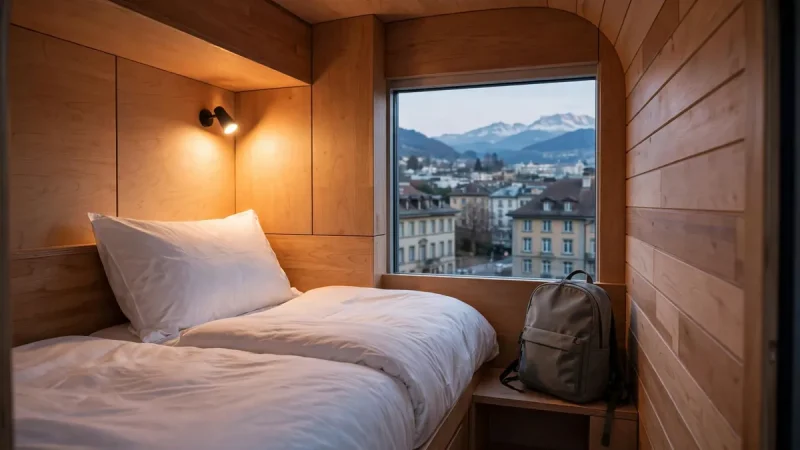

Capsule Hotel Chapter Lucerne: Experience Compact Luxury in the Heart of Switzerland
You arrive in Lucerne with one small bag and big plans. However, your hotel room does not need to be big. Indeed, Capsule Hotel Chapter Lucerne builds its promise on that idea. Compact luxury sits in the heart of Switzerland here. So, you trade wasted floor space for smart design instead. The question is whether that trade suits your trip?
Picture the choice clearly before you judge it too fast. For example, one traveller books a large room and barely uses it. Meanwhile, another traveller books a capsule and explores all day. Then, both travellers sleep, shower, and head out again next morning. Which traveller actually used their money better on that trip?
What is a capsule hotel, in simple terms?
A capsule hotel gives each guest a private sleeping pod. Because the pod is compact, shared spaces handle the rest. Also, guests usually share lounges, bathrooms, or social areas nearby. For instance, you sleep privately, then relax openly with others. Consequently, the model lowers wasted space without removing privacy fully.
Still, capsule does not mean careless, cheap, or uncomfortable. Rather, good capsule hotels focus hard on sleep quality basics. For example, ventilation, light control, and bedding matter enormously inside pods. Similarly, quiet rules protect everyone in a shared building. Those details decide whether compact feels clever or cramped.
Compare the idea with a classic city luxury stay, too. Our guide to Hotel Totem Guadalajara and luxurious comfort in the city praises spacious ease. Conversely, Lucerne’s capsule idea praises efficiency, design, and location. Both promise comfort, yet each defines comfort very differently.
Why does Lucerne suit compact stays so well?
Lucerne invites walking, lake time, and short scenic outings daily. Because the city rewards being outside, rooms become rest bases. Also, central stays reduce time spent on buses and transfers. For instance, you can return quickly between outings for rest. Hence, a compact central base can beat a distant larger room.
Switzerland trips also reward smart budgeting on every line item. Indeed, saving on space can free money for experiences instead. However, you should never sacrifice sleep just to save money. Therefore, judge a capsule by sleep quality first, always. A cheap night that ruins tomorrow is no bargain.
Our roundup of the best places to visit in Switzerland shows how much there is outside. Mountains, lakes, and old streets fill your days completely there. In fact, many visitors spend only sleeping hours indoors anyway. That pattern makes compact luxury easier to understand, surely?
Capsule pod or standard room, which fits you better?
Choose a capsule if you travel light and move fast. Because pods reward guests who pack simply and sleep deeply. For example, solo travellers and short-stay visitors often adapt quickly. Also, friends travelling together can enjoy shared social spaces more. Consequently, the social side becomes part of the trip.
Choose a standard room if you need open private space. Some travellers spread work, clothes, and gear across a room. Similarly, couples on slow trips may want private lounging time. Meanwhile, families usually need bathrooms and storage without sharing routines. Neither choice is smarter universally, because trips differ greatly.
Ask yourself how many waking hours you will spend inside. If the honest answer is almost none, go compact confidently. Then, spend your saved budget on food, transport, or activities. Conversely, if you plan lazy mornings indoors, book more space. Self-knowledge beats trend-following on every single trip, honestly.
What should you check inside the pod?
Check light control, because sleep depends on darkness working properly. Also, check ventilation, since fresh air matters in small spaces. In addition, check power points for phones and cameras overnight. Those three checks reveal whether a pod was designed carefully. Small spaces punish lazy design faster than large rooms.
Check storage for your bag, shoes, and daily essentials, too. Will your bag block your sleeping space or stay separate? Can you reach water, glasses, and earplugs without fully waking? Those tiny questions predict your first night surprisingly well. Ask the property directly if photos leave doubts unresolved.
How does compact luxury actually feel at night?
At night, a good pod feels like a private cocoon. Because walls, curtains, or doors create a clear personal boundary. For instance, you can read, listen, and rest without disturbing others. Also, shared-house rules usually keep corridors and pods respectfully quiet. That shared discipline protects everyone’s sleep equally well.
Morning feels different from a standard hotel, and intentionally so. Indeed, you rise, store bedding if required, and move out efficiently. Then, shared spaces take over for coffee, planning, and chatting. Meanwhile, staff keep turnover smooth with clear, simple routines. Efficiency feels luxurious when it removes friction, not warmth.
Compare that rhythm with a remote, space-rich hotel stay now. Our piece on Maupin Oregon hotels in the heart of nature celebrates slow openness. Conversely, a Lucerne capsule celebrates urban pace and precision. Your trip rhythm should choose between those feelings, really.
What are the honest downsides of capsule stays?
Space limits are real, and pretending otherwise helps nobody here. Because you cannot unpack like you would at home. For example, large suitcases and bulky gear feel awkward quickly. Also, travellers who dislike shared bathrooms may struggle daily. Hence, read the layout carefully before booking any capsule.
Privacy feels different, even when pods themselves feel private enough. You will hear doors, footsteps, and soft movement around you. However, earplugs and clear house rules reduce most disturbance greatly. Still, very light sleepers should think carefully before booking. Would shared-space sounds keep you awake on night one?
Social energy can also feel tiring after long travel days. Some guests love meeting travellers in shared lounge areas nightly. Others want silence, solitude, and zero conversation after sightseeing ends. Neither preference is wrong, because rest needs vary by person. Choose the stay that matches your energy honestly.
How can you sleep better in a capsule pod?
Prepare a tiny night kit before you enter the pod. Firstly, keep earplugs, an eye mask, and water within reach. Secondly, charge devices early, so cables stay tidy overnight inside. For instance, tidy cables prevent midnight tangles in small spaces. Those small habits make compact sleep feel calm.
Some travellers manage sleep conditions carefully on every trip anyway. Our guide to the Apria travel CPAP for better sleep on the go shows that planning clearly. Similarly, capsule guests should ask about space and power needs early. Asking early prevents stressful surprises at bedtime on arrival night. Sleep planning is travel planning, not an extra.
Wind down outside the pod, then enter ready to sleep. Because scrolling bright screens inside delays rest for many people. Also, set your morning alarm quietly to respect nearby guests. In fact, considerate guests create the calm they want themselves. Shared spaces work when everyone protects the shared calm.
What should you pack for a compact luxury stay?
Pack soft bags instead of rigid, oversized suitcases whenever possible. Because soft bags fit lockers and tight storage far better. For example, packing cubes keep small spaces surprisingly organised daily. Also, one versatile layer beats three bulky outfit options usually. Light packing is the capsule traveller’s real superpower, indeed.
Bring a small day bag for Lucerne outings each day. Then, your main bag can stay stored without daily digging. Meanwhile, keep documents, medication, and valuables in your day bag. That separation makes mornings faster and pods tidier overnight. Organisation feels like extra space, even when space stays small.
Money planning matters on Swiss trips, so plan it early. Our guide to the best travel credit cards for 2025 helps compare travel rewards. Similarly, check payment options with the property before arrival day. Clear payment plans remove one more arrival-day friction point. Calm arrivals make compact stays feel premium from minute one.
How can travel apps make compact stays easier?
Apps help you move lightly and plan days without paper clutter. Our roundup of five of the best travel apps for your next trip covers useful basics. For instance, offline maps help when you return late at night. Similarly, translation tools help with signs and short questions locally. Light tools suit light travel perfectly well together.
Save the property address and check-in steps offline before arriving. Because phone batteries and data plans fail at awkward moments sometimes. Also, screenshot booking details in case the app loads slowly. That tiny backup prevents lobby stress on arrival evening. Prepared travellers feel the luxury of control immediately.
Who will love Chapter Lucerne the most?
Solo explorers often love the balance of privacy and company. Because pods feel private, while lounges feel social and welcoming. For example, you can chat over coffee, then retreat alone. Also, short-stay travellers gain location without paying for unused space. Consequently, city weekends feel rich, efficient, and surprisingly calm.
Design lovers may enjoy the concept as an experience itself. Indeed, compact luxury tests how little space good design needs. However, the concept will not convert every traveller, and that is fine. Rather, it serves a clear traveller type exceptionally well. Clear concepts beat generic hotels trying to please everyone.
Compare the social energy with a themed luxury escape, for contrast. Our profile of the BNGV Mystic Premier Hotel luxurious escape promises a fuller resort feeling. Conversely, Chapter Lucerne promises clever urban minimalism in Switzerland. Both can delight, because delight depends on your trip purpose. What kind of delight does your Lucerne trip need?
How should you plan a Lucerne day from a capsule base?
Start early, because compact stays reward active, outdoor days most. Firstly, enjoy breakfast and plan one main sight for the morning. Secondly, keep your afternoon flexible for lake time or wandering. For example, a slow lakeside walk can balance a busy museum morning. That balance keeps travel days rich without feeling rushed.
Return to your base once in the middle of the day. Indeed, a short rest inside your pod can reset your energy. Meanwhile, you can recharge devices and swap layers for evening weather. Then, head out again for dinner and an evening stroll nearby. This return-and-refresh rhythm suits central capsule stays perfectly well.
Keep evenings simple, especially after full sightseeing days in Switzerland. Because shared lounges invite conversation, decide your social limit early. For instance, enjoy one drink and chat, then retreat to rest properly. Conversely, accept every invitation and tomorrow may feel strangely heavy. Protecting sleep protects the whole trip, not just one night.
What booking checklist should you run before you pay?
Confirm pod type, shared facilities, and quiet hours in writing first. Also, confirm locker size if your bag runs larger than usual. In addition, confirm check-in steps for late arrivals from trains or flights. Those three confirmations remove most capsule surprises before money changes hands. Clear answers signal a well-run property, in most cases.
Check cancellation terms carefully, because compact rooms can sell out fast. Similarly, check whether breakfast, towels, and lockers cost extra or not. However, never rely on old reviews for current prices or policies today. Rather, trust the official booking page at the moment you book. Current facts beat remembered facts on every trip, always.
Is compact luxury in Lucerne worth trying once?
Try it for one short, well-planned stay if curiosity about compact travel keeps returning to your mind. Because one night teaches more than ten opinion threads online. Still, confirm current pod details, rules, and prices officially first. Room layouts, shared facilities, and policies can change over time. Therefore, use this guide for fit, and official pages for facts.
In the end, compact luxury asks a refreshing travel question. How much physical space do you truly need to rest well each night? If your honest answer is less than you first assumed, Lucerne rewards you generously. You gain central location, thoughtful design, and extra budget room for memorable experiences outside the room itself. And that simple trade may feel like the smartest, most modern luxury of all for city travellers today?