
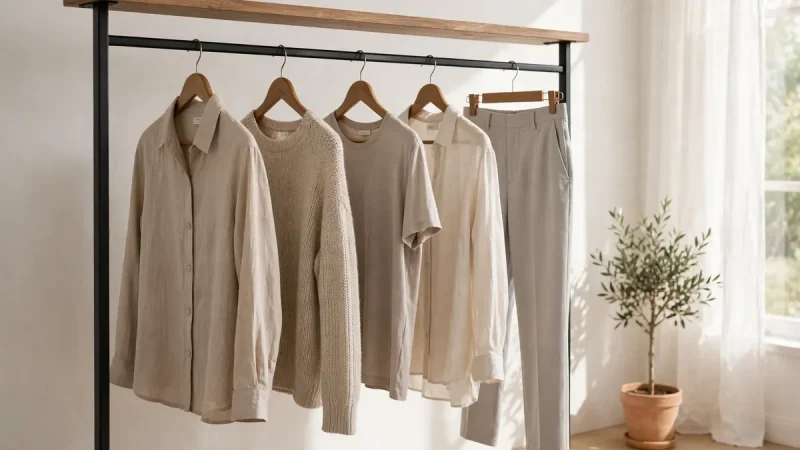

Do you stand in front of a full wardrobe and still feel stuck? You are not alone, and this guide can help. Learning how to build a capsule wardrobe for beginners changes that daily stress. So you keep fewer clothes, yet you gain more outfits. In fact, most beginners feel calmer within one week.
Think of your last rushed morning. You tried three tops, and none felt right. Then you wore the same safe outfit again. A capsule wardrobe fixes that loop. Because every piece earns its place, getting dressed becomes fast. You also spend less time shopping and guessing.
This guide walks you through each step slowly. First, you will audit what you own. Then you will choose colours and core staples. Finally, you will learn how to keep it working. No extreme rules apply here. You can adapt every idea to your life.
What is a capsule wardrobe, really?
A capsule wardrobe is a small, planned set of clothes. Each item matches several others, so mixing feels easy. For example, one blazer can top jeans, trousers, and a dress. As a result, you need fewer pieces overall. The idea rewards planning over impulse buying.
The concept became popular because closets kept growing. Yet satisfaction did not grow with them. People owned more, but they repeated favourites anyway. So the capsule approach keeps those favourites front and centre. Everything else leaves, or it waits in storage.
You do not need a fashion background for this. Beginners do well because the method is simple. You choose versatile colours, classic shapes, and good fabrics. Then you stop adding random one-off pieces. If you enjoy style history, little books of fashion unlocking the secrets to timeless style shows how classic ideas still guide modern dressing.
How many items should be in a capsule wardrobe?
Beginners often ask how many items should be in a capsule wardrobe before they start. The honest answer is flexible. Most people land between 30 and 50 pieces per season. That count usually includes tops, bottoms, dresses, and outerwear. Shoes and accessories may sit outside the count.
Your lifestyle should set the number, not a stranger online. For example, a teacher needs more work-ready outfits. A home worker may need far fewer formal pieces. So start with a range that feels calm. You can trim or add later, because learning takes time.
Project 333 capsule wardrobe explained?
You may have seen Project 333 capsule wardrobe explained in blogs and videos. The challenge asks you to dress with 33 items for 3 months. Those items include clothes, shoes, outerwear, and jewellery. Underwear, sleepwear, and workout gear usually stay outside. The point is practice, not perfection.
Project 333 works well as a trial run. First, you box the rest of your clothes away. Then you live with the small set for a season. As a result, you learn what you truly wear. Many beginners keep the system after the trial ends.
Still, you do not have to copy 33 exactly. Some people pick 37, and others pick 45. In fact, the best number is the one you maintain. Start gently, and adjust after one full season. That honest feedback beats any strict target.
Step one: decluttering your wardrobe before you start?
Good capsules begin with decluttering your wardrobe before you start buying anything new. Buying first only adds more clutter. So clear space first, and shop later if needed. This order saves money, and it reveals real gaps. You may find you need less than expected.
How to do a wardrobe audit?
Next, learn how to do a wardrobe audit in a calm, simple way. Take everything out, and lay it where you can see it. Then sort each item into four clear piles. Keep, tailor, store, and let go works well. Be honest, because kindness to yourself matters here.
Ask three questions for each piece as you sort. Does it fit your body right now? Does it match your real weekly life? Would you buy it again at full price today? If two answers are no, the piece can go. For example, a tight blazer rarely earns daily wear.
Try each doubtful item on before you decide. Mirrors tell truths that hangers hide. Also check for stains, loose buttons, and worn heels. Then note the gaps on your phone. That list becomes your smart shopping plan later.
Do you keep clothes for a fantasy life? Many of us do, so you are in good company. A sequin dress for parties you never attend is one example. Letting it go frees space and mental energy. In fact, readers who love dramatic eras can still enjoy 70s glam rock fashion and its bold iconic style without storing every bold piece at home.
Step two: choosing a neutral colour palette for clothes?
Colour does the heavy lifting in a small wardrobe. That is why choosing a neutral colour palette for clothes comes early. Neutrals mix easily, so outfits build themselves. Start with two base neutrals that suit you. Navy and grey, black and camel, or white and denim blue all work.
Then add one or two accent colours you love. Accents keep the set from feeling flat. For example, rust, olive, or soft pink can lift neutrals beautifully. Pick accents that appear in clothes you already love. As a result, new pieces blend in right away.
Hold a top near your face in daylight. Does your skin look bright or tired? That quick test helps more than colour charts. Also lay your shortlist together on the bed. If every top works with every bottom, your palette works. If not, swap one piece and test again.
Patterns need care in a small set too. Stripes and small checks usually mix best. One patterned hero piece per group is enough. For timeless inspiration, Titanic era fashion and its timeless elegance shows how simple lines and calm tones stay graceful for decades.
Your capsule wardrobe checklist for beginners?
A written capsule wardrobe checklist for beginners keeps the build on track. Use the table below as a starting point only. Your climate and job will shift the numbers. So treat it as guidance, not a strict law. Cross items off as you confirm them.
| Group | Starter guide | Notes |
|---|---|---|
| Tops | 6 to 8 | Mix tees, shirts, and knits |
| Bottoms | 4 to 5 | Jeans, trousers, and a skirt |
| Dresses or jumpsuits | 2 to 3 | One casual, one smarter |
| Layers | 3 to 4 | Blazer, cardigan, and jacket |
| Shoes | 3 to 4 pairs | Trainers, flats, boots, heels |
| Outerwear | 1 to 2 | Coat plus a lighter jacket |
Check the list against your audit notes now. You probably own most of these pieces already. Then mark only the true gaps in bold. That small list stops impulse buys in shops. Finally, set a start date and begin.
Timeless wardrobe essentials list for every beginner?
Every timeless wardrobe essentials list shares the same core logic. The pieces are simple, well cut, and easy to pair. A white shirt, straight jeans, and a tailored blazer lead most lists. A plain crew knit and a midi dress follow closely. These shapes suit many bodies and ages.
Add a trench or a structured coat for polish. Then add clean trainers and one smarter shoe. A simple tote and a smaller crossbody bag help too. Because these items repeat often, fit matters most. Tailoring a hem can transform a basic piece.
Do not chase every trend while you build. Trends can join later in tiny doses. First, secure the calm base that works daily. In fact, fame fashion ideas to transform your style can inspire one fresh accent once your base feels solid.
Versatile wardrobe staples that mix and match?
The real magic lies in versatile wardrobe staples that mix and match without effort. Each staple should create at least three outfits. If a piece only works one way, question it. For example, a navy blazer works with jeans, trousers, and dresses. That range earns it prime rail space.
How to create many outfits from fewer clothes?
People often wonder how to create many outfits from fewer clothes in practice. The maths is simpler than it sounds. Five tops times four bottoms gives twenty base outfits. Then two layers double many of those looks. Shoes and scarves stretch the total even further.
Try a quick outfit maths example at home. Pick three tops, two bottoms, and one layer. You already have six base looks from six pieces. Add a second shoe, and the mood shifts again. As a result, a small rail can cover two weeks.
Photograph outfits you love on your phone. On rushed mornings, scroll and copy one. That habit removes guesswork, so mornings stay calm. Also note which combos feel best for feedback. Over time, your best formulas become obvious.
Comfort belongs in this mix as well. Soft home pieces help you rest and reset. For instance, fans of gentle fabrics enjoy reading about old fashioned cotton nightgowns for comfort and elegance as a reminder that capsules include rest clothes too.
The quality over quantity clothing principle?
Hold the quality over quantity clothing principle in mind at every step. Fewer, better pieces outlast a rail of weak ones. Good stitching, lined jackets, and natural fibres help. So check seams, buttons, and zips before you buy. A careful five-minute check saves repeat spending.
Quality does not always mean the highest price. Fit and fabric often matter more than a label. A well-made plain shirt can outshine a costly logo tee. Because you wear staples weekly, cost per wear drops fast. That measure tells the truth about value.
Touch the fabric and hold it to light. Thin, shiny fabric often wears out quickly. Then read the care label before you commit. If a piece needs costly care, pause and think. Your capsule should support life, not create chores.
Building a capsule wardrobe on a budget?
Yes, building a capsule wardrobe on a budget is fully possible. Start with what you own, because that costs nothing. Then shop your gaps slowly, one piece per month. This pace protects your wallet and your judgement. Rushed buying is how clutter returns.
Second-hand shops reward patient capsule builders. You can find wool coats and leather shoes for less. Also swap clothes with trusted friends when sizes match. For example, a swap can fill a blazer gap free. Finally, wait for sales only for planned list items.
Set a simple rule before you enter any shop. If it is not on the gap list, it stays. That rule feels strict, but it feels freeing too. In fact, many beginners report spending less within months. Their rails look better while costing less overall.
Street style can guide budget choices wisely. Looking at Australian Fashion Week 2023 best street style moments shows how simple pieces repeat in fresh ways across many outfits.
How to build a capsule wardrobe for work and casual life?
A capsule wardrobe for work and casual life needs crossover pieces. One wardrobe should serve both worlds for most people. Blazers, loafers, and dark jeans cross over beautifully. A knit polo or a neat shirt does too. So build one rail, not two separate ones.
Start by mapping your week honestly on paper. Count work days, home days, and social time. Then match your pieces to that real split. If work fills four days, work-friendly pieces should dominate. Casual favourites fill the remaining slots naturally.
Small changes shift an outfit between settings fast. Swap trainers for loafers, and add a blazer. Then swap back for the evening walk home. Because the base stays the same, packing stays simple. This crossover thinking also helps on work trips.
Different dress codes can still share one capsule. Modest dressers, for example, can pick longer layers and relaxed cuts. Coverage of the worlds first modest fashion department store in New Jersey shows how thoughtful ranges now serve varied needs in one place.
Seasonal wardrobe rotation: how to do it simply?
Seasons change, so your rail should change too. Seasonal wardrobe rotation how to do it well is simple. At each season shift, pack away off-season pieces cleanly. Then bring stored pieces forward and review them. This rotation keeps the rail small and relevant.
First, wash or clean items before you store them. Moths love dirty wool, so this step matters. Then store pieces in breathable bags or boxes. Label each box by season for easy finding. Finally, note any gaps for the coming season.
Keep a few cross-season heroes out all year. A light knit, jeans, and a trench often qualify. Because weather shifts suddenly, these heroes save you. Also keep one warm layer handy in spring. You will thank yourself on a cold evening.
Rotation day is also review day for fit. Bodies change, and tastes change as well. If a stored piece no longer suits you, release it. As a result, storage stays lean instead of growing. Each season then starts fresh and light.
The 5 4 3 2 1 capsule packing rule for travel?
Travel tests a capsule, and travel also teaches it. The 5 4 3 2 1 capsule packing rule is a handy travel formula. Pack 5 tops, 4 bottoms, 3 pairs of shoes, 2 dresses or layers, and 1 hat or key accessory. Adjust the mix for trip length and weather.
This rule works because every piece must pair widely. Choose travel colours from your main palette only. Then lay all pieces out and check each pairing. If one top matches nothing else, swap it out. So the case stays light and outfits stay plentiful.
Do you travel for work and rest in one trip? Then lean on your crossover pieces even more. A blazer, dark trousers, and neat trainers cover both. In fact, a capsule traveller rarely checks a large bag. That freedom alone converts many beginners for good.
Fabric care tips to make clothes last longer?
A capsule fails if pieces wear out too fast. So learn fabric care tips to make clothes last longer early. Wash less often, and wash cooler when you can. Turn knits inside out, and close all zips. These tiny habits protect fibres and colour.
Air clothes after one wear before you judge them. Many pieces need air, not a full wash. Then store knits folded, because hangers stretch them. Hang woven shirts and dresses to hold shape. Finally, fix small faults the week you spot them.
Learn basic mending, even if you start small. Sewing a button takes minutes to learn online. A cobbler can resole good shoes for years more wear. Because your set is small, each repair matters more. Caring well is part of the capsule mindset.
Fabric knowledge also guides smarter future buys. Industry coverage like why NFR fashion is dominating the industry can help you spot durable trends versus short-lived fads before you spend.
Capsule wardrobe mistakes beginners make?
Let us end the main guide with capsule wardrobe mistakes beginners make most often. The first mistake is cutting too much too fast. That shock makes people quit within weeks. So start with a trial box, not a purge. You can release pieces after the trial proves itself.
The second mistake is copying someone else’s list exactly. Their job, climate, and taste differ from yours. Use lists for ideas, then personalise every slot. For example, a skirt-heavy list fails a trouser lover. Your capsule must reflect your real days.
Another common slip is ignoring shoes and layers. Outfits fail at the edges more than the centre. Then people blame the core pieces unfairly. Check shoes, bags, and layers with equal care. As a result, whole outfits click together smoothly.
Finally, many beginners forget to review the system. Set a short review after the first month. What did you wear most, and what sat idle? That honest review sharpens the next season’s rail. Small tweaks keep the capsule alive for years.
Frequently asked questions
How long does it take to build a capsule wardrobe?
Most beginners build a working capsule in one weekend. The audit and sorting take a few focused hours. Then fine-tuning continues over the first season. So start fast, but expect gentle tweaks later. Your first version does not need perfection.
Can I keep sentimental clothes in a capsule wardrobe?
Yes, you can keep a few sentimental pieces safely. Store them separately from your daily rail, though. That way, memories stay safe without blocking outfits. For example, keep a wedding outfit in a labelled box. Your daily rail then stays practical and calm.
What if my job has a strict dress code?
A strict dress code can still fit a capsule well. Build your core around the code first. Then add casual crossover pieces for days off. Because most pieces repeat, laundry planning matters more. Two extra shirts can solve a five-day work week.
Do I need to throw clothes away to start?
No, you do not need to throw clothes away first. Box doubtful pieces and store them for one season. If you never miss them, donate or sell them. This gentle method reduces regret for beginners. It also makes starting feel much safer.
How do I add trends without breaking my capsule?
Add trends in small, low-cost doses only. One scarf, one top, or one colour can refresh everything. Then check that the trend pairs with three staples. If it pairs well, it can stay for the season. If not, skip it without any guilt.
When should I replace a capsule wardrobe staple?
Replace a staple when repair no longer restores it. Faded colour, stretched shape, and worn fabric are clear signs. Then replace like for like from your gap list. This habit keeps the system stable over time. You avoid a full rebuild every year.

