

How to Make a Small Bedroom Look Bigger: Layout, Light and Colour Tricks That Work
Does your bedroom feel cramped the moment you walk in? You are not alone, and you do not need a bigger room. In fact, most small bedrooms feel small for fixable reasons. The bed sits in the wrong spot, for example. The light pools in one dull corner, so the walls feel closer. Also, dark or busy colours shrink the space visually. Learning how to make a small bedroom look bigger starts with those three levers.
Picture this room on a calm morning instead. Sunlight spreads across pale walls, and the floor stays clear. You can see the edges of the room, so your eye travels further. As a result, the same room feels wider and calmer. This guide walks you through layout first, then light, then colour. Finally, you will tackle furniture and storage, step by step. Which change will you try first?
Start with layout, because layout decides everything else?
Firstly, stand in the doorway and look slowly around the room. What do you see first, and what blocks your view? In many small rooms, a tall wardrobe blocks the sightline. So, your eye stops early, and the room feels shallow. Also, a bed pushed diagonally eats useful corners. Because first impressions matter, you should fix the view first. A clear sightline makes any room feel deeper instantly.
Secondly, place the bed against the longest solid wall. That wall usually sits opposite or beside the window. As a result, the bed anchors the room without cutting it in half. You also gain equal walking space on both sides. For example, leave a comfortable gap beside the bed for your feet. In fact, even a narrow gap beats no gap at all. Can you still open every door fully after the move?
Also, think like a planner when you map the floor. Teachers use the same logic with classroom floor plan ideas to fit more into less space. So, sketch your room on paper before you lift anything. Mark the door swing, the window, and the radiator, for example. Because paper mistakes cost nothing, you can test bold layouts freely. Then, move each heavy piece once, with a clear plan.
How can you keep visible floor space open in the layout?
The golden rule is simple to remember. You should keep visible floor space open layout planning in mind at all times. In other words, your eye needs empty floor to read a room as spacious. So, pull furniture away from the centre of the room. Also, avoid lining every wall with heavy pieces, because that crowds the edges. For example, one clear wall can rest the whole room. Does the middle of your floor feel calm or cluttered?
Use light in layers, because one bulb never works?
A single ceiling bulb flattens everything beneath it. Shadows gather in corners, so the room feels smaller after dark. Also, harsh overhead light makes pale walls look grey. In fact, poor lighting undoes good layout work every evening. So, treat light as a design layer, not an afterthought. You will build it in three gentle layers instead. How does your room actually feel at nine in the evening?
Firstly, fix the natural light you already own. Open curtains fully during the day, and clean the window glass. As a result, more daylight enters, and colours look truer. Also, keep the windowsill almost empty, because clutter blocks low light. For example, one small plant beats five dusty ornaments there. In fact, daylight is the cheapest space trick you have. Why waste light that costs you nothing at all?
Why does one large mirror opposite a window change everything?
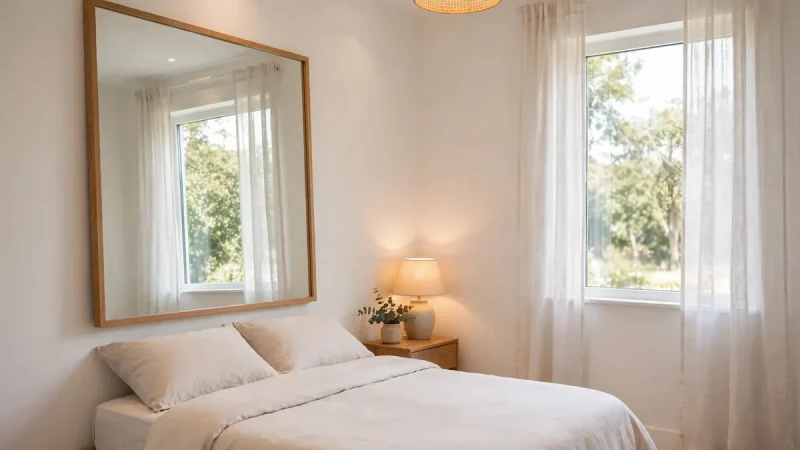
Hang one large mirror opposite a window, and the room doubles its light. The mirror catches daylight, then throws it back across the space. As a result, dark corners soften without extra bulbs. Also, the reflection creates a false view, so depth feels real. For example, a mirror above a low dresser works beautifully. In fact, bigger truly beats several tiny mirrors here. Can you picture the window reflected while you lie in bed?
How do you layer artificial light without clutter?
Remember the simple rule for layered lighting three light sources small room planning follows. Firstly, you need soft general light from above. Secondly, you need task light beside the bed for reading. Finally, you need accent light low down or behind furniture. As a result, the room glows in pools instead of glaring once. Also, layered light hides the true edges of the room. Which of those three layers does your room lack?
Also, choose warm white bulbs 2700k to 3000k for a restful feel. That range flatters skin, wood, and pale paint, for example. In fact, cooler bulbs can make small rooms feel clinical and hard. So, match every bulb in the room to a similar warmth. Because mixed temperatures fight each other, consistency calms the space. You can also explore smart home devices you did not know you needed for dimming ideas. Do your bulbs match each other right now?
Let curtains do heavy lifting, because fabric frames the light?
Firstly, try the hang curtains high and wide trick in your room. You hang the rail close to the ceiling, not the frame. Also, you extend the rail beyond the window on both sides. As a result, the window looks taller and wider than it is. For example, curtains then cover wall, not precious glass, when open. In fact, more glass stays exposed all day long. Does your rail sit right above the window frame now?
Choose colour with care, because colour sets the mood?
Firstly, start with light colours for small bedroom walls in soft tones. Warm whites, pale greys, and gentle creams bounce light around. As a result, walls seem to step back from the bed. Also, light walls forgive small scuffs and busy bedding choices. For example, a warm white suits north facing rooms especially well. In fact, cooler whites can feel chilly in dull daylight. Which pale tone already appears in your bedding or rug?
What is colour drenching, and why does it suit small rooms?
Try colour drenching small room one tone styling if contrast feels choppy. You paint walls, trim, and even the ceiling in one tone. As a result, edges blur, and the room feels like one calm shell. Also, the eye stops hunting for boundaries, so space seems larger. For example, a soft sage shell can feel restful and deep. In fact, drenching works with pale tones and mid tones alike. Would one calm tone relax your room more than contrast?
Also, limit your accent colours to two at most. Pillows, a throw, and one picture can carry those accents. So, the room stays lively without turning noisy or broken. Because small rooms show everything, restraint reads as luxury. For example, rust and cream can warm a pale grey room. You can find broader home inspiration in this guide to modern American living for balanced rooms. Which two accents would you keep, and which would go?
Can vertical stripes add height to a low ceiling?
Yes, and vertical stripes to add height illusion tricks work gently. Thin stripes draw the eye upward, so walls feel taller. As a result, a low ceiling seems to lift a little. Also, you can use stripes in wallpaper, curtains, or bedding. For example, a striped throw at the bed foot adds rhythm. In fact, subtle tone on tone stripes beat bold contrasts here. Where would a quiet stripe guide your eye upward?
Pick furniture that earns its place, because bulk steals space?
Firstly, measure your room before you buy or move anything large. Write the wall lengths down, and keep them on your phone. As a result, guesswork stops, and costly mistakes stop too. Also, tape the footprint of a new piece onto the floor. For example, tape shows instantly if a dresser overwhelms the wall. In fact, bulky media furniture like a large entertainment center for stylish home entertainment rarely suits a small bedroom. Does tape on the floor change your buying plans often?
Secondly, favour multi functional furniture small spaces rely on daily. A stool can hold books, guests, and a morning coffee tray. Also, a bench at the bed foot can store spare blankets. As a result, one piece does the work of two or three. For example, an ottoman with a lid hides clutter fast. In fact, every double duty piece frees real floor area. Which single piece in your room only does one job?
Why do narrow bedside tables suit small bedrooms so well?
Choose narrow bedside tables for small bedrooms with tight wall space. A slim table still holds a lamp, a book, and water. As a result, you keep the bedside ritual without the bulk. Also, wall mounted tables free the floor beneath them completely. For example, a small floating table suits a tight corner beautifully. In fact, visible floor under a table stretches the room visually. Could a slimmer table give you breathing space tonight?
Store smarter, because hidden clutter still shouts?
Firstly, pick a bed with storage drawers small bedroom sleepers can use daily. Drawers under the bed swallow spare bedding, towels, and off season clothes. As a result, the wardrobe stops bulging, and shelves stay calmer. Also, under bed storage uses space that usually gathers only dust. For example, two deep drawers can replace one small chest. In fact, hidden storage protects the open, airy feeling best. What currently hides, forgotten, beneath your bed frame?
Secondly, lift storage upward with floating shelves to free floor space. Shelves hold books, baskets, and one or two loved objects. As a result, the floor stays open, and cleaning gets easier too. Also, place shelves above the dresser or beside the window. For example, a high shelf can display plants beyond reach of clutter. You could borrow greenery ideas from these cactus and succulent garden ideas for a tiny shelf display. Which wall in your room has empty, wasted height?
How should you declutter surfaces without stripping character?
Start when you declutter surfaces fewer larger items decor guidance in mind. One large vase reads calmer than seven tiny ornaments together. As a result, surfaces breathe, and dusting takes far less time. Also, group small keepsakes onto one tray, because trays contain visual noise. For example, a tray turns scattered bottles into one tidy moment. In fact, fewer objects also make each loved piece stand out. Which surface in your room collects the most tiny things?
Size the soft layers right, because rugs and bedding set scale?
Firstly, get the rug size for small bedroom under bed placement right. A good rug slides under the lower two thirds of the bed. Also, the rug should extend clearly on both sides for your feet. As a result, you land softly, and the bed zone feels generous. For example, a rug that peeks out generously widens the floor visually. In fact, a tiny rug stranded mid floor shrinks the room. Does your rug hug the bed or float alone?
Also, borrow scale lessons from other small spaces you know. Gardeners use the same thinking in easy outdoor seating ideas for small backyards every season. So, fewer, well sized pieces beat many small, fussy ones outdoors too. Because scale rules travel between rooms, your eye learns fast. For example, one generous rug beats three small mats anywhere. In fact, proportion matters more than square footage alone. Where else at home do you already judge scale well?
Work through one small room, step by step?
Picture a narrow bedroom with one window and a low ceiling. The bed blocks the window, and a dark wardrobe looms beside it. Firstly, you move the bed onto the longest wall instead. As a result, the window clears, and daylight enters freely again. Also, you hang a large mirror opposite that window. So, the light doubles, and the far wall softens. Can you already feel that imagined room breathing easier?
Secondly, you repaint the walls in a warm, pale tone. You also drench the trim in the same calm colour. As a result, the corners blur, and the ceiling feels higher. For example, you then hang curtains high, wide, and pale. In fact, the window now looks almost twice as tall. Also, you swap the chunky bedside tables for narrow ones. Which of those steps would change your room most?
Finally, you tackle storage and the small daily details. You slide storage drawers under the bed for spare bedding. Also, you add two floating shelves above the dresser for books. As a result, the floor stays open from door to window. For example, low cost changes like these echo the spirit of budget friendly backyard makeovers indoors. In fact, the room changed without one wall moving. Does that step order feel doable across one weekend?
Frequently asked questions
Can a queen bed fit a small bedroom?
Yes, a queen bed can fit if walking space stays comfortable. Firstly, centre the bed on the longest wall for balance. Also, choose narrow bedside tables and a low headboard. As a result, the room keeps flow around the bed. For example, skip a bulky bench if space feels tight. In fact, layout matters more than bed size alone here.
What colours make a small bedroom look bigger fastest?
Pale, warm tones usually work fastest in small bedrooms. Firstly, warm whites and creams bounce daylight around the room. Also, soft sage or pale blue can feel calm and open. As a result, walls seem to retreat from the bed gently. For example, test one tone across walls and trim. In fact, one calm tone beats several competing shades.
Where should a mirror go in a small bedroom?
Place the mirror opposite or beside the main window. Firstly, that spot catches daylight and reflects it back inside. Also, a mirror above a low dresser saves wall space. As a result, corners brighten without extra lamps or bulbs. For example, avoid facing the mirror at a cluttered shelf. In fact, mirrors repeat whatever they face, so choose carefully.
How many light sources does a small bedroom need?
Most small bedrooms feel best with three light sources. Firstly, you need gentle overhead light for general tasks. Secondly, you need bedside light for reading and winding down. Finally, you need soft accent light for depth and mood. As a result, the room glows evenly instead of glaring once. For example, wall lights add a layer without table clutter.
What rug size suits a small bedroom best?
Choose a rug that slides under the bed generously. Firstly, the rug should extend beyond both sides of the bed. Also, your feet should land fully on the rug each morning. As a result, the sleeping zone feels wide and grounded. For example, avoid tiny rugs that float alone mid floor. In fact, generous rugs widen small floors surprisingly well.
What is the cheapest way to make a small bedroom look bigger?
Clearing floor and surfaces costs nothing and works instantly. Firstly, remove pieces that block the doorway sightline completely. Also, declutter surfaces and group small items onto trays. As a result, the eye travels further across the room. For example, raising curtains higher also costs almost nothing. In fact, layout and light changes beat shopping almost every time.

