

This guide picks routes rather than just attractions, grading each walk by effort and reward. You will find a famous limestone amphitheatre, thundering waterfalls, a viaduct that stars in films, and valleys threaded with dry stone walls. Distances and terrain notes stay honest throughout, because Dales weather punishes wishful thinking. Pack waterproofs even under blue skies, in other words.
Most routes start from villages with parking, cafes, and bus links in season. Check local conditions before you set out, since rivers rise quickly after heavy rain. Ready? Then let us walk, roughly south to north.
Walk One: Malham Cove, Gordale Scar, and the Tarn
If you walk only one Dales route, make it this classic circuit from Malham village. The loop links three geological celebrities across roughly twelve kilometres of varied ground. Malham Cove itself is a towering curved cliff of white limestone, formed by a waterfall long vanished. Peregrine falcons nest on its face in season, and volunteers often set up telescopes for visitors.
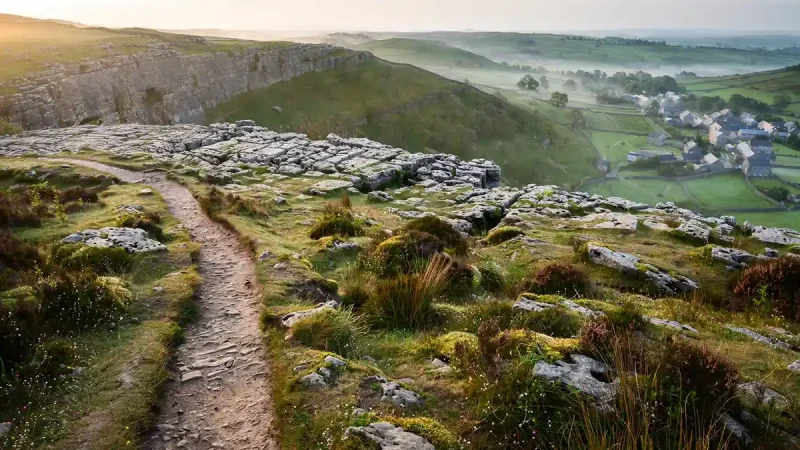
Above the cove stretches a famous limestone pavement, its clints and grykes split into a natural jigsaw. Harry Potter fans recognise this pavement instantly from the films, although the landscape outshines any movie. Tread carefully here, because wet limestone turns treacherously slippery. The views down Malhamdale, meanwhile, explain why painters keep returning to this valley.
Gordale Scar, the circuit’s wild middle act, hides a waterfall inside a deep limestone gorge. The scramble beside the falls suits confident walkers only, especially after rain, when water volume surges. A longer, gentler path avoids the scramble entirely, so nobody needs to feel pressured. Finish across the moor at Malham Tarn, England’s highest marl lake, where the water sits strangely, beautifully still. Afterwards, Malham’s pubs and tearooms handle your recovery with expertise.
Waterfall walkers comparing continents should bookmark places to visit in Watkins Glen, New York for a gorge walk on another continent. Meanwhile, southern countryside fans can continue into our companion guide to places to visit in the East Midlands next.
Walk Two: Ingleton’s Waterfalls Trail
Ingleton’s Waterfalls Trail delivers the Dales’ most concentrated cascade show, a managed loop of about seven kilometres. The path follows the River Twiss up through ancient oak woodland, passing fall after fall, each with its own personality. Thornton Force, the trail’s star, drops a sheet of water over a limestone ledge with real theatre. Pecca Falls and Beezley Falls, by contrast, charm in quieter, greener ways.
Entry runs through a paid trail system, which funds the paths, bridges, and steps you will be grateful for. The route includes plenty of climbing, so allow a few hours rather than rushing it. Waterproof footwear matters here constantly, since spray and mud keep sections slick. Arrive early on fine weekends, because the trailhead car park fills quickly.
Ingleton village itself rewards a post-walk hour. Cafes line the main street, and the outdoor pool, open seasonally, draws hardy swimmers. Cavers also know this area deeply, since White Scar Cave nearby offers one of Britain’s longest show-cave tours. Rainy-day walkers, therefore, can simply go underground instead.
Walk Three: Bolton Abbey and the Strid
For an easier day, the Bolton Abbey estate in Wharfedale pairs riverside walking with serious history. The priory ruins stand beside the River Wharfe, photogenic from every angle, and stepping stones cross the water nearby for the sure-footed. Paths run through ancient woodland toward the Strid, a narrow, powerful chute where the whole river funnels through rocks. Admire it from the bank only, since its currents are famously dangerous.
Families love this estate, because shorter loops suit smaller legs while longer trails reach the Valley of Desolation waterfall. Seasonal parking charges apply, so check the estate site before driving. Tearooms at both ends of the estate, thankfully, bookend the walking with cake. Overall, this is the Dales at its gentlest and most generous.
Walk Four: Aysgarth Falls and Wensleydale
Wensleydale, the broad valley of the River Ure, walks at a softer tempo than its neighbours. Aysgarth Falls spread across a series of wide limestone steps, more staircase than cliff-drop, and they roar impressively after rain. Woodland paths link the upper, middle, and lower falls across a relaxed few kilometres. Turner painted here, and standing before the middle falls, you see exactly why.
Hawes, the valley’s main town, waits a short drive west. The Wensleydale Creamery there makes the famous crumbly cheese, with tastings and a visitor centre explaining the craft. Try the cheese with fruit cake, the Yorkshire way, and prepare to be converted. The Dales Countryside Museum in the old station yard, meanwhile, fills a rainy hour with farming and railway stories.
Bolton Castle, a medieval fortress above the valley, adds a cultural counterweight to all this nature. Mary, Queen of Scots was held here for a time, and its rooms and gardens still carry that drama. Combine castle, falls, and a Hawes pub lunch, and Wensleydale gives you a complete Dales day. Autumn travellers who love this palette should also browse top places to visit in Vermont in the fall for a transatlantic twin.
Walk Five: Ribblehead and the Three Peaks Country
Serious walkers eventually face Yorkshire’s Three Peaks: Pen-y-ghent, Whernside, and Ingleborough. The full challenge route links them across roughly thirty-nine kilometres, a long day that demands fitness, navigation skills, and stubbornness. Most visitors, sensibly, climb just one peak per trip. Whernside, the highest, rewards with views toward the Lake District on clear days.
Even non-climbers should visit Ribblehead, where the Settle-Carlisle railway strides across a vast viaduct of twenty-four arches. Trains still cross it daily, and watching one steam or rumble over the moor feels cinematic. The surrounding moorland looks empty until you notice curlews, skylarks, and centuries of quarry and railway history. A short, flat wander near the viaduct suits almost everyone, honestly.
Settle and Ingleton both make good bases for this western edge. The Settle-Carlisle line itself deserves a ride, since it ranks among Britain’s most scenic rail journeys. Ride it on a rest day, therefore, and let the train do the climbing. Afterwards, compare notes with fellow passengers, because this line inspires loyal devotion.
Swaledale: The Walkers’ Favourite Dale?
Ask Dales regulars to name their favourite valley, and many whisper Swaledale. The northernmost dale feels wilder and quieter, its floor patterned with small meadows, stone barns, and walls without end. The Muker to Keld walk follows the River Swale through this pattern, passing wildflower meadows that peak gloriously in early summer. Waterfalls gather near Keld, where several short paths branch into side valleys.
Richmond, the dale’s gateway town, adds a Norman castle on a cliff above the river. Its market square and Georgian streets handle evenings elegantly after days on the trail. Reeth, mid-dale, offers pubs, a small museum, and ice cream worth planning around. Cyclists also adore these roads, since the Tour de France famously raced through here and left a lasting buzz.
Scenery collectors planning wider trips might enjoy our roundup of scenic places to visit in the US for a bigger-scale contrast. Dream-list builders, meanwhile, can browse the 1001 Places to Visit Before You Die book and check how many Dales neighbours make its pages.
Culture Between the Walks
Rest days in the Dales still feed the mind. Grassington, a cobbled village in Wharfedale, hosts a well-loved summer arts festival and doubles as Darrowby in recent television adaptations of James Herriot’s vet stories. Skipton, the southern gateway, guards a medieval castle and runs lively markets along its broad high street. Its canal basin, meanwhile, offers narrowboat trips for thoroughly rested legs.
Dry stone walls deserve a thought as you walk, too. Thousands of miles of them stitch the Dales together, built by hand across centuries without mortar. Field barns, called cow houses locally, dot the meadows as part of the same farming story. Noticing this working landscape, rather than just the views, deepens every walk considerably.
Food culture anchors the villages between routes. Farm shops sell local lamb, cheeses, and preserves, while pubs pride themselves on Yorkshire portions. Sunday roasts here are a competitive sport, honestly, so book popular spots ahead. Finally, if grand European touring calls next, our guide to the most important places to visit in Europe pairs history with these hills nicely, and the top most visited places in the world will recalibrate your crowd expectations entirely.
When Should You Walk the Dales?
Spring brings lambs, curlew calls, and waterfalls still fat with winter rain. Late spring and early summer, however, win the beauty contest, since Muker’s hay meadows bloom and the days stretch long. Book accommodation early for that window, because savvy walkers compete for the same village rooms. Waterproofs stay essential, admittedly, since Dales rain ignores the calendar entirely.
Autumn trades flowers for colour and quiet. Heather purples the moor edges earlier in the season, then bracken rusts and the larches turn gold. Trails empty noticeably after the school holidays, so September walkers get famous viewpoints almost privately. Meanwhile, winter strips the valleys to bone and drama: bare limestone, roaring falls, and pubs with fires lit by noon. Short days demand earlier starts in winter, though, and high routes need proper skills in ice or flood. Choose your season by temperament, rather than habit, and the Dales will show you a different face each time.
A Walker’s Dales Checklist
- Boots and waterproofs: Limestone turns slippery and moor weather flips fast, so dress for the worst sky, not the current one.
- Map plus backup: Signal fades in side valleys, therefore carry a paper map or downloaded route for every longer walk.
- Start early: Famous trailheads like Malham and Ingleton fill by mid-morning on fine weekends.
- Respect farmland: Close gates, keep dogs controlled near livestock, and follow the Countryside Code throughout.
- Check locally: River levels, trail diversions, and seasonal services change, so confirm at visitor centres on the day.
Walk the Dales properly and something shifts in you. The valleys stop being scenery and start being a rhythm: climb, wall, village, tea, repeat. Each dale keeps its own accent, its own cheese, its own favourite waterfall, and you will leave with strong opinions about all three. That, more than any summit, is the sign the Dales have claimed another walker. You will drive home planning the next valley, the next waterfall, and very possibly a bigger pair of boots for the longer, wilder, gloriously muddier routes you are already eyeing up next on the map spread across your kitchen table at home tonight.

