
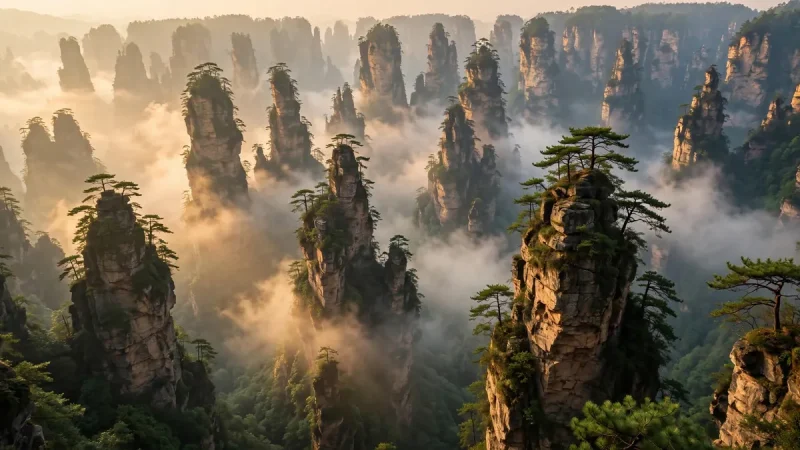

My China nature trip began with fog on a train window. I wiped the glass, and stone pillars floated past like islands. Honestly, that single view rewired my whole travel list. You may know China for cities, temples, and busy markets. Yet the wild side of this country steals the show. So this story follows one loose route across five wild regions. Along the way, you will meet lakes, gorges, and striped hills.
Most travellers start with the most popular places to visit in China first. That list covers walls, warriors, and glittering skylines, quite rightly. However, nature asks for a slower and quieter plan. You trade neon streets for dawn mist and birdsong instead. Meanwhile, fast trains still link each wild stop with ease. Therefore, you can chase scenery without punishing road journeys. Ready to trade city noise for mountain silence?
Zhangjiajie, Where Stone Pillars Touch the Clouds
Zhangjiajie greeted me with drizzle, wet stone, and total silence. Then the clouds thinned, and thousands of pillars appeared below. Each pillar wears a green cap of stubborn pine trees. Meanwhile, monkeys patrol the boardwalks like tiny, furry ticket inspectors. You ride a glass lift straight up a cliff face. Afterwards, your knees wobble, yet your camera works overtime.
The park rewards walkers who start early and wander far. Crowds hug the famous viewpoints near the main entrances. However, quiet trails hide just twenty minutes beyond them. For example, the Golden Whip Stream path stays calm all morning. Clear water slides past mossy rocks and curious fish. Meanwhile, photographers chase mist from the Yuanjiajie viewpoints at dawn. Indeed, sunrise here feels like watching a painting assemble itself.
Try this simple trick on your first morning there. Take the earliest bus, then walk against the tour flow. Most groups move viewpoint to viewpoint in one set direction. You, however, will enjoy empty platforms and softer light. Also, pack a light rain shell for sudden mountain showers. Finally, give Zhangjiajie two full days at the very least. Rushing this forest of stone feels like skipping dessert.
Jiuzhaigou Valley, Lakes That Refuse to Sit Still
Jiuzhaigou flipped my idea of what lake water can do. One lake glows turquoise, while the next burns deep sapphire. Fallen trees rest under the surface, perfectly visible and eerie. Meanwhile, waterfalls stitch the whole valley together with white ribbons. You walk wooden boardwalks from one impossible colour to another. Honestly, your phone battery will surrender before your curiosity does.
The valley follows a simple Y shape in the mountains. Shuttle buses carry you between lakes, falls, and Tibetan villages. However, walking the quiet stretches gives you the real magic. For instance, the trail near Five Flower Lake stays peaceful. Peacocks of colour shimmer under the ripples there, somehow. Meanwhile, autumn sets the hillsides alight with red and gold. Therefore, October visitors often call this valley China’s prettiest place.
Altitude deserves respect in this high mountain valley, though. You should walk slowly, drink water, and skip heroic sprints. Also, mornings bring the calmest water and the clearest reflections. So ride the bus up early, then stroll downhill afterwards. Guides in the villages sell hot tea and simple snacks. Finally, book park entry ahead during the busy autumn weeks. This valley protects its calm with daily visitor limits.
Guilin and the Li River, a Painting You Can Float Through
Guilin slowed my route down in the loveliest way. Karst peaks rise from flat fields like green exclamation marks. Meanwhile, bamboo rafts drift past fishermen and water buffalo. You float the Li River toward the town of Yangshuo. Each bend reveals another scene from a classic scroll painting. Indeed, artists have copied these hills for a thousand years.
The river cruise suits travellers who love gentle, lazy days. Boats glide past Reed Flute Cave and famous Nine Horses Hill. However, smaller rafts near Yangdi feel calmer and more personal. You hear the water, the birds, and almost nothing else. Meanwhile, cyclists explore the Yulong River valley on quiet lanes. Rice fields mirror the peaks after a soft rain shower. Therefore, Yangshuo rewards anyone who lingers beyond one night.
Try this evening plan once you reach Yangshuo town. Rent a bike, then ride out before the golden hour. Village paths glow, and the peaks turn honey coloured slowly. Afterwards, street stalls serve beer fish and steaming noodle bowls. Also, West Street buzzes with cafes for a relaxed nightcap. Still, the countryside mornings remain the true headline act here. Wake early, and the mist performs just for you.
Tiger Leaping Gorge, the Hike That Tests Your Nerve
Tiger Leaping Gorge swapped my river calm for pure adrenaline. The Jinsha River roars through one of Earth’s deepest canyons. Meanwhile, cliffs climb steeply on both sides of the trail. You hike the high path between guesthouses and tea stops. My legs complained loudly, yet my grin refused to fade. Honestly, few hikes anywhere deliver this much drama daily.
The classic trek takes two days at a steady pace. Day one climbs through pine woods toward a mountain teahouse. However, the famous twenty eight bends test every trekker’s patience. Each switchback steals breath, then repays you with bigger views. Meanwhile, Naxi guesthouses serve hot meals and thick blankets nightly. Therefore, you can hike light with just a daypack. Similar high trails reward readers of the places to visit in Leh and Ladakh guide.
Safety matters more than bravado inside this giant gorge. Rain turns the stone steps slick within a few minutes. So check the forecast, then start walking early each day. Also, carry cash, because mountain signals fade without warning. Guides and horses wait near the trailhead for struggling hikers. Finally, skip the gorge during the heaviest summer rains. Landslides close sections, and the river runs dangerously high then.
Zhangye Danxia, Hills Painted in Stripes
Zhangye Danxia looked fake until I stood inside it. Red, orange, and cream stripes ripple across smooth hills. Meanwhile, viewing platforms frame the colours like gallery walls. You ride park buses between platforms across this rainbow desert. Late light sets the stripes glowing like heated metal. Indeed, sunset here explains every photograph you have seen.
The geology behind the colours sounds simple, yet looks unreal. Ancient river sediments stacked up, then pressure folded them skyward. Wind and rain later carved the layers into soft waves. However, your eyes will still argue with your brain. For example, one ridge shifts from rust to pink slowly. Meanwhile, shadows redraw the patterns every hour of the day. Therefore, photographers plan two visits, morning and evening alike.
The northern Silk Road setting adds another layer of charm. Gansu province mixes desert forts, noodle shops, and camel country. Also, the vast grasslands farther north echo the top ten places to visit in Mongolia. You can pair Zhangye with Dunhuang and its famous dunes. Trains link these desert stops along the old trade route. Finally, carry sunscreen, because shade hides from these hills. The colours reward patience, water, and a wide hat.
Huanglong, the Quiet Sister of Jiuzhaigou
Huanglong sits higher, quieter, and somehow even more delicate nearby. Travertine terraces hold hundreds of small, glowing blue pools. Meanwhile, a golden temple watches over the topmost terrace. You climb boardwalks through pine forest and thin mountain air. Each pool tier looks like a staircase built for giants. Honestly, the silence up there feels thick and golden.
Many travellers skip Huanglong, and that mistake helps you. Crowds stay thinner, so the boardwalks feel calm and spacious. However, the altitude climbs higher than Jiuzhaigou, so pace yourself. Cable cars lift you most of the way up first. Afterwards, you walk down slowly past pool after pool. Meanwhile, golden snub nosed monkeys sometimes watch from the pines. Therefore, keep your camera ready and your voice low.
Pairing both valleys in one trip works beautifully well. Songpan town makes a handy base between the two parks. Also, local buses and drivers cover the mountain roads daily. So you can sleep once and explore twice, quite easily. Still, weather can close high roads during winter months. Check conditions locally before you lock any tight schedule. Finally, warm layers matter here in every single season.
When Should You Chase China’s Wild Side?
Spring brings fresh green hills and wildflowers across the south. Guilin looks lush, while Zhangjiajie mists feel soft and moody. Meanwhile, autumn paints Jiuzhaigou and Huanglong in gold and crimson. That colour show rivals the places to visit in Seoul Korea during autumn. Therefore, many photographers call autumn China’s finest nature season. However, popular parks grow busy during national holiday weeks then.
Summer delivers drama, heat, and the fullest waterfalls of all. The Li River runs high, and the gorge roars loudly. Still, rain can disrupt trails, roads, and mountain views suddenly. Meanwhile, winter empties the parks and sharpens the mountain air. Snow dusts the Zhangjiajie pillars like icing on stone cakes. So winter suits travellers who prize quiet over warmth. Indeed, every season hands you a different China outdoors.
Japan offers a useful comparison for seasonal nature trips. The Japan best places to visit in summer guide shows similar planning logic. You match each region to its best month carefully. China simply stretches that puzzle across a far bigger map. Therefore, pick your season first, then choose your regions. This order saves money, patience, and precious holiday days. Finally, shoulder seasons usually blend good weather with thinner crowds.
How to Build Your Own Nature Route
Start by choosing three regions, not seven, for one trip. China looks compact on maps, yet distances stretch for hours. Meanwhile, high speed trains shrink many hops to an afternoon. You can fly into one hub, then train onward smoothly. For example, Chengdu works well for the Sichuan valleys. Similarly, the places to visit in Kuala Lumpur city guide shows hub planning abroad.
Use this simple checklist before you book anything at all:
- Pick one hero region and protect two full days.
- Book park entries early during spring and autumn peaks.
- Pack layers, rain gear, and broken in walking shoes.
- Carry cash for villages, trailheads, and small mountain stalls.
- Leave one spare day for weather and slow mornings.
Also, download offline maps and translation tools before remote legs. Mountain signals vanish inside gorges and high valleys without mercy. Meanwhile, hotel staff happily arrange drivers and early breakfasts. So ask politely, and most logistics problems simply melt away. Finally, store park tickets and hotel names in Chinese characters. Taxi drivers will thank you with a big smile.
Small Habits That Protect Wild Places
Wild China stays wild when visitors tread lightly every day. Stay on boardwalks, especially near the fragile travertine pools. Meanwhile, carry your litter out, even tiny tissue scraps. You will notice locals guarding these places with real pride. Also, skip feeding monkeys, however charming their begging looks. Human snacks harm wildlife and encourage bold, risky behaviour.
Photography manners matter on narrow trails and busy platforms. Share the railing, then move along after your shots. However, dawn and dusk visits spread crowds more kindly anyway. Therefore, early alarms protect both nature and your photos. Still, the biggest gift remains simple patience outdoors. Sit quietly, and birds, mist, and light will perform. Indeed, slow travellers always see more than rushed ones.
One Last Look From the Train Window
My route ended where it began, beside a train window. This time, though, I recognised the shapes rolling past outside. Pillars, rivers, and striped hills had become old friends somehow. You will collect your own versions of these places soon. Meanwhile, lists like the top most visited places in the world keep growing. Yet wild corners reward the travellers who wander beyond them.
So choose your first wild region and commit to it. Book the train, pack the layers, and set that alarm. Afterwards, let mist, colour, and canyon wind do the rest. China rewards walkers who slow down and look up. Finally, tell me this before you go anywhere else. Which wild place will you chase first of all?

