

It is 6 pm on a Tuesday. You are hungry, tired, and staring into the fridge. Nothing looks like a meal. You order takeaway again, even though you promised yourself you would cook this week. Sound familiar? If so, meal prep might be the habit that changes everything.
So, how to meal prep for beginners — without spending your whole Sunday in the kitchen? This guide gives you a simple system that takes about two hours a week. You will learn the four ways to prep, how to build a balanced plate without counting anything, what to buy, how to store food safely, and how to avoid the mistakes that make most beginners quit. No fancy equipment is needed. Just a plan, a few containers, and one free afternoon.
What Is Meal Prep, Really?
Meal prep means preparing food ahead of time so that eating well during the week becomes easy. It does not mean cooking seven identical lunches and eating the same thing every day. That is the version you see on social media, and it is the version that puts most people off.
Real meal prep is flexible. Some people cook full meals in advance. Others cook ingredients and mix them into different meals during the week. Some people only prep breakfasts, because mornings are their weak point. All of these count. If you are learning how to meal prep for beginners, the first step is choosing the method that fits your life, not the method that looks best online.
Why does it work? Because most poor food choices happen when you are hungry, tired and rushed. If a good meal is already waiting in the fridge, you will eat it. If it is not, you will reach for whatever is fastest. Meal prep removes the daily decision, and that is where its power lies.
The Four Ways to Meal Prep
There is no single correct method. The best method is the one you will actually repeat. Here are the four main approaches, so you can pick the one that fits your life.
Full Meals, Ready to Grab
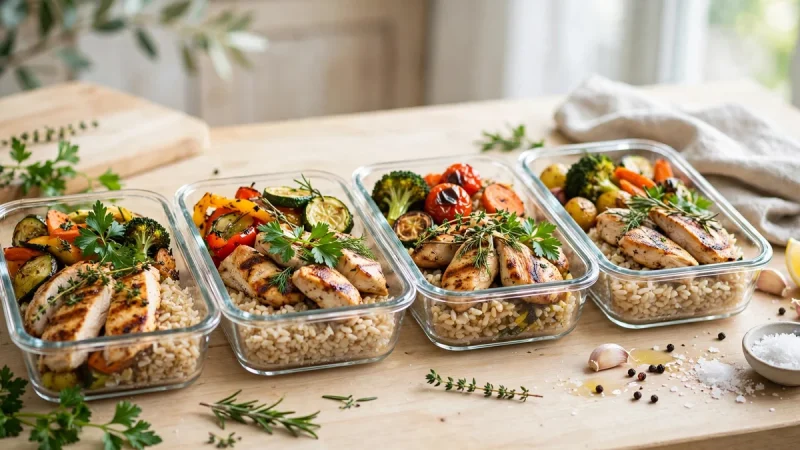
You cook complete meals, divide them into containers, and store them in the fridge. At mealtime, you heat and eat. This is the simplest method, and it works well for lunches you take to work.
The downside is repetition. If you cook five identical containers, you will be bored by Thursday. A good fix is to prep only three or four days of full meals, and leave the rest of the week flexible.
Batch Cooking
You cook one large dish, such as a stew, a curry or a soup, and eat it over several days. The rest goes into the freezer for later. Batch cooking is efficient, because one cooking session produces many meals.
This method suits people who enjoy a dish enough to eat it more than once. It also suits families, because a big pot feeds everyone. Freeze individual portions so you can defrost one at a time.
Ingredient Prep
Instead of finished meals, you prep ingredients: a tray of roasted vegetables, a pot of rice, a batch of grilled chicken, a chopped salad base. During the week, you mix and match them into different meals.
This is the most flexible method, and it is the one this guide recommends for beginners. You never eat the same meal twice, because the combinations change. A chicken-and-rice bowl on Monday becomes a chicken wrap on Tuesday and a chicken salad on Wednesday, all from the same prep session.
Ready-to-Cook Kits
You wash, chop and portion the ingredients for specific recipes, but you do not cook them yet. At dinner time, you simply cook. This cuts weeknight cooking from 45 minutes to about 15, because all the slow work is already done.
This method works well if you enjoy cooking but hate the preparation. It is also the best option for food that does not reheat well, such as fish or stir-fries.
You can mix these methods, too. Many people prep ingredients for dinners and full meals for lunches. Start with one method, try it for two weeks, and adjust. There is no prize for doing it the hard way.
The 2-Hour Weekly System
Here is the system in full. It takes about two hours, once a week, and it covers most of your weekday meals. Pick a day that suits you — Sunday works for many people, but any day is fine.
Step 1: Plan Your Week (15 Minutes)
Before you shop, decide what you will eat. Look at your calendar first. How many breakfasts, lunches and dinners do you need? Are there evenings when you eat out, or days when you work late? Count the meals you actually need, not the meals you wish you needed.
Next, choose your meals. Start small. Pick one breakfast, two lunches and two dinners you already know how to make. Use recipes you trust, not new ones. New recipes belong in a relaxed weekend, not in a prep session.
Then write a shopping list from those meals. Check your cupboards first, so you do not buy things you already have. A list keeps the shop quick and stops impulse buying, which is where most food budgets leak.
Step 2: Shop Once, Shop Smart (30 Minutes)
Shop with your list, and stick to it. Buy ingredients that work in more than one meal. A bag of rice, a tray of chicken thighs, a bunch of herbs and a few vegetables can become five different meals. That overlap is the secret of a short shopping list.
Buy some frozen vegetables, too. They are just as nutritious as fresh ones, they last for months, and they save chopping time. Frozen peas, spinach and mixed vegetables are the easiest win in meal prep. They also mean you always have a vegetable on hand, even in a busy week.
If you buy meat, check the dates and freeze anything you will not use within two days. Thaw it in the fridge overnight, never on the counter. Food safety starts at the shop, not in the kitchen.
Step 3: Prep in One Session (About 90 Minutes)
Now the cooking begins. The trick is to work in parallel, not one dish at a time. Start the slowest thing first — usually a grain or a roast — and chop vegetables while it cooks.
A simple order looks like this. First, put rice or grains on to cook. Second, put a tray of vegetables and a tray of protein in the oven. Third, while those cook, wash and chop salad vegetables and make a sauce. Fourth, portion everything into containers once it has cooled.
Cool food before you seal the containers. Hot food in a sealed box creates steam, and steam makes food soggy. It also raises the temperature inside your fridge, which is a food safety risk. Spread food on a tray to cool quickly, then pack it.
If you are new to cooking in quantity, start with the basics. Knowing basic knife skills makes chopping faster and safer, and it is the single most useful kitchen skill for any beginner. A sharp knife, a steady grip and a flat surface are all you need.
How to Build a Balanced Plate Without Counting
You do not need to count calories or weigh your food to eat well. A simple plate formula does the job. Fill half your plate with vegetables or salad, a quarter with protein, and a quarter with a carbohydrate such as rice, potatoes or bread. Add a little healthy fat, such as olive oil, nuts or avocado, for flavour and satisfaction.
Protein is the part most beginners underdo. Aim for a palm-sized portion at each meal: chicken, fish, eggs, beans, lentils, tofu or yoghurt. Protein keeps you full, and it stops the mid-afternoon slump. Our guide to the best high-protein fast foods is a useful backup for days when prep does not happen and you need a quick, protein-rich option instead.
Vegetables are the easiest part to get wrong, because they feel like extra work. The fix is to prep them in bulk. Roast two trays at once, keep a bag of salad leaves washed and ready, and keep frozen vegetables as a backup. When vegetables are already prepared, you will eat them. When they need washing and chopping at 6 pm, you will not.
Carbohydrates are not the enemy. Rice, potatoes, oats, bread and pasta give you energy and make meals satisfying. The key is portion, not avoidance. A fist-sized serving alongside protein and vegetables is a sensible target for most people.
A Sample Week: What Prep Actually Looks Like
Talking about meal prep is one thing. Seeing a real week is another. Here is a simple example, built from one two-hour session plus a few quick assemblies during the week.
| Day | Breakfast | Lunch | Dinner |
|---|---|---|---|
| Monday | Overnight oats with fruit | Chicken and rice bowl | Chicken stir-fry with vegetables |
| Tuesday | Overnight oats with fruit | Chicken wrap with salad | Vegetable soup with bread |
| Wednesday | Eggs on toast | Rice and bean bowl | Roast vegetables with chicken |
| Thursday | Yoghurt with fruit and oats | Leftover roast chicken salad | Takeaway or eating out |
| Friday | Eggs on toast | Freezer meal or leftovers | Something simple at home |
Notice how the same ingredients appear in different meals. The chicken from Monday’s bowl becomes Tuesday’s wrap and Wednesday’s roast. The rice serves two lunches. The oats cover two breakfasts. That reuse is what makes prep efficient. You cook once, and you eat well for days.
For breakfasts, overnight oats are a perfect beginner prep. They take five minutes the night before, and they are ready when you wake up. Our anti-inflammatory gingerbread overnight oats recipe is a good place to start if you want a flavoured version. And if you like fruit with your breakfast, our guide to dragon fruit health benefits and nutrition facts explains one colourful option worth trying.
Food Safety: How Long Does Prepped Food Last?
Food safety is the part of meal prep that matters most, and it is the part most guides skip. Here are the rules that keep your food safe.
Cooked meals keep in the fridge for three to four days. That is the standard guidance from food safety authorities. If you prep on Sunday, plan to eat the fridge meals by Wednesday or Thursday. Anything beyond that should go in the freezer.
Cool food quickly. Get cooked food into the fridge within two hours of cooking, and sooner if you can. Divide large pots into shallow containers so they cool faster. A big pot of soup left on the counter cools slowly in the middle, and that warm centre is where bacteria grow.
Reheat food until it is steaming hot all the way through. For most cooked meals, that means heating to at least 75°C. Stir halfway through reheating, because microwaves heat unevenly. Only reheat a meal once. If you reheat it, eat it; do not put it back in the fridge for another day.
Label your containers with the date. A small piece of tape and a pen is enough. It takes five seconds, and it stops the daily question of whether something is still good. When in doubt, throw it out. Food poisoning is a far higher price than a wasted lunch.
Storage and Containers: What You Actually Need
You do not need a matching set of expensive containers to start. You need containers that seal well, stack neatly, and survive the microwave and the dishwasher. Glass containers are the most durable and do not stain, but they are heavy. Good-quality plastic containers are lighter and fine for most meals.
Choose containers with compartments if you like your food separate, or plain ones if you do not mind mixing. Small containers suit snacks and sauces. Large ones suit full meals. A set of ten, in two sizes, is enough for most beginners.
Fresh herbs deserve a mention, because they make prepped food taste alive again. A handful of chopped parsley or coriander can rescue a meal that has been in the fridge for three days. Our guide on how to store fresh herbs so they last longer shows a simple method that keeps them usable for a week or more.
One more tip: store sauces separately. A dressing or sauce added at mealtime keeps salads crisp and rice from going soggy. A small container inside a larger one does the job. It is a tiny habit that makes a big difference to how your food tastes on day three.
Make It Fast: The Air Fryer Shortcut
If you own an air fryer, it can cut your prep time sharply. It heats up fast, cooks evenly, and handles the protein and vegetables in one batch. Chicken, fish, potatoes and roasted vegetables all work well in it.
For beginners, the key is knowing times and temperatures. Our air fryer cooking time chart lists the right settings for common foods, so you do not have to guess. And if chicken is your main protein, our air fryer chicken breast recipe shows how to keep it juicy rather than dry — the most common complaint about prepped chicken.
An air fryer is not essential, though. A normal oven does the same job, just a little more slowly. Do not buy new equipment to start meal prepping. Start with what you have, and add tools only when you know you will use them.
Seven Mistakes That Make Beginners Quit
Most people who try meal prep quit within three weeks. The reason is rarely a lack of willpower. It is usually one of these mistakes.
Mistake 1: Prepping too much. Five different recipes in one session is a recipe for exhaustion. Start with two or three. A modest prep you repeat weekly beats a heroic prep you do once.
Mistake 2: Prepping food you do not enjoy. If you hate plain chicken and broccoli, do not prep plain chicken and broccoli. Choose food you look forward to. Flavour is not optional; it is what keeps the habit alive.
Mistake 3: Ignoring variety. Eating the same lunch five days running is boring, and boredom kills habits. Prep components, not finished meals, so the combinations change. Add one new sauce or spice each week.
Mistake 4: No plan for leftovers. Food that sits uneaten is food wasted. Plan your week, count your meals, and freeze the surplus. A freezer meal is a gift to your future self.
Mistakes 5 to 7: Treats, Safety and Scope
Mistake 5: Forgetting snacks and treats. A week of perfectly healthy meals with no treats is hard to sustain. Leave room for a dessert or a snack you enjoy. A small treat is part of the plan, not a failure of it. Even a simple flourless chocolate cake can be portioned and enjoyed across the week.
Mistake 6: Skipping food safety. Eating four-day-old rice that sat out overnight is a real risk. Follow the storage times, cool food quickly, and reheat properly. Your stomach will thank you.
Mistake 7: Trying to prep every meal. You do not need to prep breakfast, lunch and dinner from day one. Pick the meal you struggle with most — usually lunch or dinner — and prep only that. Add more meals once the habit sticks.
Meal Prep on a Budget
Meal prep saves money, but only if you shop with a plan. Here is how to keep costs down.
Build meals around cheap, filling staples: rice, oats, potatoes, lentils, beans and eggs. These cost little and form the base of many meals. Then add a protein and vegetables. Seasonal vegetables are cheaper and taste better, so let the season guide your choices.
Buy in bulk where it makes sense. A large bag of rice, a big pack of oats, or a family pack of chicken thighs usually costs less per portion. Freeze what you cannot use within a few days. A freezer is a money-saving tool, not just a storage box.
Use leftovers creatively. Roast chicken becomes sandwiches, salads and soup. Cooked rice becomes fried rice. Vegetables become a frittata. Every leftover is an ingredient, not waste. This mindset alone can cut a weekly food bill noticeably.
Finally, compare your spending before and after. Many people find they save money within two weeks, because they stop ordering takeaway and stop throwing food away. The savings are a nice bonus, but the real win is the calm of knowing what you will eat.
Frequently Asked Questions About Meal Prep for Beginners
What is the easiest way to learn how to meal prep for beginners?
Start with one meal, not all three. Pick lunches, choose one recipe you already know, and prep it for three days. Once that feels easy, add a second meal. The habit builds faster when the first step is small.
How long does meal prep take each week?
About two hours for a full week of lunches and dinners, including shopping. Beginners may take a little longer at first. The time drops quickly as you learn the routine and reuse the same recipes.
What food should a beginner start with?
Start with food you already cook well. A simple grain, a roasted protein, and two vegetables are enough. Add new recipes one at a time, once the basic routine feels easy.
Can I meal prep if I have a small kitchen?
Yes. You need one pot, one tray, a chopping board and a few containers. Cook in sequence rather than in parallel, and wash up as you go. A small kitchen slows you down slightly, but it does not stop you.
How do I stop prepped food from tasting boring?
Use sauces, herbs, spices and different textures. A squeeze of lemon, a spoonful of chilli sauce, or a handful of fresh herbs can transform a plain meal. Prep components rather than finished meals, so the combinations change each day.
Is meal prep safe for the whole week?
Fridge meals are safe for three to four days. For a full week, freeze the meals for Thursday and Friday, and move them to the fridge the night before. That way, nothing sits in the fridge longer than it should.
The Bottom Line
So, how to meal prep for beginners in one sentence? Start small, pick one meal, and prep it for three days. Use the component method: a protein, a grain, two vegetables and a sauce. Shop once, cook once, and let the fridge do the rest. Follow the food safety rules, leave room for treats, and do not try to be perfect.
The goal is not a perfect week. The goal is a calmer week, with fewer rushed decisions and better food on the table. That is a habit worth building, one container at a time.
What will you prep first? Choose one meal, one recipe, and one free afternoon this week. Cook it, pack it, and see how Monday feels when lunch is already waiting for you.

