
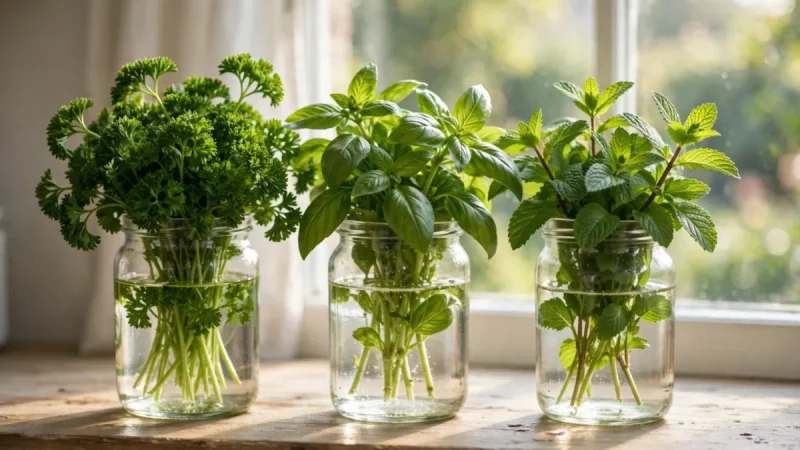

This guide fixes that problem with one clear split first. Tender herbs need one approach, and woody herbs need another. Then you get simple steps for each popular herb. As a result, your bunches stay fresh, fragrant, and ready to cook with. Ready to rescue your next bunch from the bin?
What is the tender herbs vs woody herbs storage difference?
Herbs fall into two broad families, tender and woody. Tender herbs have soft stems and delicate, leafy growth. Parsley, cilantro, basil, and mint all belong here. Dill, tarragon, and chives also sit in this group. In contrast, woody herbs grow stiff, woody stems and tougher leaves.
Rosemary, thyme, oregano, and sage lead the woody group. Marjoram also behaves like a woody herb in storage. The tender herbs vs woody herbs storage difference starts with moisture needs. Tender herbs love steady moisture around their stems and leaves. Woody herbs, however, prefer much drier conditions overall.
Think of tender herbs like fresh flowers in a vase. Think of woody herbs like hardy branches from the garden. Indeed, that simple picture guides almost every storage choice. For example, tender stems drink water happily through cut ends. Woody stems, meanwhile, rot quickly in standing water.
Temperature creates the second big difference between the groups. Most tender herbs chill well inside the fridge. Basil breaks that rule, because cold damages its leaves. Woody herbs, in contrast, tolerate cool, dry storage beautifully. So one quick question sorts any new herb fast. Does this bunch feel soft and leafy, or stiff?
Should you wash herbs before storing them?
Many cooks ask this question before anything else. Should you wash herbs before storing them at all? Generally, you should wait and wash herbs before use. Excess water clings to leaves and speeds up decay. As a result, damp bunches often turn slimy very fast.
Still, muddy or gritty herbs sometimes need an early rinse. In that case, wash them gently in cool water first. Then dry them thoroughly before you store them away. A salad spinner works well for sturdy, leafy bunches. Alternatively, you can pat leaves dry with clean towels.
Food safety still matters every single time you cook. Always wash herbs under clean, running water before use. Also, discard any slimy, mouldy, or foul-smelling leaves immediately. Those signs mean the bunch no longer suits your plate. You can read more about food poisoning from bacteria and simple kitchen habits.
Next, check stems as soon as you get home. Trim away crushed ends and any blackened leaves. Then store the bunch with its best method below. Indeed, five calm minutes here saves the whole bunch. Why let one damaged leaf spoil every healthy neighbour?
How does the storing herbs in a jar of water method work?
The storing herbs in a jar of water method suits tender herbs beautifully. You treat the bunch exactly like a small bouquet. Firstly, trim a little length from the stem ends. Then fill a clean jar with cool water. Finally, stand the stems upright inside that water.
Next, cover the leaves loosely with a clean bag. The bag traps gentle humidity around the leaves above. Then place the jar inside the fridge for freshness. Basil is the exception, so keep basil at room temperature. Also, change the jar water every few days.
Clean water keeps stems drinking and leaves perky longer. Cloudy water, in contrast, signals that change time arrived. Simply rinse the jar, refill it, and trim stems again. Consequently, parsley and cilantro often stay usable far longer. Does your fridge have one small corner for a jar?
Why does wrapping herbs in a damp paper towel help instead?
Some tender herbs prefer a towel over a jar. Wrapping herbs in a damp paper towel gives gentle moisture. The towel stays damp, yet it never soaks the leaves. As a result, delicate leaves avoid both dryness and rot. This method also suits small bunches and loose leaves.
Firstly, lay the herbs flat on the towel in one layer. Then roll the towel loosely around the bunch. Next, slide the roll inside a container or bag. Finally, store the pack inside the fridge crisper drawer. Check the towel every few days and redampen it lightly.
How to store parsley in the fridge?
Parsley rewards the jar method more than most herbs. So learn how to store parsley in the fridge properly. Firstly, trim the stems and remove yellow leaves. Then stand the bunch in a jar of water. Finally, cover it loosely and chill the whole jar.
Alternatively, the damp towel method suits flat-leaf parsley too. Both flat-leaf and curly parsley store in similar ways. Indeed, parsley often leads salads, soups, and bright sauces. You might also pair fresh parsley with grains and vegetables. Those pairings fit well alongside wider fitness and nutrition tips for balanced meals.
How to keep cilantro fresh longer?
Cilantro wilts fast, so many cooks dread buying it. Yet you can learn how to keep cilantro fresh longer easily. Firstly, inspect the bunch and remove any black leaves. Then choose the jar method or the towel method. Both methods protect cilantro far better than the shop bag.
Keep the leaves dry above the water line always. Wet cilantro leaves darken and soften very quickly indeed. Also, keep cilantro away from strong-smelling fridge foods nearby. Its delicate leaves absorb neighbouring odours surprisingly fast in storage. As a result, one covered jar solves two problems.
Cilantro also freezes well when fresh leaves run long. So freeze the surplus instead of watching it fade. Similarly, fresh stems carry plenty of flavour for cooking. Chop tender stems finely and add them to dishes. Why discard good flavour when stems cook so well?
How to store basil without it turning black?
Basil frustrates cooks more than almost any other herb. Chilling basil carelessly turns its leaves black very quickly. Indeed, basil hates cold and bruises at low temperatures. So learn how to store basil without it turning black properly. The counter, not the fridge, gives basil its home.
Firstly, trim the stems and stand basil in water. Then place the jar on the counter, away from sun. Next, cover the leaves loosely, or leave them open. Change the water often, and use leaves within days. Room-temperature water keeps basil fragrant, green, and sweet tasting.
Never squeeze or pack basil tightly inside a bag. Pressure bruises the leaves and creates dark patches fast. Also, keep basil away from the fridge door shelves. Even brief cold blasts can damage those tender leaves. Consequently, a simple counter jar beats fancy storage here.
How to store fresh mint leaves?
Mint grows vigorously, yet cut mint wilts surprisingly fast. So learn how to store fresh mint leaves the right way. The jar method works well for whole mint stems. Stand the stems in water, cover them loosely, then chill. Alternatively, wrap loose leaves inside a damp towel pack.
Mint loves company in sweet and savoury dishes alike. For example, mint lifts salads, drinks, and fresh desserts beautifully. You can also pair mint with colourful fruit plates. A guide to dragon fruit health benefits nutrition facts shows one bright pairing idea. Indeed, mint makes simple fruit taste instantly fresher.
Check mint jars often, because mint drinks water quickly. Top up the jar before the stems sit dry. Also, remove any dark leaves as soon as you spot them. One rotting leaf, in fact, spreads damage very quickly. Quick checks keep the whole bunch sweet and usable.
What does storing rosemary and thyme correctly involve?
Woody herbs need a drier home than tender herbs. Storing rosemary and thyme correctly means skipping the water jar. Instead, wrap the sprigs loosely inside a damp towel. Then place the pack inside a container or bag. Finally, store that pack inside the fridge crisper.
Rosemary sprigs stay firm and fragrant under this method. Thyme sprigs also hold their tiny leaves much longer. Indeed, both herbs dry beautifully as a backup plan. So drying gives you a second chance with surplus sprigs. Why waste woody herbs when they preserve so easily?
Sage and oregano follow the same woody storage pattern. Wrap them, chill them, and check them weekly for mould. Also, keep woody herbs away from very wet vegetables. Extra fridge moisture, in contrast, shortens their useful life. Clearly, dry and cool beats wet and warm here.
How should you store dill, chives, and tarragon?
Dill, chives, and tarragon all count as tender herbs. The jar method suits dill and tarragon stems well. Chives, however, prefer the damp towel method instead. Their hollow stems crush easily inside a crowded jar. So wrap chives gently and chill them flat.
Use these delicate herbs sooner than hardier bunches, ideally first. Their fine leaves lose aroma faster than parsley leaves. Indeed, a quick sniff tells you plenty each time. Bright, fresh scent means the bunch still cooks well. Faint scent, meanwhile, suggests freezing or cooking today.
How long do fresh herbs last in the fridge?
Every bunch starts with a different freshness level, remember. So how long do fresh herbs last in the fridge really? Lifespans below show typical ranges, never firm guarantees. A fresh, dry bunch outlasts a tired, wet bunch easily. Your storage method also shifts those ranges a lot.
| Herb | Type | Best Method | Typical Fridge Life |
|---|---|---|---|
| Parsley | Tender | Jar of water, covered | About 1 to 2 weeks |
| Cilantro | Tender | Jar of water or damp towel | About 1 to 2 weeks |
| Basil | Tender | Counter jar, not the fridge | A few days on the counter |
| Mint | Tender | Jar of water, covered | About 1 to 2 weeks |
| Dill | Tender | Jar of water or damp towel | About 1 week |
| Chives | Tender | Damp paper towel wrap | About 1 week |
| Rosemary | Woody | Damp towel wrap, chilled | About 2 to 3 weeks |
| Thyme | Woody | Damp towel wrap, chilled | About 2 weeks |
| Sage | Woody | Damp towel wrap, chilled | About 1 to 2 weeks |
| Oregano | Woody | Damp towel wrap, chilled | About 1 to 2 weeks |
Treat those ranges as guides, not promises for dinner. Always judge the bunch in front of you first. Look for bright colour, firm stems, and fresh scent. Then discard anything slimy, mouldy, or sour smelling immediately. Indeed, your eyes and nose beat any printed table.
How to freeze fresh herbs in olive oil?
Freezing rescues surplus herbs before they fade away completely. Many cooks ask how to freeze fresh herbs in olive oil neatly. Firstly, wash the herbs and dry them very well. Then chop the leaves roughly and pack them loosely. Wet leaves, in contrast, freeze into messy, icy clumps.
Herb sauces and chopped herbs also shine in home cooking. For example, a green herb sauce lifts simple grilled vegetables beautifully. It also tops grain bowls and bean dishes with ease. Fans of why plant-based burgers are here to stay often love such sauces. Indeed, one frozen cube melts into instant, fresh flavour.
What is the herb ice cube tray freezing method?
The herb ice cube tray freezing method keeps portions tidy. You fill each tray section with chopped herbs first. Then you pour olive oil or water over them. Next, you freeze the tray solid for several hours. Finally, you move the cubes into a labelled container.
Each cube then drops straight into a hot pan. The oil melts fast and releases the herb flavour. Water cubes, meanwhile, suit soups, stews, and cooked sauces better. Avoid using thawed frozen herbs as raw garnishes, though. Freezing softens leaves, so their texture suits cooking best. Still, their flavour stays bright for cooked dishes.
Label every container with the herb name and date. Frozen cubes look surprisingly similar once they turn solid. Also, press extra air from bags before you seal them. Less air means slower freezer burn on the surface. Consequently, your future self finds the right cube fast.
Is drying herbs for long term storage right for woody herbs?
Drying suits woody herbs better than any other method. Indeed, drying herbs for long term storage works beautifully here. Rosemary, thyme, oregano, and sage all dry very well. Their strong flavours survive drying with impressive depth intact. Tender herbs, however, often lose their delicate aroma.
Air drying gives you the simplest route at home. Firstly, tie small bunches loosely by their stems. Then hang them upside down in a dry spot. Choose a spot with good airflow and no steam. Finally, wait until the leaves feel crisp and dry.
A low oven also dries herbs on a tray. Spread the sprigs in one thin, even layer first. Keep the heat low and check the tray often. Then cool the herbs fully before you store them. Store dried leaves in airtight containers, away from light. Clearly, dry, dark, and sealed keeps flavour longest.
Freezing herbs vs drying herbs which is better?
Many cooks ask one big preserving question at harvest time. Freezing herbs vs drying herbs which is better for you? The honest answer depends on the herb and dish. Freezing keeps fresh, green flavour closer to the original. Drying, in contrast, concentrates woody herb flavour very well.
Choose freezing for basil, parsley, cilantro, and mint leaves. Their tender leaves keep colour and aroma when frozen. Choose drying for rosemary, thyme, oregano, and sage instead. Their leaves dry cleanly and store for months afterwards. Indeed, many home cooks happily use both methods together.
Storage space also shapes your choice more than taste. Freezer cubes need freezer room all year round, remember. Dried jars, meanwhile, sit happily inside a cupboard instead. So weigh your space before a big harvest arrives. Which method fits your kitchen and your cooking style?
How to revive wilted herbs in cold water?
A wilted bunch often looks far worse than reality. You can learn how to revive wilted herbs in cold water easily. Firstly, fill a bowl with very cold water. Then trim the stem ends under that water. Finally, submerge the whole bunch for a short soak.
Leaves often perk up visibly after that cold bath. Pat the bunch dry gently once it revives well. Then store it again with the correct method above. Indeed, this trick rescues many slightly tired bunches. Parsley, cilantro, and mint respond especially well to soaking.
Revival only works on wilted, not spoiled, herbs though. Slimy or mouldy leaves never recover in cold water. Discard those bunches fully and start fresh next time. Also, use revived herbs promptly in cooking that day. Their second life, in fact, stays short but useful.
What helps with keeping potted herbs alive indoors?
A living pot beats storage tricks for frequent cooks. Keeping potted herbs alive indoors starts with bright light. Place pots on your sunniest windowsill or close nearby. Then rotate the pots weekly for even, balanced growth. Plants lean toward light, so rotation keeps shapes tidy.
Drainage matters just as much as light and water. Choose pots with holes and empty saucers after watering. Soggy roots rot quickly and kill otherwise healthy plants. Indoor growers who enjoy cactus succulent garden ideas know drainage lessons well. Indeed, most indoor herbs hate wet feet too.
Harvest little and often instead of stripping a plant bare. Regular snipping encourages bushy, leafy new growth on top. Gardeners who study a hardy perennial like actinidia kolomikta arctic beauty the ultimate hardy plant for your garden learn patience similarly. Steady care, in fact, beats sudden rescue attempts. Also, good autumn garden preparation tips help you move pots indoors before cold nights.
Frequently asked questions
Can you store different herbs together in one jar?
You can share a jar between similar tender herbs sometimes. Parsley and cilantro, for example, enjoy similar cool moisture. Still, separate jars keep flavours and checks much simpler. Basil always needs its own counter jar, remember. Indeed, separate storage helps you spot problems faster.
Why do your herbs turn slimy so quickly?
Excess moisture usually causes that slimy, rapid breakdown. Wet leaves inside a sealed bag decay very fast. Rough handling also bruises leaves and speeds the decline. So dry herbs well and store them loosely always. Then check bunches every few days for early damage.
Can you freeze herbs without oil or water?
Yes, you can freeze clean, dry leaves on trays. Spread the leaves in one layer and freeze them. Then move the frozen leaves into airtight containers quickly. Woody herbs freeze especially well with this simple approach. Use those leaves for cooked dishes, not garnishes.
Does basil belong in the fridge or on the counter?
Basil belongs on the counter in a water jar. Cold fridge air blackens and bruises its tender leaves. Room temperature, in contrast, keeps basil green and fragrant. Change the jar water often and trim stems occasionally. Then use the leaves within a few days.
When should you throw fresh herbs away?
Throw herbs away when leaves turn slimy or mouldy. A sour or unpleasant smell also signals clear spoilage. Black, mushy stems mean the bunch passed its best. Never taste a bunch that smells wrong to you. Fresh herbs, indeed, should always smell bright and clean.
Can you dry herbs that have already wilted slightly?
You can dry slightly wilted woody herbs quite successfully. Their low moisture suits drying even after mild wilting. Tender herbs, however, give weak flavour after wilting badly. Check every sprig carefully and discard any mouldy pieces. Then dry the sound sprigs promptly and store them sealed.

