
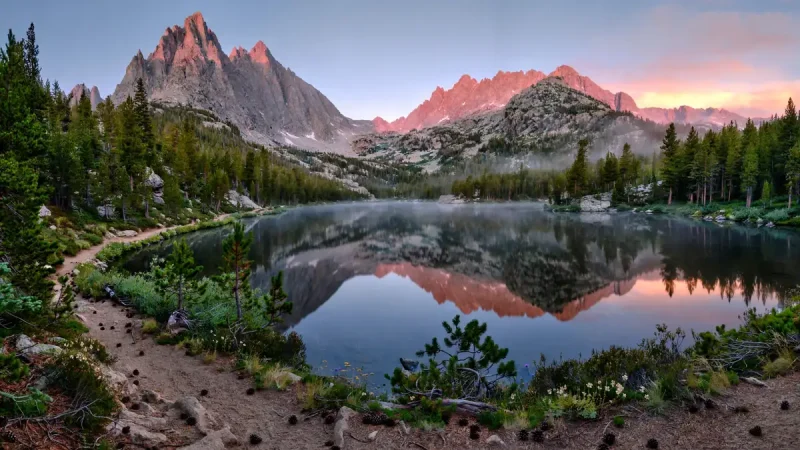

One warning comes first, because altitude humbles everyone. Much of this park sits above 8,000 feet, and Trail Ridge Road climbs far higher. Drink water constantly, climb gradually, and turn back if headaches or nausea grow. Pride heals slowly at altitude, while smart retreats keep trips fun.
Logistics matter here, too. Entry rules, timed reservations, and road seasons change, so check the official park site before you go. Weather shifts within hours, especially above treeline in the afternoon. Pack layers, start early, and treat every forecast as a polite suggestion.
Easy Wins: Big Views, Small Effort
New to mountain hiking? Start around Bear Lake, because the trailhead unlocks several gentle classics. Bear Lake itself sits steps from parking, yet its mirror view of Hallett Peak feels earned. Arrive early, though, since this corridor fills faster than any other.
Sprague Lake offers an even calmer warm-up. A flat loop circles the water while moose sometimes feed at dawn. Photographers love sunrise here, especially when wind leaves the surface glassy. Bring coffee, walk slowly, and let your lungs adjust before bigger climbs.
Alberta Falls makes a perfect first real hike. The trail rolls through aspen and pine for under a mile, then delivers a loud, joyful waterfall. Kids manage it well, although wet rocks near the falls demand care. Go onward if legs feel strong, because the path keeps rewarding you.
The alpine lakes Colorado hikers praise most hide just beyond here. Nymph Lake floats lily pads in early summer, while Dream Lake adds a jagged skyline behind still water. Push to Emerald Lake if energy holds, since each lake tops the last one. Few easy routes anywhere stack beauty this efficiently.
Moderate Missions Worth the Sweat
Ready to level up? Cub Lake rewards steady walkers with lily pads, wildflowers, and quieter benches. The loop through Fern Lake country adds waterfalls, so your camera battery drains fast. Start counterclockwise if you prefer gentler grades on the way up.
Sky Pond earns its legendary status honestly. You scramble beside Timberline Falls, then enter a basin that feels like another planet. Loch Vale softens the approach, although the waterfall scramble tests nervous beginners. Wear grippy shoes, keep hands free, and never rush the wet rock.
Deer Mountain gives you summit views without technical drama. Switchbacks climb through ponderosa pine while Estes Park shrinks below you. Mornings suit this peak best, because exposed sections bake by midday. Celebrate at the top, then descend before afternoon storms build.
Which moderate hike fits you best? Choose Cub Lake for flowers, Sky Pond for drama, and Deer Mountain for a classic summit photo. Still unsure? Pick Sky Pond on a clear, calm morning, since its basin truly defines this park. Just start before sunrise crowds gather at the trailhead.
Hikers comparing big mountain regions often pair this park with our wider guide to places to visit in the Rocky Mountain region, because one trip rarely covers it all.
Waterfalls and Quiet Corners Most Visitors Miss
Chasing quieter water? Ouzel Falls hides along the Wild Basin corridor, where fewer tour buses venture. The trail threads cool forest, passes Copeland Falls early, and then climbs gently toward its main cascade. Families with steady kids manage it well, especially with snack breaks beside the creek.
Adams Falls near Grand Lake offers the opposite bargain. A short stroll delivers a punchy little gorge, while the meadow beyond invites a longer wander. Combine it with an East Inlet amble, since moose and wildflowers share that valley generously. West-side mornings feel hushed, almost private, compared with busy eastern gates.
Lily Lake gives tired legs a gentle finale. Its flat shoreline loop suits picnics, strollers, and sunset watchers equally well. Across the road, the Twin Sisters trail tempts stronger hikers, although its summit push runs steep and rocky. Choose by energy honestly, because both options reward the drive south from Estes Park.
Gem Lake surprises nearly everyone the first time. Granite walls cradle a tiny pool above town, yet the climb there sweats like a bigger hike. Go early for shade, then linger while chipmunks patrol the warm rocks nearby. Views back toward Longs Peak from the Lumpy Ridge area feel quietly spectacular.
The Big One: Longs Peak, Honestly Assessed
Longs Peak watches every hiker in this park. At 14,259 feet, it is the only fourteener here, and it demands respect daily. The Keyhole route mixes steep trails, exposed ledges, and fast-changing weather into one serious day. Most strong hikers need a pre-dawn start, ideally well before sunrise.
Should every visitor attempt it? Honestly, no, and saying so protects people. Altitude sickness, lightning, and fatigue turn small mistakes into rescues here. Train beforehand, study the route, and set a firm turnaround time. The summit keeps for another year, while bad decisions echo longer.
Want the Longs drama without the danger? Hike to Chasm Lake instead, because its cirque sits beneath the peak’s sheer east face. Sunrise there feels theatrical, especially when alpenglow paints the Diamond wall pink. You still earn a serious climb, yet you skip the exposed upper route.
High Asia tempts you as well? Compare these granite giants with our trekking notes on places to visit in Leh and Ladakh, since both regions teach the same altitude lessons.
Trail Ridge Road: The Drive That Acts Like a Hike
Not every great park day needs boots. Trail Ridge Road crosses the park above treeline, so passengers get alpine tundra through the windshield. Pullouts reveal marmots, sweeping valleys, and snowfields that linger into summer. Drive slowly, because wildlife crosses without checking for cars.
The Alpine Visitor Center crowns the route. Learn tundra ecology there, then walk the short, steep Alpine Communities trail if your lungs allow. Every step feels heavy at this height, although the views forgive everything. Hold hats tightly, since wind up here steals loose gear gleefully.
Road season stays short, of course. Snow closes Trail Ridge for much of the year, so verify status on the official park site before driving. Fall color hunters timing a wider trip may also like our places to visit near Denver in summer guide for lower-elevation add-ons. And city-based travelers can base in Estes Park happily, since dining and lodging cluster near the east entrances.
Wildlife Watching Without the Crowds
Elk own the autumn headlines here. Bugling fills Moraine Park at dawn during the rut, while visitors watch from respectful distances. Rangers close some meadows then, because love-struck bulls behave unpredictably. Bring binoculars, keep back, and let the animals set every boundary.
Moose prefer the quieter west side. Kawuneeche Valley wetlands suit them, especially near the Colorado River’s slow headwaters. Dawn and dusk raise your odds, although patience matters more than luck. Watch for dark shapes standing belly-deep, then enjoy the show quietly.
Smaller sightings delight patient walkers, too. Pikas chirp from talus slopes, marmots sunbathe on roadside rocks, and Clark’s nutcrackers beg boldly at overlooks. Never feed any of them, since human food harms wild digestive systems. Photograph from afar instead, because zoom lenses beat close approaches ethically.
Building a bigger American road trip around wildlife? Browse our collection of scenic places to visit in the US for parks that pair well with Colorado. Winter fans, meanwhile, should compare seasons through our guide to places to visit in Kansas in winter, since the plains change character completely under snow.
Season choice shapes every plan here. Summer opens Trail Ridge and the high basins, although crowds peak alongside the wildflowers. Autumn brings elk rut drama, golden aspens, and colder mornings that thin the trailhead lines. Winter turns the park into a snowshoe playground, especially around Bear Lake and Wild Basin. Spring stays quiet and muddy, yet waterfalls roar then, fed by meltwater from the high country.
Your Trailhead Checklist
- Carry two liters of water per person, because dry air steals moisture silently.
- Start summit hikes before dawn, especially when afternoon storms threaten.
- Pack a warm layer and rain shell, although the morning looks clear.
- Check permits and timed entry rules first, since systems change by season.
- Download offline maps at your hotel, because signal vanishes in the valleys.
- Tell someone your route and return time, then stick to that plan.
Boots deserve one honest note as well. Broken-in footwear prevents most trail misery, while brand-new boots manufacture blisters reliably. Test your pair on local hills before this trip, if possible. Your future self, descending Sky Pond happily, sends thanks already.
How Many Days Does This Park Deserve?
Can you rush it in one day? Technically yes, although you will taste only the Bear Lake corridor and Trail Ridge pullouts. Two days let you add a moderate hike plus a wildlife morning properly. Three days feel ideal, because weather backups and slow mornings finally fit.
Base yourself thoughtfully, too. Estes Park suits first-timers who want restaurants and shuttle options nearby. Grand Lake feels quieter, while its west-side trails reward solitude seekers. Either base works, if you match trailheads to your side of the park.
Pacific peaks calling next? Our pick for the best place to visit in Oregon continues the mountain theme beautifully. Adventure planners building a national list will also enjoy our roundup of the best places to visit in the US for adventure, since this park anchors any such list proudly.
Evenings, Photos, and Ranger Wisdom
Evenings in Estes Park deserve a plan, too. Rangers host talks and night-sky programs seasonally, so check schedules at visitor centers during your stay. A slow dinner downtown restores calories, while elk sometimes wander the golf course at dusk. Keep distance there as well, because town elk remain wild animals.
Visitor centers deserve thirty minutes of your first day. Rangers there read trail conditions daily, so their advice reflects ice, closures, and wildlife activity accurately. Beaver Meadows and Fall River centers suit east-side arrivals, while Kawuneeche serves the west. Pick up a paper map as backup, because batteries die fastest exactly when routes confuse you.
Photographers should milk the shoulder hours ruthlessly. Sunrise at Sprague Lake, sunset at Moraine Park, and stars above Trail Ridge create three distinct moods daily. Clouds complicate plans, although broken skies often produce the most dramatic light. Set alarms, dress warmly, and forgive yourself one lazy morning per trip.
Lace up, breathe deep, and pick your first trail tonight. The mountains reward early alarms, honest pacing, and hikers who know when to stop for the view. See you at the trailhead, coffee in hand, while the peaks turn gold.

