
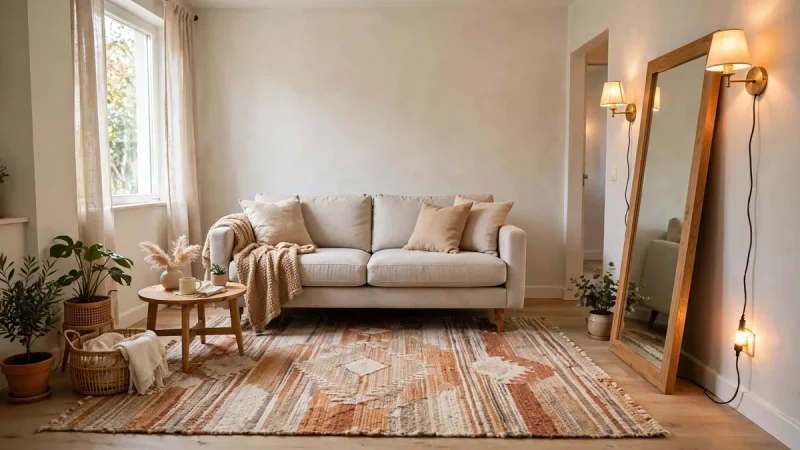

Every idea below passes one simple test for renters. Follow the golden rule — renter friendly decor no damage walls: if it needs a drill, skip it. Also, every change reverses fast on moving day. As a result, your room can feel personal today and stay deposit-safe tomorrow. Ready to transform your space without annoying your landlord?
Why does a small rental living room feel cramped so quickly?
Small rooms rarely suffer from one single problem. Usually, furniture hugs every wall and leaves a dead gap in the middle. Also, harsh ceiling light flattens colours and shrinks the space visually. In contrast, layered light and clear walkways make the same room breathe. So you fix feelings first, and shopping comes later.
Clutter also steals calm in a tiny rental lounge. Shoes, chargers, and spare chairs slowly claim every spare corner. Because each item competes for attention, your eye never rests anywhere. Therefore, a calm room starts with editing, not buying. Does your room need more decor, or simply less noise?
Free changes first: how can you transform the room for nothing?
Firstly, give yourself one free weekend before you spend anything. Free changes reveal what your room actually needs from you. For example, a new layout can fix problems that shopping never solves. Indeed, most renters already own enough pieces for a better room. So treat this stage like a fun experiment, not homework.
Why should you rearrange the furniture before anything else?
Start with the rearrange furniture first free makeover rule, and spend nothing on day one. Pull every piece out, clean the floor, and rebuild the room slowly. Then test one layout for a full evening before judging it. Living in a layout, in fact, teaches more than staring at it. Would you judge a haircut before the mirror dried?
Also, photograph each layout attempt on your phone for comparison. Photos reveal awkward gaps that your eyes forgive in person. Secondly, keep walkways clear from the door to the seating area. Guests should enter and sit down without squeezing past furniture. Consequently, the room feels welcoming from the very first step.
Teachers solve tight-space puzzles daily with very limited floor area. Borrow their zoning mindset from these classroom floor plan ideas for renters too. Clearly, zones for sitting, reading, and working beat one jumbled middle. So sketch your zones on paper before you lift anything heavy.
How does floating the sofa change the whole layout?
Try a float sofa off the wall layout before you buy anything new. Pull the sofa a hand’s width away from the wall behind it. Then angle a chair toward the sofa to spark conversation. As a result, the seating group feels intentional, cosy, and gathered. In fact, pushed-back furniture often makes small rooms feel smaller.
Floating works because it creates a shadow line behind the sofa. That tiny gap, similarly, tricks your eye into sensing depth. Also, you gain a slim channel for cords and a floor lamp. Therefore, the layout looks designed rather than stored against walls. Could one small gap really change your whole room?
How can a tight colour palette calm the room for free?
Build a tight neutral palette plus one accent colour, then repeat that accent three times. Shop your own home first for cushions, throws, and books in that colour. For example, move a rust cushion, a rust book, and a rust candle together. Consequently, scattered items suddenly look like one deliberate scheme.
Neutrals calm the base, so your accent colour can shine properly. Grey, cream, warm white, and soft brown pieces mix easily together. Also, hide clashing items inside cupboards or your bedroom for now. Indeed, editing colour costs nothing yet changes everything you see. What single colour already hides inside your home, waiting?
Cheap changes next: which textiles give the biggest lift?
Secondly, spend a little on textiles once the layout works. Fabric softens hard rental edges faster than any ornament can. Also, textiles travel with you to your next home easily. So they suit renters far better than fixed, built-in changes. Which textile should earn your first small spend, though?
What rug size should a small living room really use?
Use this sizing guide: rug size 5×8 minimum small living room layouts feel balanced and grounded. Place the front legs of your sofa on the rug edge. Also, leave a border of floor showing around the rug sides. As a result, the seating zone reads as one calm island. Tiny rugs, in contrast, chop the floor into restless pieces.
You can also layer rugs for warmth on a budget in colder months. Place a large, flat, neutral rug under a smaller patterned one. Then angle the top rug slightly for a relaxed, collected feel. Indeed, layering hides worn rental flooring beautifully without fitting carpets. So test the look with blankets before you buy anything.
How does hanging curtains higher change the room?
The curtains hung at ceiling height trick makes low ceilings feel taller instantly. Mount a tension rod or adhesive hooks as high as possible. Then let the fabric fall close to the floor below. Because your eye follows that long line upward, height grows visually. In fact, short curtains hung low shrink a room badly.
Light fabric works best for this trick in small rentals. Linen-look panels, for example, filter glare while keeping brightness alive. Also, extend the rod wider than the window frame itself. Consequently, the window looks bigger and the wall feels grander. Does your window deserve that taller, softer frame too?
How can a leaning mirror brighten a dark corner?
A leaning mirror to bounce light renters can place anywhere transforms a dark corner. Lean it safely against the wall opposite your brightest window. Then check the reflection from your sofa seat, not standing height. As a result, daylight doubles its reach across the whole room. Also, mirrors reflect your nicest view instead of the ceiling.
Style the base with a plant and a small stack of books. A leafy corner near glass feels fresh, calm, and alive. Borrow plant pairing inspiration from these cactus succulent garden ideas for sunny spots. Indeed, low-care plants suit busy renters and small shelves perfectly. So start with one plant, then grow your corner slowly.
How can plug-in lighting make evenings feel warm and calm?
Harsh rental ceiling lights ruin evenings in most small apartments. Warm, low light fixes the mood faster than new paint. Add plug in sconces no hardwiring lighting suits renters perfectly here. Simply mount them with removable strips or stand them nearby. Then plug them in and enjoy instant, landlord-safe glow.
Aim for light at three heights across your small room. Table lamps cover reading height, while floor lamps lift dark corners. Also, warm bulbs make neutrals look richer and skin tones kinder. In contrast, one bright ceiling bulb flattens every texture below. Consequently, guests relax faster in pools of gentle light.
Renters can also carry their lighting upgrades to the next flat. Choose portable pieces from the world of smart home devices you can take with you when you move. Smart plugs, for example, put lamps on timers without rewiring anything. Indeed, plug-in tech gives renters control without touching the walls. So build your glow slowly, one lamp at a time.
How can you change the walls without drilling a single hole?
Walls offer the biggest canvas in any small rental room. Still, most renters fear marks, patches, and lost deposit money. Luckily, removable wall changes now suit renters better than ever. Also, small doses beat covering every wall in a tiny space. So pick one feature wall and leave the rest calm.
Where does peel and stick wallpaper work best for renters?
Try peel and stick wallpaper removable renters trust on one small wall only. The wall behind your sofa gives the strongest, safest impact. Firstly, clean the surface well and let it dry fully. Then apply slowly from the top and smooth bubbles outward. As a result, your room gains pattern without permanent paste.
Test a hidden patch first, because rental paint quality varies widely. Wait a day, then peel that corner back gently. If paint lifts, stop and choose framed prints instead. Indeed, a quick test protects both your wall and deposit. Would you rather test for ten minutes or repaint later?
How do you build a gallery wall with no holes at all?
Use command strips for gallery wall no holes displays above the sofa. Lay your frames on the floor first and arrange them there. Then photograph the layout before you stick anything up. Also, keep gaps even, roughly one hand apart, for calmness. Consequently, your wall looks curated rather than randomly dotted.
Follow the art two thirds width of sofa rule when you size pieces. Your grouped art should span about two thirds of the sofa below. Single tiny frames, in contrast, look lost above big furniture. Similarly, one large thrifted print often beats six small ones. So measure your sofa first, then hunt art second.
Your TV wall deserves the same balanced thinking as your art wall. Frame the screen with low storage and soft light nearby. Take layout cues from this stylish entertainment center choice for proportions and balance. Indeed, a calm media wall keeps the whole room feeling ordered. Therefore, hide cables in a simple clip-on channel tonight.
Which small spends work hardest in a tiny living room?
Finally, choose small spends that solve two problems at once. Double-duty furniture earns its floor space in every small rental. Also, hidden storage calms visual clutter better than open baskets. So judge each purchase by jobs done, not looks alone. Can one piece sit, store, and serve drinks too?
A storage ottoman instead of coffee table works twice as hard here. You gain a footrest, spare seat, coffee tray surface, and blanket box. Also, soft edges suit tight walkways better than sharp corners. Round shapes, for example, let knees pass safely in narrow gaps. Consequently, guests move comfortably even when the room fills.
Seating flexibility matters outdoors too, in surprisingly similar ways. The same thinking shapes these easy outdoor seating ideas for small backyards on tight footprints. Indeed, movable, light seating beats bulky fixed sets almost everywhere. So borrow that flexibility mindset for your indoor layout too. Your future self will thank you on cleaning day.
How do you shop secondhand without wasting money or space?
Use smart shop secondhand furniture marketplace tips before you browse listings each week. Firstly, measure your doorway, lift, and target corner very carefully. Then save those numbers in your phone for instant checking. Also, set alerts for your exact wish list items only. As a result, impulse buys stop crowding your small room.
Secondly, inspect photos for scale, stains, wobbles, and pet damage clues. Ask sellers for one photo beside a door for size reference. For example, a standard door reveals the true height fast. In contrast, cropped listing photos can hide surprising bulk easily. Therefore, slow questions save you from heavy return trips.
Also, plan collection before you message any seller at all. Check the route, parking, and help you actually have available. Indeed, a bargain sofa becomes stressful without a carry plan. Still, patient hunters find quality pieces that renters resell later. So keep a small watch list and check it weekly.
Broad home inspiration helps you spot good pieces faster too. Skim this american lifestyle magazine guide to modern living for styling direction first. Then hunt secondhand versions of the looks you loved there. Consequently, your room gains character without showroom prices attached. Does that hunt not beat scrolling new furniture endlessly?
Worked example: how would you redo one small room in order?
Imagine a narrow rental lounge with a sofa, two chairs, and dull walls. The tenant rents, works from the sofa corner, and hosts friends weekly. Firstly, she floats the sofa and angles both chairs inward. Then she moves a bookshelf behind the sofa as a console. As a result, the room gains zones without buying anything.
Secondly, she builds her palette from items she already owns. Cream throws stay, one teal cushion becomes her accent colour star. Also, she layers a thin flat rug under her patterned one. In fact, that layering follows the rug guidance from earlier sections. Consequently, the floor feels warmer underfoot every single evening.
Finally, she adds one mirror, two plug-in sconces, and one ottoman. The mirror leans by the window and doubles her daylight daily. Also, the ottoman hides blankets, remotes, and board games neatly. Her only wall change is one removable wallpaper panel behind the sofa. Overall, the order matters more than the money spent.
- Day one: declutter, rearrange, and float the sofa.
- Day two: set the palette and layer the rugs.
- Week two: add mirror, curtains, and plug-in light.
- Week three: fit the ottoman and gallery wall.
- Last step: test, photograph, and adjust slowly.
Notice how each stage builds calmly on the stage before. Nothing here needs drilling, painting, or landlord permission at all. Also, each stage stays easy to reverse within one afternoon. Therefore, the example suits almost any small rental lounge well. Could your room follow this same gentle order too?
What should you skip when money and space feel tight?
Skip oversized sectionals that swallow half of a small room. Also, skip matching furniture sets that flatten your personality completely. In contrast, mixed pieces with shared colours feel collected and warm. Indeed, small rooms reward editing far more than completeness. So leave floor space empty on purpose sometimes.
Also, skip dark heavy curtains, tiny rugs, and single overhead light. Each choice shrinks the room in a different, sneaky way. Similarly, skip novelty decor that solves no real daily problem. For example, a sculpture without storage must earn its place honestly. Consequently, every object in your room should justify itself.
The same discipline helps outside your front door later on. Renters who master restraint indoors reuse it for budget friendly backyard makeovers at their next home. Indeed, free-first thinking travels well from room to room. So practise the habit now, while the stakes stay small. Your wallet will feel the difference every single month.
How do you protect your deposit while making changes?
Focus on removable changes that protect security deposit money from day one. Photograph every wall, floor corner, and fixture before you start decorating. Then keep those photos dated and stored safely in your phone. Also, save packaging for strips, hooks, and removable coverings carefully. As a result, moving day becomes a calm reversal job.
Also, keep a small renter kit ready in one drawer. Your kit holds spare strips, felt pads, and a microfibre cloth. Felt pads under furniture, for example, stop floor scratches completely. Similarly, cable clips keep cords tidy without pinning walls anywhere. Consequently, small protections prevent the most common deposit deductions.
Finally, reverse each change slowly during your final week there. Peel products downward slowly and warm stubborn adhesive with a hairdryer. Then wash gentle residue away with warm, soapy water afterward. Indeed, patience here saves far more than rushing ever will. Would you trade one careful hour for your full deposit?
Frequently asked questions
How much should you spend first on a small rental living room?
Spend nothing at all during your very first weekend of changes. Rearrange, declutter, and set your colour palette completely for free first. Then buy textiles and lighting slowly, one useful piece monthly. As a result, each purchase solves a problem you actually feel. Indeed, slow spending beats one big, regretful shopping trip.
Can you hang art in a rental without making holes?
Yes, you can hang light frames with removable strips easily. Clean the wall first, press firmly, and wait before hanging anything. Also, keep heavier pieces on shelves or leaning on sideboards instead. Consequently, your gallery wall stays flexible and fully landlord-safe. Would you move one frame weekly in a drilled wall?
What is the best layout trick for a narrow living room?
Float your sofa slightly and angle chairs toward it gently. Then anchor the group with one correctly sized rug below. Also, keep the path from door to window completely clear. In fact, clear paths make narrow rooms feel twice as calm. So test the walk yourself before you settle anything.
How do you add storage without bulky furniture pieces?
Choose pieces that hide storage inside a shape you need anyway. A lidded ottoman, for example, stores blankets and serves guests daily. Also, use the slim gap behind a floated sofa wisely. Narrow baskets there hold remotes, chargers, and magazines neatly. Consequently, surfaces stay clear and the room breathes again.
Which colours make a small living room feel bigger?
Light neutrals make walls recede and daylight travel much further. Build your base in cream, soft white, pale grey, or warm beige. Then repeat one accent colour three times for gentle energy. Also, keep big furniture pieces inside that same calm palette. Indeed, contrast belongs on cushions, not on the sofa.
How do you reverse removable decor on moving day?
Start early and work slowly, one product type at a time. Peel strips downward, warm stubborn wallpaper corners, and wash residue gently. Then compare each wall against your dated move-in photos carefully. Also, fill nothing and paint nothing without asking your landlord first. As a result, you hand back a room that looks untouched.

