
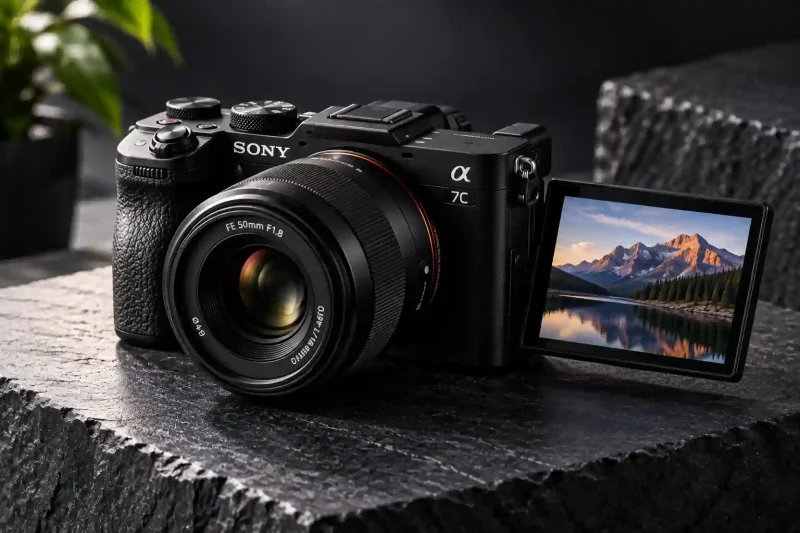

Visual storytelling and digital content creation continue to expand at an astonishing rate worldwide. Today, independent videographers, travel photographers, and hybrid creators require camera systems that balance portability with flagship-tier imaging capabilities. Therefore, finding an interchangeable lens camera that combines rapid autofocus, compact ergonomics, and cinema-grade video recording is essential. Many creative professionals research camera hardware advancements and digital production guides across our main portal. Through these resources, visual storytellers discover how modern imaging tools elevate daily workflow productivity and visual fidelity. In exciting photographic hardware news, Sony releases the a6700: An advanced APS-C camera designed to lead the next generation of creative imaging. Specifically, this mirrorless powerhouse integrates a 26-megapixel back-illuminated sensor and a dedicated AI processing engine. It also provides 4K 120p video recording in a compact chassis.
Discerning filmmakers and photographers seek far more than incremental specification bumps when investing in camera gear. In addition, creators value robust physical handling, extended battery endurance, intuitive touch navigation, and versatile color profiles. By exploring our hardware reviews and digital gear insights in our dedicated technology category archive, content creators can evaluate modern camera platforms with complete confidence. In this comprehensive guide, we examine the engineering breakthroughs behind the Sony a6700. Furthermore, we analyze sensor performance, artificial intelligence subject tracking, cinema-line video features, and refined hardware ergonomics. Finally, we provide a step-by-step buyer roadmap and field setup guide. These tips help you optimize this advanced imaging tool.
The Evolution of Sony’s APS-C Mirrorless Camera Lineup
Sony has long occupied a commanding leadership role in the global mirrorless camera revolution. Specifically, when the original a6000 launched nearly a decade ago, it redefined consumer expectations for autofocus speed in compact bodies. For example, subsequent iterations like the a6300 and a6600 added key features. These included 4K video capture, in-body stabilization, and larger batteries. However, while full-frame cameras advanced rapidly, the APS-C lineup had not seen a flagship update since 2019.
Consequently, the release of the a6700 marks a monumental leap forward for compact system cameras. Instead of recycling older components, Sony updated the camera with cutting-edge technologies. These innovations come directly from its Cinema Line and full-frame Alpha systems. In fact, hybrid shooters enjoy cinematic 10-bit recording and AI-driven autofocus. Best of all, they avoid carrying heavy full-frame bodies. As a result, the a6700 establishes an exciting standard for lightweight documentary filmmaking, wildlife tracking, and travel photography.
In addition, maintaining operational excellence in digital production mirrors broader enterprise growth strategies. For example, corporate operational models detailed in scaling business services growth demonstrate the necessity of clear product positioning. Similarly, strategic market research in small business growth and marketing analysis shows that customer-centric engineering sustains commercial brand loyalty across changing seasons. Sony applies these exact principles to deliver an exceptional imaging experience for creators worldwide.
| Hardware Feature | Sony a6700 Specification | Predecessor (Sony a6600) | Creative Advantage for Photographers |
|---|---|---|---|
| Image Sensor | 26.0 MP BSI Exmor R CMOS | 24.2 MP Front-Illuminated CMOS | Higher resolution, faster readout speeds, improved low-light noise |
| Image Processing | BIONZ XR + Dedicated AI Processing Unit | Previous-Gen BIONZ X Processor | Eight times faster processing and advanced deep-learning tracking |
| Video Capability | 4K 60p (6K oversampled), 4K 120p, 10-bit 4:2:2 | 4K 30p, 8-bit 4:2:0 | Rich color grading flexibility with S-Cinetone and S-Log3 |
| Autofocus Points | 759 Phase-Detection Points (93% coverage) | 425 Phase-Detection Points | Wider frame coverage and precise edge-to-edge subject tracking |
| Display Screen | Fully Articulated Vari-Angle Touchscreen | 180-Degree Tilt-Only Screen | Effortless framing for high, low, and vertical video angles |
| Physical Controls | Dedicated Front Dial & Still/Movie/S&Q Switch | Rear Dial Only, Shared Mode Dial | Instant exposure adjustments and seamless mode switching |
Next-Generation Imaging: 26-Megapixel BSI Exmor R Sensor
At the mechanical core of the Sony a6700 lies a modern 26.0-megapixel back-illuminated Exmor R CMOS image sensor. This is the exact sensor architecture utilized in Sony’s acclaimed FX30 Cinema Line camera. Specifically, back-illuminated architecture positions the sensor’s circuitry behind the photodiode layer rather than in front of it.
Specifically, this architectural shift delivers notable technical advantages:
- Enhanced Light-Gathering Efficiency: Maximizes photon capture on the photodiode surface, resulting in pristine image clarity during low-light night shooting.
- Accelerated Readout Speeds: Significantly reduces rolling shutter distortion during high-speed panning and fast-action sports photography.
- Expansive Dynamic Range: Delivers over fourteen stops of dynamic latitude in S-Log3, preserving delicate highlights and shadow details.
- Broad ISO Sensitivity Range: Offers a native range of ISO 100 to 32,000, expandable up to ISO 102,400 for challenging ambient environments.
Furthermore, the sensor pairs with Sony’s latest BIONZ XR image processing engine. This powerful processor operates up to eight times faster than previous-generation processing chips. Consequently, the camera processes high-resolution Raw files, complex color science, and high-bitrate video streams with effortless fluidity. In fact, photographers can capture rapid eleven-frame-per-second continuous bursts while maintaining full autofocus and exposure tracking.
AI-Powered Subject Recognition and Real-Time Tracking
In fact, autofocus performance has long been a benchmark of Sony cameras. However, the a6700 introduces a transformative technological evolution. Specifically, the camera borrows the specialized AI processing unit from the flagship Alpha 7R V. It uses advanced deep-learning algorithms. Specifically, this dedicated coprocessor does not merely track eyes and faces; it predicts full human skeletal poses.
Furthermore, human pose estimation allows the camera to maintain focus reliably. It locks on even when a subject turns their head or wears sunglasses. For instance, if a runner briefly ducks behind a tree, tracking continues smoothly. The focus locks onto their torso reliably until their face reappears. In addition, the AI processing unit expands subject recognition far beyond human subjects:
- Animals and Pets: Accurately tracks dogs, cats, and small mammals, locking onto heads and eyes during unpredictable movements.
- Birds in Flight: Distinguishes birds perched against foliage or gliding across cluttered mountain skies with razor-sharp precision.
- Insects and Macro Life: Tracks small insects such as bees and butterflies, assisting macro photographers in capturing delicate nature details.
- Vehicles and Transport: Recognizes cars, trains, motorcycles, and airplanes, ensuring crisp tracking for automotive and aviation shoots.
In fact, the autofocus system covers ninety-three percent of the sensor area with 759 phase-detection points. Consequently, focus hunting is eliminated across all scenarios. The camera tracks wildlife darting across frames or moving subjects during weddings effortlessly.
Cinema-Grade Video Features: 4K 120p, 10-Bit, and S-Cinetone
The Sony a6700 marks a monumental turning point for video creators who prefer compact camera rigs. Earlier models restricted video capture to 8-bit color depths. In contrast, the a6700 brings true cinema production capabilities to the APS-C format. In addition, filmmakers can capture breathtaking visuals that integrate seamlessly with professional Cinema Line productions.
Specifically, the camera records full-width 4K video at up to 60 frames per second. This footage is oversampled from a rich 6K capture area. Specifically, 6K oversampling produces pristine 4K footage without pixel binning. This results in exceptional sharpness, realistic textures, and minimal moire. Furthermore, creators can shoot high-frame-rate 4K at 120 frames per second with a modest 1.58x crop. This high-speed capability enables dramatic, cinematic slow-motion footage for sports action and wedding b-roll.
In addition, video creators benefit from professional recording formats and color profiles:
- 10-Bit 4:2:2 Color Sampling: Captures over one billion colors, providing the tonal gradation required for professional color grading.
- S-Log3 Gamma Profile: Captures 14+ stops of dynamic latitude, preserving rich contrast in bright outdoor sunlight and deep shadows.
- S-Cinetone Color Science: Delivers rich, filmic mid-tones, natural skin complexions, and gentle highlight roll-off straight out of camera.
- Custom User LUT Support: Allows filmmakers to import custom look-up tables to preview final color grades directly on the monitor while filming.
- Auto Framing Feature: Uses AI subject recognition to automatically crop and track a subject across the frame, simulating an automated camera operator.
Consequently, solo content creators and documentary videographers can produce broadcast-ready footage without needing secondary camera assistants.
Ergonomic Refinements, Vari-Angle Screen, and Controls
In fact, for years, users requested specific ergonomic improvements to Sony’s compact APS-C camera bodies. Fortunately, Sony listened attentively to creator feedback, redesigning the physical layout of the a6700 to provide superior handling and intuitive operation.
Specifically, several physical upgrades transform daily shooting ergonomics:
- Dedicated Front Control Dial: Positioned conveniently beneath the shutter button, allowing independent simultaneous control over aperture and shutter speed.
- Side-Opening Vari-Angle LCD Monitor: A 3.0-inch 1.03-million dot touchscreen flips out laterally, rotating 270 degrees for easy vertical framing and vlogging.
- Still/Movie/S&Q Switching Ring: Placed directly underneath the primary exposure mode dial, allowing instant transition between photo and video presets.
- Deepened Ergonomic Handgrip: A sculpted, deeper grip provides secure hand placement when balancing heavy telephoto and zoom lenses.
- High-Resolution OLED Viewfinder: A 2.36-million dot XGA OLED Tru-Finder delivers smooth 120fps preview rates for tracking fast-moving subjects.
Furthermore, the camera integrates the high-capacity NP-FZ100 lithium-ion battery. This battery delivers more than double the operating endurance of older models. In fact, creators can record extended 4K video clips without battery anxiety. In addition, the USB-C port supports USB Power Delivery (USB-PD), allowing direct power operation from portable power banks in the field.
In-Body Image Stabilization and Audio Connectivity
Shooting handheld video and slow-shutter photography requires dependable camera stabilization. The Sony a6700 integrates a precision 5-axis optical in-body image stabilization (IBIS) unit. Specifically, this mechanical gyro sensor system compensates for angular pitch, yaw, horizontal shift, vertical shift, and roll motion.
The stabilization unit provides up to five stops of optical compensation, enabling sharp handheld images at slow shutter speeds. Furthermore, video creators can activate “Active Mode” stabilization, which combines optical sensor shifting with advanced electronic algorithms. Consequently, vloggers can capture smooth, walking tracking shots without mounting the camera on bulky mechanical gimbals.
In addition, acoustic fidelity is equally refined. Specifically, the a6700 features an intelligent Multi-Interface (MI) hot shoe with a built-in digital audio interface. When paired with digital microphones like the Sony ECM-M1, audio signals transfer directly. The sound records as clean digital data without analog interference. This direct digital stream eliminates analog conversion noise, delivering crystal-clear dialogue for interviews and outdoor documentaries.
Commercial Media Infrastructure, Studio Operations, and Equipment Financing
Operating a professional commercial photography studio or video agency requires continuous capital investment. Creative studios must invest in digital cinema cameras, fast prime lenses, heavy-duty lighting grids, and high-performance editing servers. Furthermore, production companies must maintain sufficient financial liquidity to handle client shoots and equipment upgrades smoothly.
Commercial creative enterprises frequently manage equipment capital through specialized corporate financing programs. For instance, media production businesses evaluate asset funding options like Northmill equipment finance to secure camera packages while preserving liquid capital reserves. In addition, expanding creative agencies explore commercial credit lines such as Navitas financial solutions to fund multi-camera expansions. Commercial real estate developers also analyze institutional studio and warehouse debt models detailed in Lument real estate capital investments. Meanwhile, memorable photography and film studio branding draws inspiration from creative design principles in Flowfury Entertainment logo strategies.
Holistic Lifestyle Synergy: Creative Stamina and Physical Well-Being
Working behind the camera on long video shoots requires sustained physical stamina and mental focus. Documentary filmmakers and event photographers spend ten- to twelve-hour days carrying heavy camera rigs across demanding terrain. Therefore, maintaining personal physical endurance and mental balance is essential for long-term creative longevity.
Moreover, committing to balanced daily routines supports sustained creative stamina. For example, maintaining daily physical fitness promotes cardiovascular health and muscular endurance, aligning with proven habits like exercising 40 minutes every day. In addition, enjoying an early, nourishing dinner between busy shooting days aids digestive rest and restorative sleep, reflecting principles discussed in benefits of early dinner for digestion. Many visual artists also design peaceful domestic studio spaces inspired by the nature-focused lifestyle principles of balanced lifestyle luxury and wellness.
Furthermore, maintaining overall personal wellness involves regular consultations with trusted healthcare providers for postural screenings and eye checkups. Respected regional healthcare networks, including community clinics like the Muskingum Valley Health Center and public health agencies like the Gastonia Health Department, emphasize preventive clinical nutrition, ergonomic wellness, and vision care. Meanwhile, creative production agencies expanding their promotional reach in competitive metropolitan media markets can evaluate multi-channel marketing models through advertising marketing growth in Los Angeles.
Comparative Analysis: Sony a6700 vs. Top Industry Competitors
To understand the true market position of the a6700, one must compare it against its prominent rivals in the APS-C category. In fact, the enthusiast camera market features formidable competitors from Fujifilm, Canon, and Nikon, each offering distinct imaging strengths.
Specifically, the competitive field reveals unique operational trade-offs:
- Fujifilm X-T5: Offers a higher 40-megapixel sensor and retro exposure dials, but features less sophisticated AI subject recognition than Sony’s autofocus system.
- Canon EOS R7: Delivers rapid mechanical burst shooting, but suffers from a more limited selection of native APS-C RF-S lenses compared to the mature Sony E-mount ecosystem.
- Sony FX30: Features an integrated cooling fan and dual card slots for pure cinema work, but lacks an electronic viewfinder and mechanical shutter for still photography.
In fact, the Sony a6700 strikes the most balanced compromise between hybrid still photography and professional video production. Furthermore, the Sony E-mount system offers hundreds of native lenses from Sony, Sigma, Tamron, and Samyang. Consequently, creators investing in the a6700 enjoy unparalleled optical flexibility across every focal length and budget.
Step-by-Step Guide: How to Configure Your Sony a6700 for Creative Work
In fact, unboxing and configuring a sophisticated hybrid mirrorless camera can feel overwhelming due to extensive custom menus. Follow this structured roadmap to optimize your Sony a6700 for seamless field shooting:
- Configure the Touch Navigation Menu: First, power on the camera, set the date and time, and customize the Function (Fn) menu with your most frequently used exposure settings.
- Set Up the Dedicated Front Dial: Second, assign the front control dial to aperture control and the rear top dial to shutter speed for quick manual shooting.
- Enable AI Subject Recognition Tracking: Third, access the autofocus menu to select your primary subject type (Human, Animal, Bird, or Vehicle) and set Priority to Real-Time Tracking.
- Program the Memory Recall Modes: Fourth, save your preferred video settings (such as 4K 24p S-Log3 10-bit) into custom memory slots 1, 2, and 3 on the mode dial.
- Configure Breathing Compensation and Active IBIS: Fifth, turn on in-camera focus breathing compensation for supported E-mount lenses and enable Active Mode stabilization for video.
- Calibrate Creators’ App Connectivity: Finally, pair the camera with your smartphone via the Sony Creators’ App to enable automatic background geotagging and instant wireless photo transfers.
Following this disciplined setup roadmap ensures that your camera operates smoothly. It becomes an intuitive extension of your creative vision in any shooting scenario.
Frequently Asked Questions About the Sony a6700
What sensor is inside the Sony a6700?
Specifically, the Sony a6700 features a 26.0-megapixel back-illuminated Exmor R CMOS APS-C sensor, paired with the BIONZ XR processing engine and a dedicated AI processing unit.
Can the Sony a6700 shoot 4K video at 120 frames per second?
Specifically, the camera can record 4K video at 120 frames per second with a 1.58x crop, allowing creators to capture fluid, dramatic slow-motion footage in 10-bit 4:2:2 color depth.
Does the a6700 feature in-body image stabilization (IBIS)?
Specifically, the camera features 5-axis optical in-body image stabilization providing 5.0 stops of mechanical compensation, alongside an electronic Active Mode for stabilized video shooting.
What memory card does the Sony a6700 use?
Specifically, the Sony a6700 features a single dedicated high-speed SD card slot compatible with UHS-I and UHS-II SD cards, located conveniently on the side of the camera body.
Conclusion: The Ultimate Compact Hybrid Creator Camera
The official announcement that Sony releases the a6700: An advanced APS-C camera represents a defining triumph for compact photography gear. By uniting a 26-megapixel back-illuminated sensor, next-generation AI subject recognition autofocus, 10-bit 4K 120p video, and refined body ergonomics, Sony has engineered the definitive hybrid tool for modern creators. In fact, this camera proves that compact APS-C systems can deliver professional-grade imaging without the bulk and expense of full-frame setups.
Therefore, whether you are a documentary filmmaker capturing dynamic travel scenes, a wildlife enthusiast tracking fast-moving birds, or a hybrid creator balancing commercial photo shoots, the a6700 excels across every discipline. Explore the Sony a6700 today and unlock boundless creative possibilities in an ultra-portable body!

