
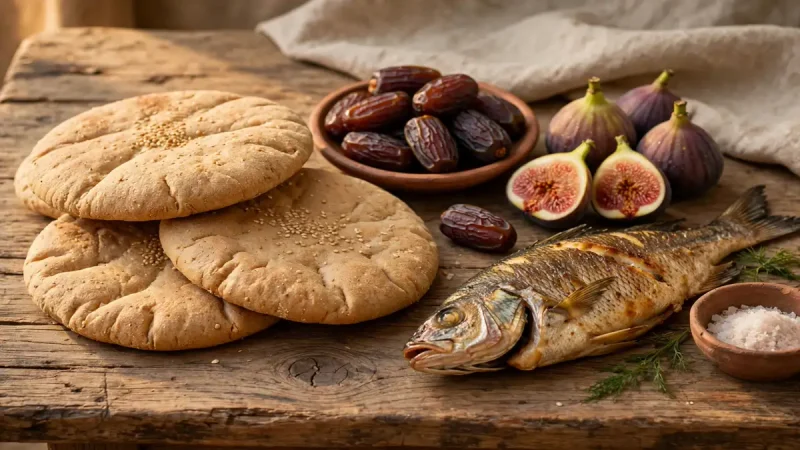

You will learn the staples that fed every social class, the fruits and proteins that varied by wealth, and how food shaped Egyptian life. Additionally, you will see which traditions survive today. Let us travel back 3,000 years.
Bread and Beer: The Twin Pillars
Every Egyptian meal centered on two foods: bread and beer. Emmer wheat — rich in protein and vitamins — became loaves of many shapes in Egyptian ovens: flat rounds like pita, long conical loaves, and fancy molded forms for the wealthy. Bread was so fundamental it served as wages; workers building temples received bread rations, and wooden tokens recorded ten-day allotments.
Beer was equally essential but utterly unlike modern brews. Thick, cloudy, and nutritious, brewers made it by fermenting partially baked bread in water with barley. The result delivered protein, carbohydrates, and safe hydration — cleaner than Nile water. In addition, children drank it daily; it was food, not indulgence. It likely contained less alcohol than today’s beer.
Vegetables and Legumes
The Nile’s fertile soil produced abundant vegetables. Onions and garlic were everyday staples — so valued that workers reportedly received them as rations. Leeks, lettuce, cucumbers, celery, and gourds filled out the vegetable basket.
Legumes provided crucial protein: lentils, beans, chickpeas, and peas (introduced in the Middle Kingdom) became hearty stews in Egyptian pots. In addition, these affordable proteins sustained the laborers who built monuments. A simple meal of bread, lentil stew, and onions fueled an empire.
Fruits of the Nile Valley
Dates served as the ancient sweetener — people ate them fresh, dried, or pressed into syrups. Figs, grapes, and pomegranates added variety and luxury. In addition, fruit appeared in tomb paintings as offerings for the afterlife, showing its cultural importance.
Honey, collected from hives, sweetened breads and desserts for those who could afford it. Furthermore, dried fruits preserved the harvest through lean seasons — an early food security strategy.
Fish, Fowl, and Rare Meat
The Nile provided tilapia, mullet, and other fish — the common person’s protein. People ate fish fresh, dried, or heavily salted (a tradition surviving today as fesikh, enjoyed at spring festivals). In addition, waterfowl — ducks and geese — supplemented the diet.
Beef, mutton, and goat remained luxuries for the wealthy and religious festivals. Tomb paintings show lavish meat feasts, but these depicted ideals, not daily reality. Furthermore, pigs existed but carried social stigma in some periods.
Oils, Seasonings, and Drinks
Egyptians pressed oil from sesame, lettuce, and radish seeds; traders imported olive oil from Mesopotamia at great expense. Salt, cumin, coriander, and herbs like cilantro seasoned dishes. In addition, the wealthy accessed exotic spices through trade.
Beyond beer, Egyptians brewed herbal drinks: anise for digestion, and fenugreek (mughat) traditionally given to women during and after childbirth. Furthermore, wine existed but remained an elite luxury — vineyards belonged to temples and nobles.
How Food Was Preserved
Without refrigeration, Egyptians mastered preservation. Egyptians sun-dried fruits and meats, packed fish in salt, and stored grains in sealed silos against pests and moisture. In addition, these techniques made surplus possible — the foundation of civilization itself.
Beer and bread production was industrial in scale. Tomb models show bakeries and breweries with dozens of workers. Furthermore, temples operated massive food operations feeding priests, workers, and the gods (priests redistributed offerings to the people).
Food and Social Class
The poor ate bread, beer, onions, lentils, and Nile fish — simple but nutritionally sound. The middle classes added more fruit, fowl, and varied breads. The elite enjoyed beef, wine, honey cakes, imported spices, and elaborate multi-course feasts.
Yet the grain foundation united everyone. In addition, festivals temporarily erased class lines — religious feasts distributed meat and beer to common people. Food was politics, religion, and survival intertwined.
Frequently Asked Questions
What did ancient Egyptians eat every day?
Bread (from emmer wheat) and beer (from barley) at nearly every meal, supplemented with onions, garlic, lentils, beans, dates, figs, and Nile fish. Meat was rare for common people.
Did ancient Egyptian children drink beer?
Yes. Their beer was thick, nutritious, and low in alcohol — closer to liquid food than modern beer. It was safer than untreated water and provided calories.
What meat did Egyptians eat?
Fish and waterfowl were common; beef, mutton, and goat were luxuries for the wealthy and festivals. Furthermore, pork carried social stigma in some periods.
How did Egyptians preserve food?
Sun-drying fruits and meats, heavy salting of fish, and sealed grain silos. These techniques created surpluses that sustained the civilization.
Do any ancient Egyptian foods survive today?
Yes! Fesikh (salted fish) is still eaten at Sham El Nessim spring festival. Furthermore, bread and ful (fava bean stew) remain Egyptian staples after millennia.
Conclusion
The foods Egyptians ate — humble bread, nourishing beer, Nile fish, and dates — powered one of history’s greatest civilizations. Simple ingredients, extraordinary legacy.
For more food history, explore our food and beverage section.
As we traverse the culinary landscape of ancient Egypt, it’s fascinating to consider the enduring legacy of their dietary practices and the way they laid the groundwork for modern cooking techniques. The simplicity and resourcefulness evident in their meals echo in today’s kitchen innovations, where the quest for healthy, flavorful dishes continues. For instance, the art of achieving crispiness without excess fat has found its way into contemporary recipes, such as the popular air fryer chicken breast recipe, which mirrors the ancient Egyptian emphasis on wholesome ingredients. This blend of history and modern culinary trends not only connects us with the past but also illustrates how the principles of nutrition and flavor have transcended time, adapting to fit our evolving dietary needs. Just as bread and beer were central to ancient Egyptian sustenance, today’s health-conscious meals reflect a similar commitment to balancing taste and nutrition.
As we reflect on the dietary practices of ancient Egypt, it’s fascinating to consider how food and drink have historically influenced social customs and cultural expressions across civilizations. Just as bread and beer were foundational to the daily lives of Egyptians, beverages like wine have played a significant role in other cultures, shaping rituals, celebrations, and social interactions. Understanding this rich tapestry of culinary history paves the way for a more nuanced appreciation of modern gastronomy. For those venturing into the world of wine, grasping the essential terms associated with it is crucial. Familiarity with wine terminology can elevate one’s tasting experience and enhance the enjoyment of this age-old libation, much like the ancient Egyptians’ reverence for their own traditional brews.

